Building Agents for Teams: Managing the noise of collaboration
Microsoft outlines how AI agents in Teams should use reactions, threads, and quotes to collaborate without disrupting group chats, offering practical guidance for developers.
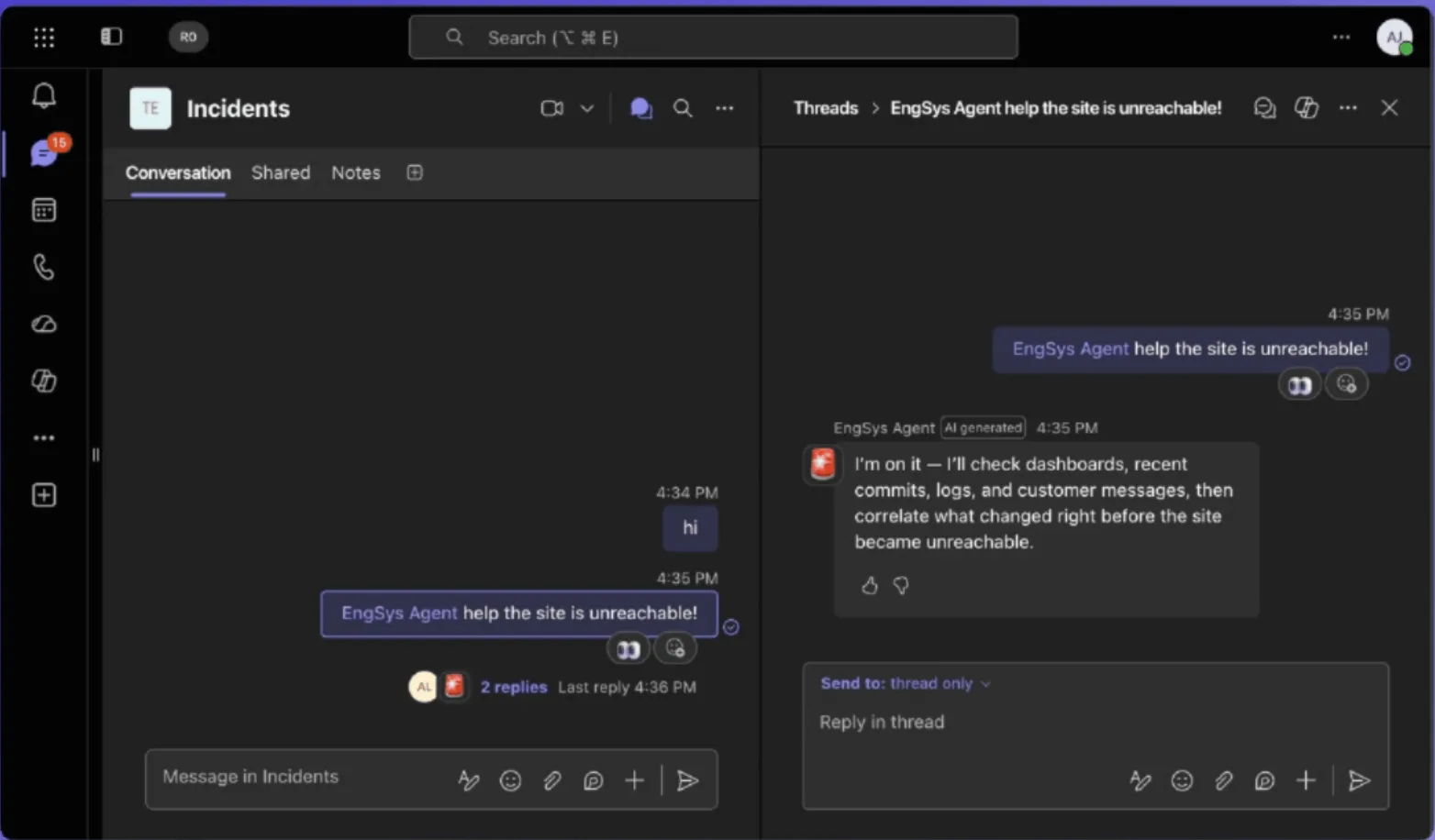
Microsoft describes how group collaboration differs from one-to-one chats, where every message competes for attention and responses must account for multiple participants. Agents joining shared workspaces need to adopt behaviors that keep conversations manageable, such as using emoji reactions, threaded replies, and quoted replies to acknowledge or respond without adding noise. The company argues that these interaction patterns mirror how humans naturally communicate in busy workspaces, reducing unnecessary interruptions.
The post explains how emoji reactions can signal acknowledgment without creating new messages. For example, an agent can react with an 👀 to show it has seen a request and later replace it with a ✅ upon completion, keeping the chat concise. Threaded replies allow agents to respond to specific topics without cluttering the main channel, such as providing code review feedback in a contained thread while the broader discussion continues undisturbed.
Quoted replies help agents reference earlier messages in long-running conversations, ensuring clarity without derailing the flow. This is particularly useful for asynchronous tasks, where an agent may respond hours later to an original question, tying its reply directly to the context. Microsoft emphasizes that these patterns enable agents to contribute meaningfully while respecting the social dynamics of group collaboration.
To implement these interaction models, Microsoft directs developers to the Teams SDK and coding agent skill. The company also points to a Build demo session, 'Build agents where work happens: chats, channels, and meetings in Microsoft Teams,' for practical examples. Lily Du, a Software Engineer at Microsoft, authored the post.