APOD: 2026 September 18 – Messier 33: The Triangulum Galaxy
NASA’s Astronomy Picture of the Day highlights Messier 33, a spiral galaxy in the Triangulum constellation, showcasing its structure and star-forming regions.
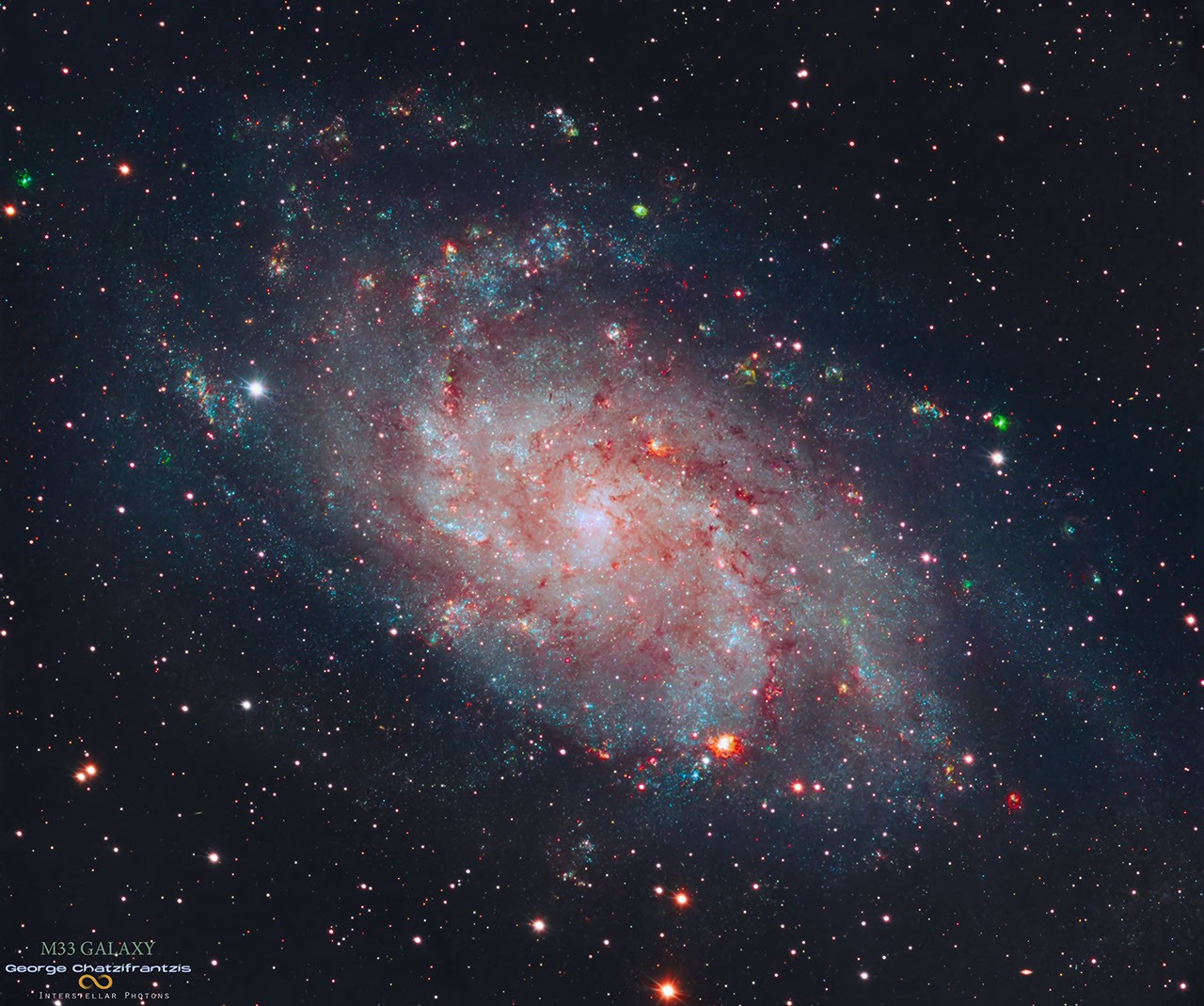
The Astronomy Picture of the Day (APOD) featured an image of Messier 33, a spiral galaxy located in the small northern constellation Triangulum. Known also as the Pinwheel Galaxy or Triangulum Galaxy, M33 is the third-largest galaxy in the Local Group, after the Andromeda Galaxy and the Milky Way. Its diameter spans over 50,000 light-years, offering a prominent view of its loosely wound spiral arms adorned with blue star clusters and pinkish star-forming regions.
The image prominently displays NGC 604, the brightest star-forming region in M33, positioned roughly at the 5 o’clock mark from the galaxy’s center. This cavernous nebula serves as a key marker for astronomers studying stellar birth within the galaxy. The galaxy’s proximity to the Milky Way, estimated at about 3 million light-years, allows for detailed observations of its structure and dynamics.
Astronomers consider M33 a satellite of the Andromeda Galaxy, suggesting that observers in either galaxy would have a striking view of the other’s spiral structure. The galaxy’s well-documented variable stars have played a crucial role in refining the cosmic distance scale, aiding in the measurement of astronomical distances across the universe.
APOD, NASA’s daily astronomy feature, announced a transition of its main website from apod.nasa.gov to science.nasa.gov/apod, effective immediately. The change reflects an organizational update to NASA’s science communication platforms, though the daily image and explanation will continue as before.