NASA Challenge Tests Wheel Designs for Moon Base Mobility
NASA’s Rock and Roll with NASA Challenge selected five finalist teams to test lunar rover wheel prototypes at Johnson Space Center, aiming to improve mobility for future Moon base operations.
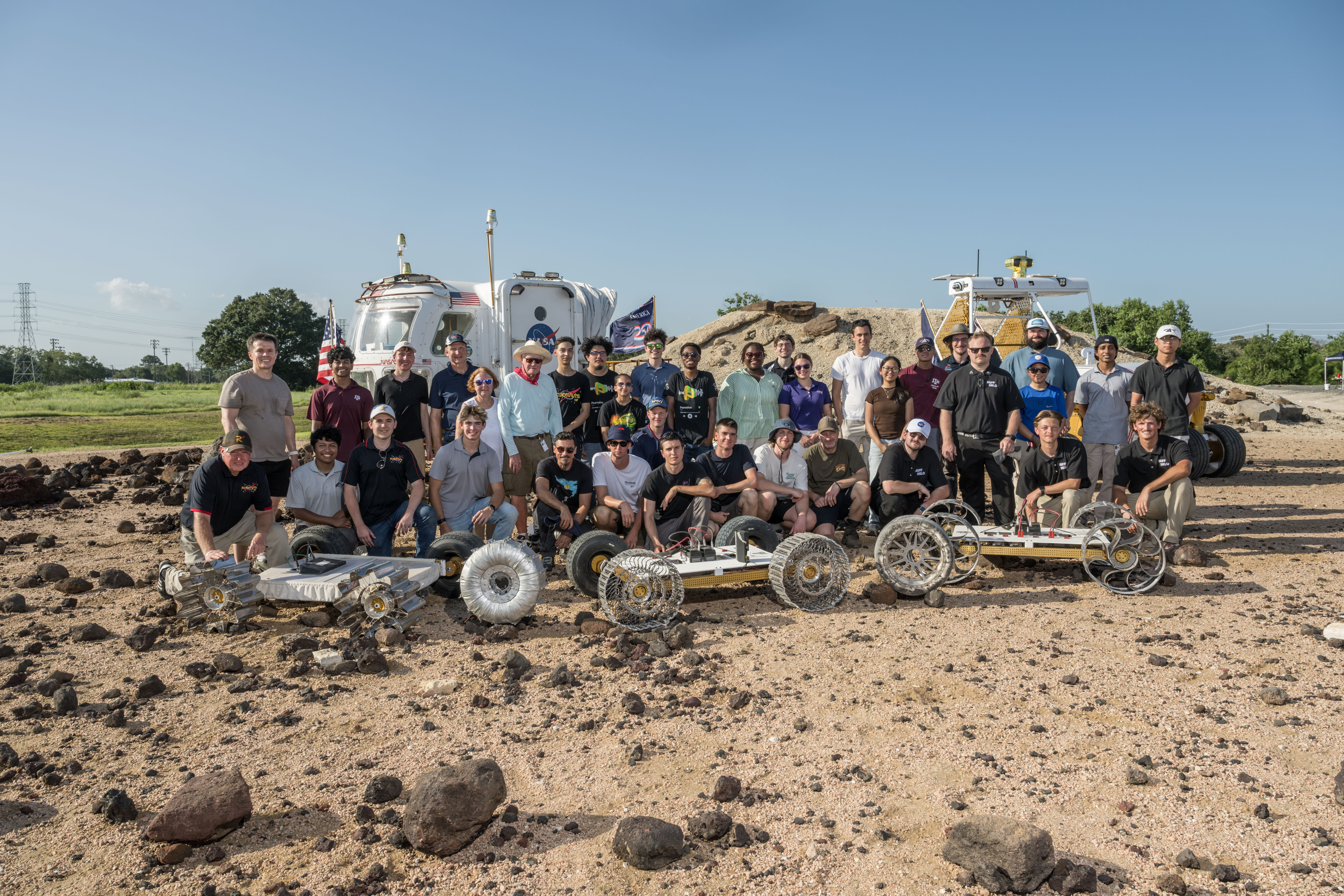
NASA’s Johnson Space Center hosted the final phase of the Rock and Roll with NASA Challenge on July 31, where five finalist teams tested their lunar rover wheel prototypes. The competition sought lightweight, durable, and scalable wheel designs capable of absorbing impacts, maintaining traction, and withstanding the Moon’s harsh environment. Prototypes were mounted on MicroChariot, a 45-kilogram test rover, and evaluated on NASA’s Rock Yard terrain courses to assess performance under varying conditions. Ed Herrera, a robotics engineer at Johnson and co-leader of the challenge, emphasized the importance of advancing wheel technology to expand exploration range and scientific capabilities on the lunar surface.
The five finalist designs represented diverse engineering approaches to lunar wheel mobility. Hellenic Technology of Robotics SA’s HTR Variable Flex Lunar Wheel adjusts stiffness based on terrain and vehicle needs, adapting technology originally developed for terrestrial applications. Hyperbola’s Hiper Wheel uses tensioned cables and a corrugated structure to provide spring-like flexibility without traditional spokes. Huff Helo Inc.’s Huff Helo Flexible Titanium Wheel employs formed titanium sheet metal, though testing revealed rigidity challenges in conforming to uneven terrain.
Deborah and Craige Payne’s Payne Aviation Wheel drew inspiration from aviation and early automobile tire designs, combining a pneumatic approach with historical concepts. The winning Scotch Pad Tyres prototype, designed by Daniel and Isaac Bloomfield, features a Nomex-based tire structure with an aluminum hub, deforming to conform to terrain while maintaining shape. The outer surface, treated with epoxy and corundum grit, enhances traction. Testing highlighted the need for varied wheel designs to address different lunar terrains, including loose material, rocks, and slopes, each imposing distinct demands on stability and performance.
NASA plans to further evaluate the finalist designs in thermal vacuum chambers to assess responses to lunar-like dust, vacuum, and extreme temperatures. Engineers may also test the wheels over extended distances and under varying loads and sizes. Lucien Junkin, a robotics engineer at Johnson and co-leader of the challenge, noted that the competition brought in innovative ideas from non-traditional industries, expanding the options for longer-duration lunar surface operations. The Common Robotics Project within Johnson’s Engineering Directorate conducted the challenge, with support from NASA’s Glenn Research Center and HeroX.