Hubble Solves Merger Mystery From Milky Way’s Early Years
NASA’s Hubble Space Telescope has uncovered definitive evidence of an ancient merger between the young Milky Way and a dwarf galaxy named LKH, extending the galaxy’s known history by 1.8 billion years.
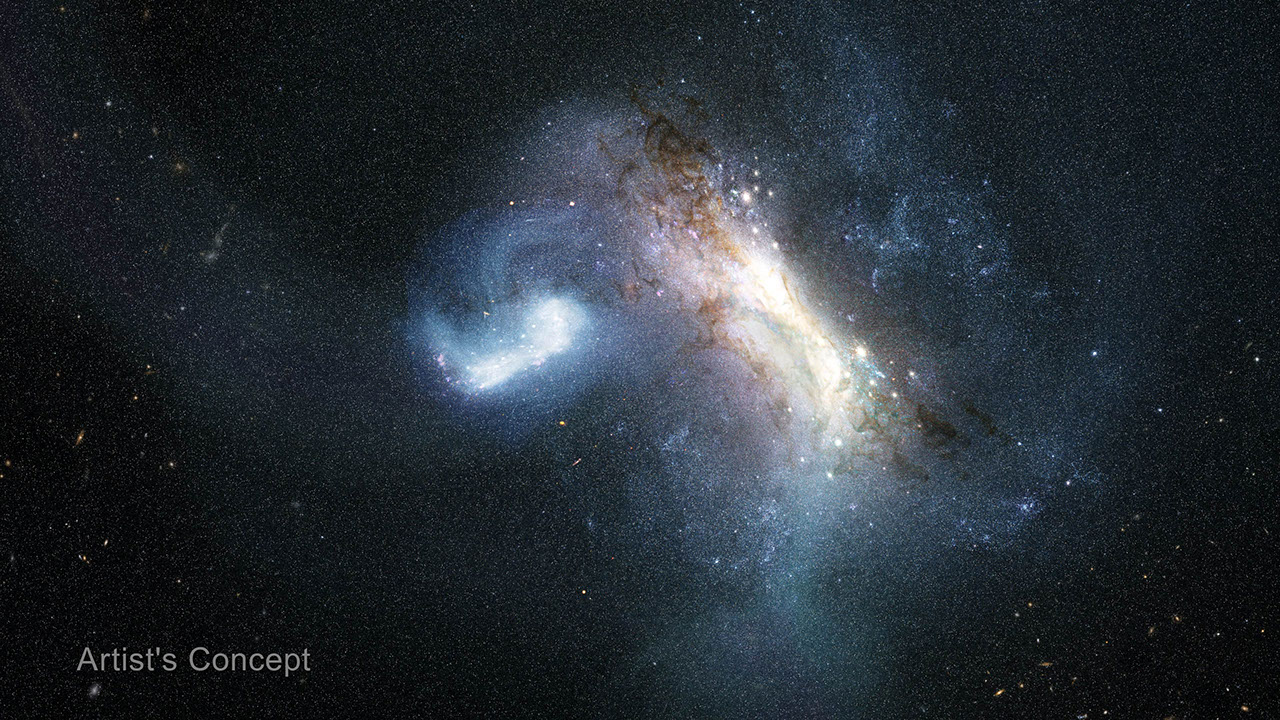
NASA’s Hubble Space Telescope has provided definitive evidence of a dwarf galaxy merging with the young Milky Way approximately 11.8 billion years ago, deepening our understanding of the galaxy’s early evolution. This discovery extends the Milky Way’s documented history 1.8 billion years further back in time than previously known, revealing a significant merger that shaped the galaxy’s structure. Researchers identified a distinct population of globular clusters in the Milky Way’s inner regions, tracing their origins to this ancient event. The findings were published Monday in the journal Nature Astronomy.
The study focused on 39 globular clusters within 20,000 light-years of the Milky Way’s center, where traces of the earliest mergers are most likely preserved. By analyzing the clusters’ ages and metallicity—abundance of elements heavier than helium—astronomers distinguished a third population of clusters not linked to later mergers. These clusters originated from a dwarf galaxy later named LKH, which contained roughly 500 million solar masses in stars at the time of its absorption.
The merger with LKH occurred when the Milky Way was significantly smaller, making the event a pivotal moment in its formation. The absorbed galaxy contributed a substantial fraction of the Milky Way’s mass at the time, altering its stellar disk and influencing subsequent mergers. Lead author Davide Massari noted that the findings challenge the assumption that early Milky Way stars formed solely within the galaxy, emphasizing the role of external contributions. The research relied on high-resolution Hubble data combined with measurements from ESA’s Gaia mission to achieve unprecedented precision.
The team plans to expand this work by studying additional globular clusters to reconstruct the full history of the Milky Way’s mergers. Co-author Fernando Aguado-Agelet highlighted Hubble’s ongoing role in uncovering distant merger events, reinforcing its contribution to fundamental astrophysical research. The telescope, a collaboration between NASA and ESA, continues to operate after more than three decades, delivering ground-breaking insights into the universe’s evolution.