Ancient Milky Way Merger
NASA announced evidence of an ancient merger between the Milky Way and a dwarf galaxy called LKH, dating back 12 billion years, extending the galaxy’s known history by 1.8 billion years.
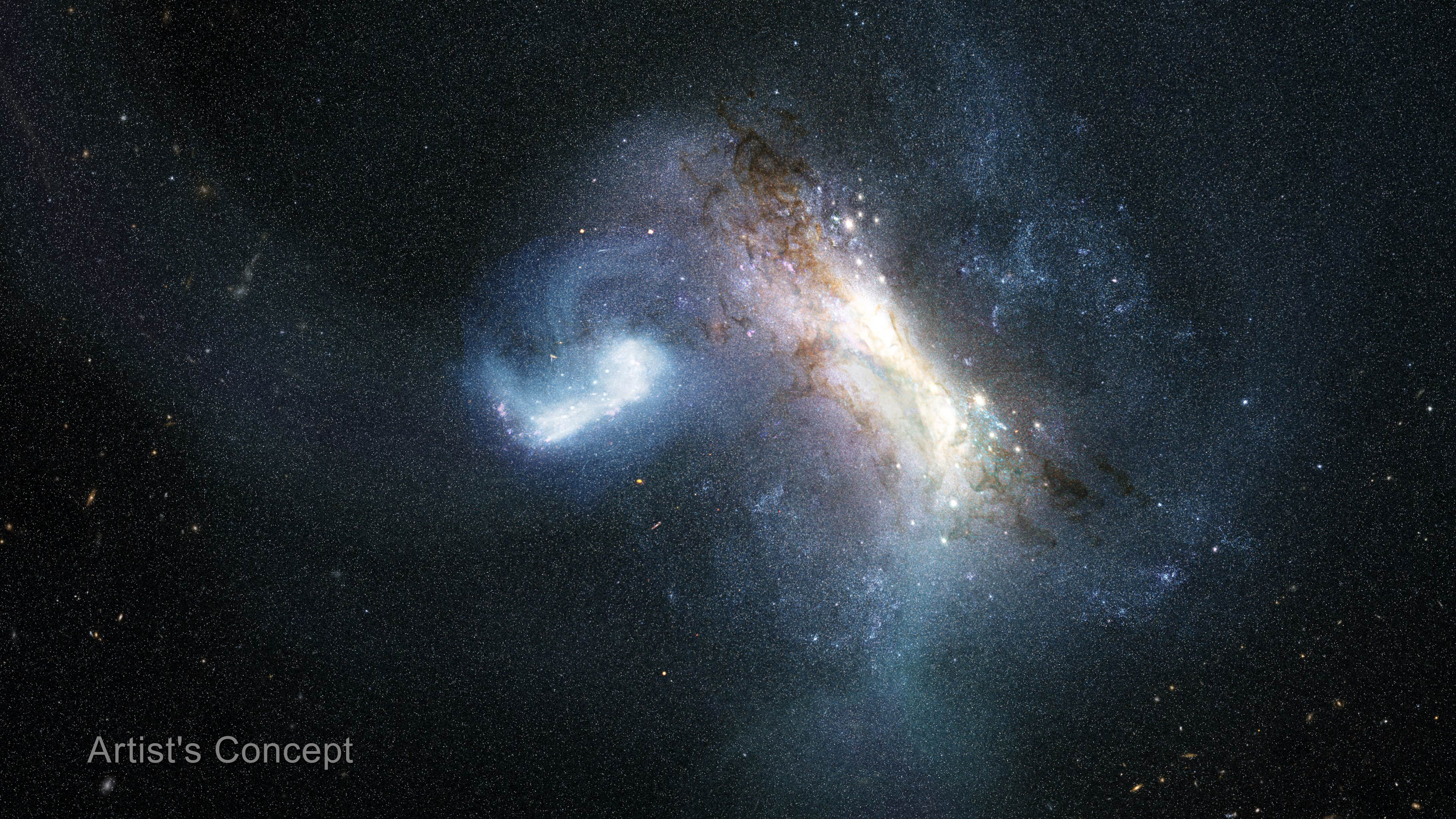
Astronomers using data from NASA’s Hubble Space Telescope have uncovered definitive proof of a collision between the Milky Way and a dwarf galaxy named LKH. The merger occurred approximately 12 billion years ago, during the earliest stages of the Milky Way’s formation. This discovery was published in the journal Nature Astronomy and represents the oldest known merger event involving our galaxy. The findings provide new insights into the dynamic processes that shaped the Milky Way’s structure and evolution.
The study’s lead researcher noted that the merger’s timing aligns with a period when the Milky Way was rapidly assembling its stellar population. By analyzing Hubble’s observations, scientists identified distinct chemical signatures and stellar motions that trace back to the dwarf galaxy LKH. This evidence helps reconstruct the galaxy’s early history, which was previously poorly understood due to the lack of direct observational data from such ancient events.
The discovery extends the timeline of the Milky Way’s merger history by 1.8 billion years, pushing back the earliest confirmed interaction to just 1.8 billion years after the Big Bang. Researchers emphasized that this merger likely contributed to the growth of the Milky Way’s central bulge and thick disk, influencing the distribution of stars and gas. The findings underscore the role of galactic collisions in shaping the universe’s largest structures.
NASA’s Hubble Space Telescope played a critical role in detecting the merger’s remnants through high-resolution imaging and spectroscopic analysis. The telescope’s capabilities allowed astronomers to distinguish between stars originating from the Milky Way and those from the dwarf galaxy LKH. This breakthrough highlights the importance of long-term space missions in uncovering the history of our cosmic neighborhood and advancing our understanding of galaxy formation.