NASA’s Lunar Development and Test Facility Prepares Artemis Hardware for Moon
NASA’s Lunar Development and Test Facility at Johnson Space Center is testing Artemis hardware to address challenges posed by abrasive lunar dust before astronauts return to the Moon.
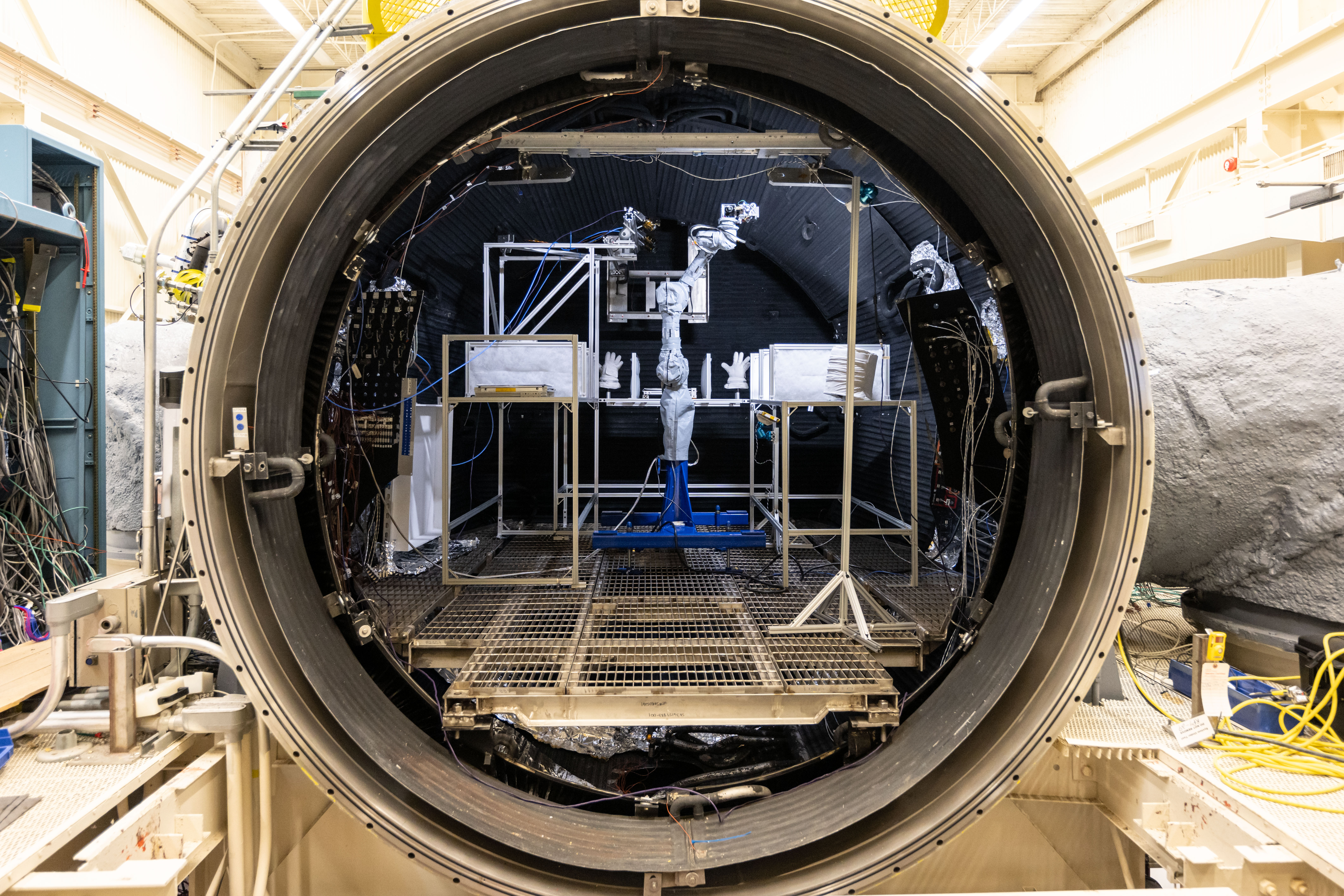
NASA’s Lunar Development and Test Facility at Johnson Space Center in Houston is preparing hardware for the Artemis program by addressing the challenges of lunar dust. Unlike Earth sand, lunar dust is sharp, abrasive, and clings to surfaces, posing risks to equipment, spacesuits, and astronaut health. Engineers at the facility are developing and testing mitigation strategies to ensure hardware can withstand the Moon’s harsh environment during future missions.
The facility, managed by NASA engineers, includes specialized systems for simulating lunar conditions. It features a dust containment laboratory, a 3-foot cube vacuum chamber, and a 15-foot thermal vacuum chamber where hardware is tested using lunar regolith simulant. Engineers evaluate spacesuits, spacecraft components, and mechanisms under realistic lunar conditions to assess performance and durability.
NASA’s Propulsion and Power Division developed the systems enabling these simulations, including a closed-loop nitrogen system to recreate the lunar environment. Engineers are also advancing techniques to extract resources from lunar regolith, such as oxygen for astronauts and liquid oxygen for rocket propellant, supporting long-duration lunar exploration.
The facility’s exterior features a 2024 mural by artist Sebastian Boileau depicting lunar exploration, and a new 3D virtual tour allows public access to see where engineers prepare technologies for the Artemis program. The facility plays a critical role in advancing lunar exploration and innovation.