NASA Completes Astronaut-Deployed Science Instrument for Lunar Surface
NASA completed the Lunar Environment Monitoring Station (LEMS), a deployable seismometer package for Artemis astronauts to place near the lunar South Pole, marking a step toward sustained lunar science.
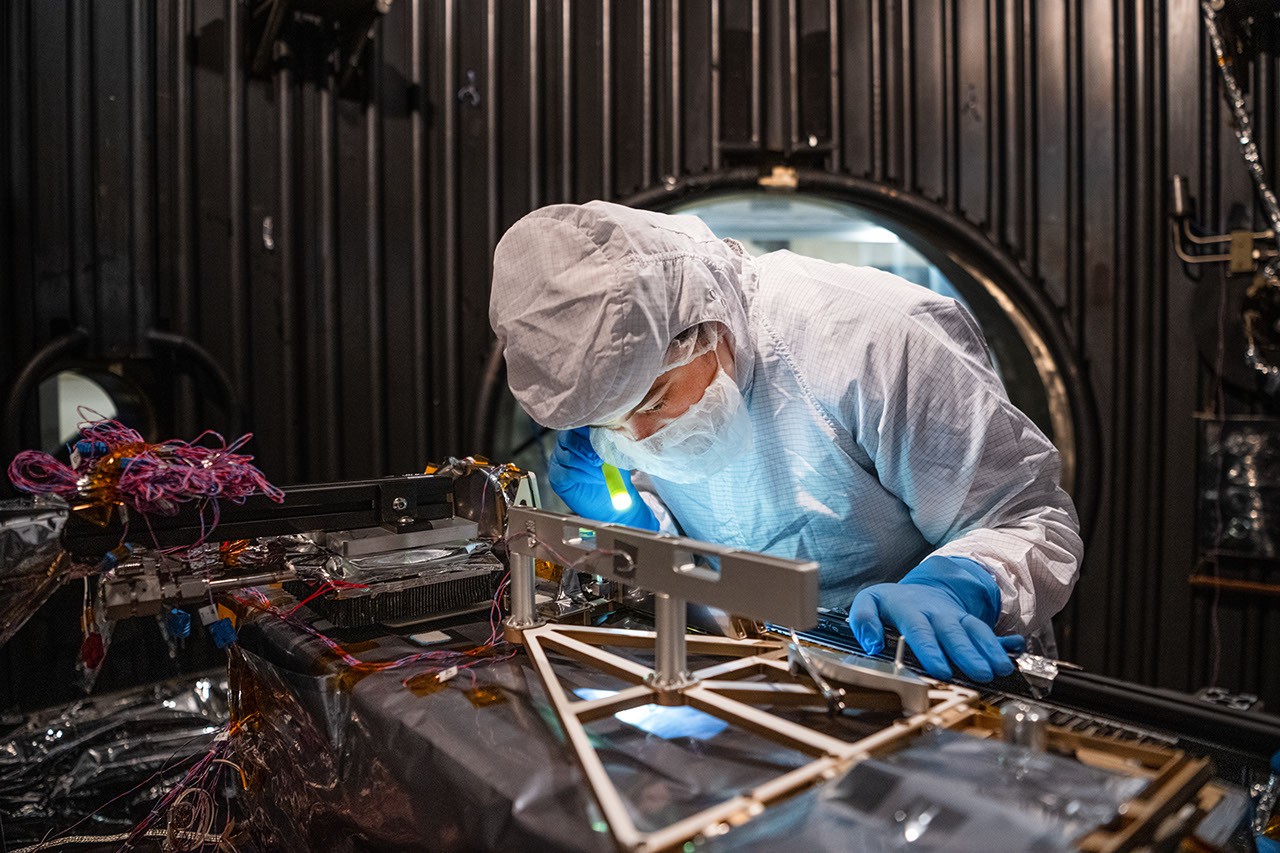
NASA announced the completion of the Lunar Environment Monitoring Station (LEMS), a science instrument designed to be deployed by Artemis astronauts on the Moon’s surface. The payload includes two advanced seismometers to detect moonquakes and meteorite impacts, helping researchers study the Moon’s interior and assess seismic risks for future missions. LEMS is built to operate independently after deployment, using solar power and thermal management to survive the extreme temperature swings near the lunar South Pole. The instrument will remain in a clean room at NASA’s Goddard Space Flight Center until assigned to an Artemis mission for lunar deployment.
Joel Kearns, deputy associate administrator for exploration in NASA’s Science Mission Directorate, highlighted LEMS as a key step in expanding lunar surface science. The instrument builds on Apollo-era seismometer networks, which recorded over 13,000 moonquakes between 1969 and 1977, but LEMS will be the first deployed by astronauts and equipped with modern, energy-efficient technology. Mehdi Benna, LEMS lead scientist at NASA Goddard, described the project as a long-term platform for lunar exploration, designed to be adaptable and capable of operating autonomously for years.
LEMS underwent rigorous testing to ensure survival during launch, transit, and the Moon’s harsh surface conditions, including extreme cold and radiation. Engineers verified the payload’s mechanical and electrical safety for astronaut handling and confirmed its ability to operate through the two-week lunar night without external power. The instrument uses advanced insulation and thermal regulators instead of radioisotope heaters, reducing mass and power demands while maintaining functionality in temperatures as low as minus 400 degrees Fahrenheit.
The LEMS project is led by the University of Maryland Baltimore County and University of Maryland College Park, with technical implementation by NASA Goddard. The University of Arizona and Silicon Audio, Inc. provided the seismometers, while Morehead State University will operate the instrument on the surface and Washington University in St. Louis will manage data processing and distribution to the scientific community.