Curiosity Blog, Sols 5056-5062: Charging Back Up!
NASA’s Curiosity rover paused drilling to recharge power, conducting remote science and testing new energy-saving parallel operations before resuming sample analysis at the Nazca drill site.
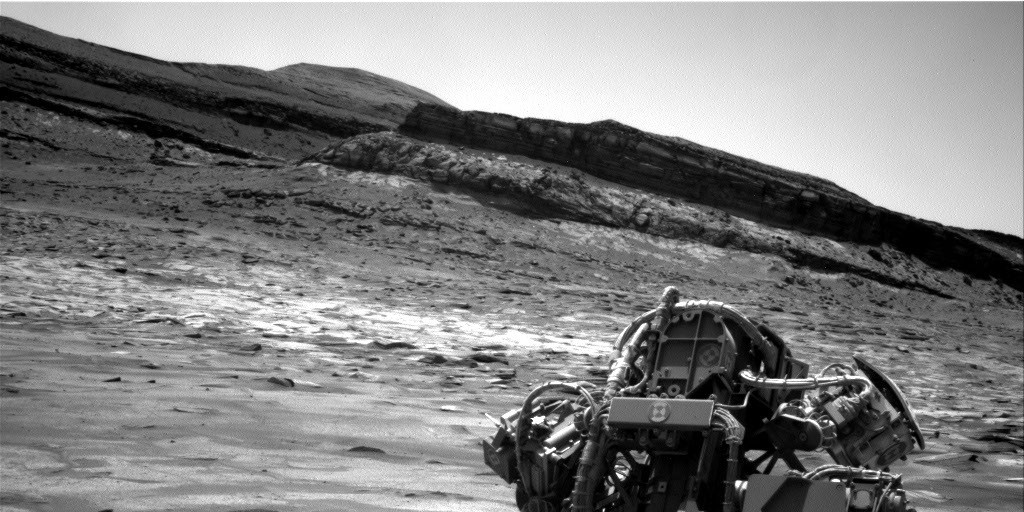
NASA’s Curiosity rover entered a planned recharge phase over three sols, pausing drilling activities to restore power reserves before continuing its Nazca drill campaign. The rover had already drilled a hole, analyzed tailings with ChemCam, and performed multiple sample dropoffs to instruments inside its body. Remaining tasks include additional sample analysis, drill cleanup activities like the RAGE shake maneuver, and detailed imaging of the drill site and tailings. Power-intensive operations were minimized to ensure energy-positive sols ahead of resumed drilling.
The plan included standard morning science blocks alongside new engineering tests, such as parallelism experiments to reduce power use by running two activities simultaneously. On sol 5061, engineers tested running CheMin’s data transfer alongside orbiter communications to assess efficiency gains. Remote science activities, including ChemCam observations and Mastcam imaging of targets like Titicaca and Pampas, were conducted despite the recharge focus. Twilight imaging and dust devil studies were also included to maintain scientific productivity.
A key engineering test on sol 5061 evaluated the safety and feasibility of executing two high-power activities at once, a strategy aimed at conserving energy as the rover’s power output declines over time. The CheMin “Get Data” activity, which transfers science data to flight computers, was paired with downlink communications to an orbiter. Results are pending analysis by the engineering team to confirm the approach’s viability for future operations.
Curiosity’s Nazca drilling campaign remains ongoing, with the rover preparing to complete remaining sample dropoffs and cleanup activities before concluding the effort. Imaging and remote sensing data continue to document the drill hole and surrounding layered rocks, supporting ongoing analysis of the crystal formations. The pause allowed the team to balance power conservation with scientific output ahead of the campaign’s final stages.