Curiosity Blog, Sols 4982–4987: Back to Our Regularly Scheduled Programming
NASA’s Curiosity rover resumed its planned ascent of Mount Sharp after a brief detour, conducting geology and environmental monitoring during sols 4982–4987.
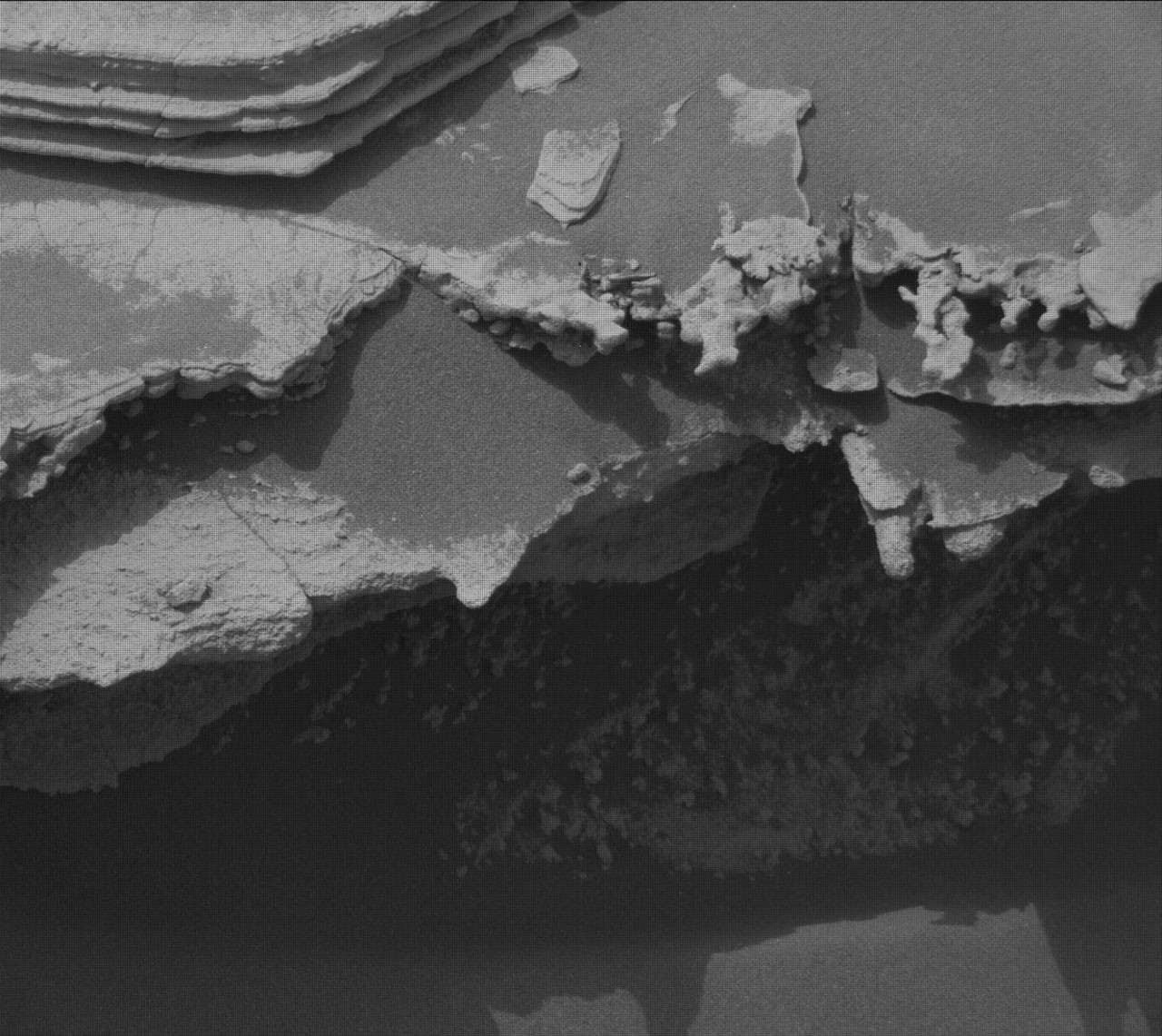
NASA’s Curiosity rover returned to its planned route up Mount Sharp after a short investigation of an erosional surface feature. The team completed contact science on bedrock targets using MAHLI and APXS instruments, including reacquiring images for a mosaic of the underside of the feature Tres Morros. ChemCam performed laser spectroscopy on nearby bedrock targets, while Mastcam captured detailed mosaics of geological formations named Los Toldos and Los Ladrillos.
After a 100-foot (30-meter) drive, Curiosity reached a new location where contact science continued on targets Mamorecillo and Aguas Claras, despite a slight wheel positioning challenge. ChemCam analyzed three additional targets, including a dark-toned resistant layer named Yura Kasa, with Mastcam documenting the results. Environmental monitoring intensified to track atmospheric dust levels, including tau measurements and dust-devil surveys.
Dust storm monitoring dominated the week’s activities, with Mastcam, APXS, and Navcam conducting multiple observations to assess atmospheric opacity and detect dust devils. APXS also performed an overnight atmospheric measurement. The rover’s planned 150-foot (47-meter) drive southwest positioned it for continued ascent of Mount Sharp.
Curiosity remains focused on climbing Mount Sharp while balancing science and environmental monitoring. The team will resume operations Monday with a new plan combining contact science, remote sensing, and driving. The rover continues to operate in Gale Crater, where seasonal changes are reducing dust storm risks.