NASA’s Titan-Bound Dragonfly Rotorcraft Gets Its Eyes
NASA’s Dragonfly rotorcraft, bound for Saturn’s moon Titan, has received its DragonCam imaging system, enabling detailed surface and panoramic views during flight and on the ground.
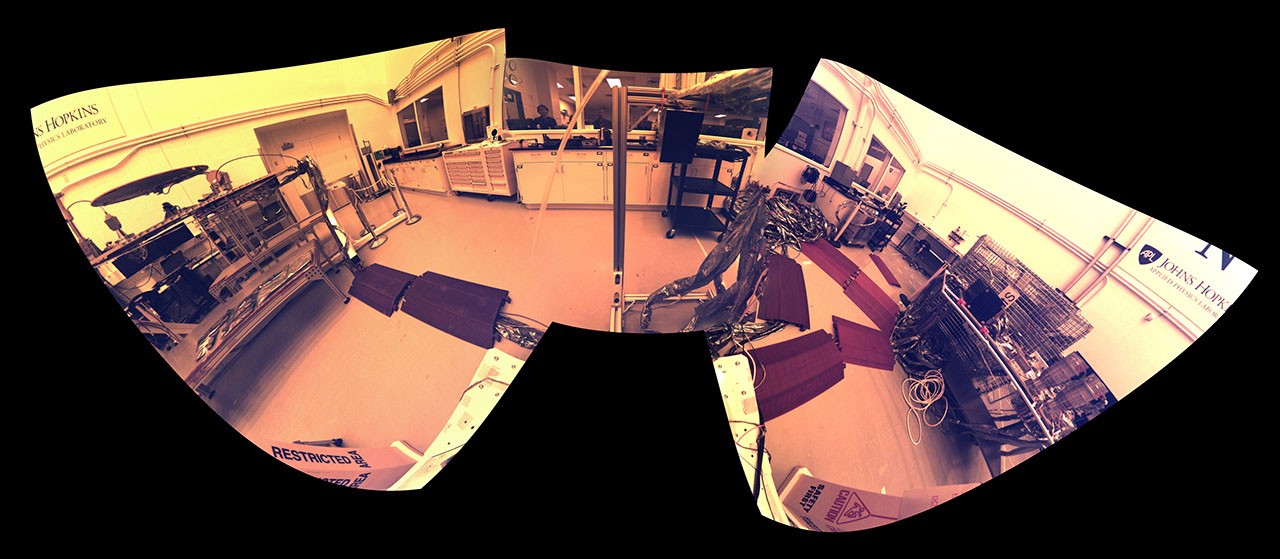
NASA’s Dragonfly rotorcraft, bound for Saturn’s moon Titan, has begun receiving its science instruments at the Johns Hopkins Applied Physics Laboratory in Maryland. The first to arrive is DragonCam, a suite of seven cameras built by Malin Space Science Systems to capture Titan’s surface at multiple scales during flight and while stationary. Each camera is housed in insulated enclosures to withstand Titan’s extreme cryogenic environment, where temperatures drop to minus 290 degrees Fahrenheit. An LED array integrated into the system spans infrared to ultraviolet wavelengths, allowing scientists to observe surface materials and potential organic molecules that fluoresce under ultraviolet light.
The DragonCam system includes two forward-mounted cameras—a wide-angle and medium-angle camera—that provide stereoscopic views of Titan’s terrain ahead of the lander. Two side-mounted wide-angle cameras capture panoramic landscape images, while two downward-facing cameras assess landing sites for safety before deploying the sample-collecting tool, DrACO. A high-resolution microscopic imager will examine millimeter-sized sand grains at the drill site, offering detailed context for collected samples.
Elizabeth Turtle, Dragonfly’s principal investigator at APL, highlighted the significance of DragonCam’s capabilities, noting it will provide both detailed and sweeping views of Titan’s landscape. The system’s ability to operate during Titan’s eight-Earth-day-long night also enhances its scientific utility. Michael Ravine, DragonCam’s development manager, emphasized the milestone of integrating the cameras onto the spacecraft, marking progress toward the mission’s unprecedented exploration of Titan.
Additional components for Dragonfly’s other instruments, including DraGNS, DraGMet, DraMS, and DrACO, are scheduled for delivery and integration over the coming months. Dragonfly is set to launch in July 2028 and arrive at Titan in late 2034, following years of development and testing to prepare for its mission to study the moon’s geology and potential habitability.