NASA's B777 Gets New Coat of Paint
NASA unveiled a newly painted Boeing 777 intended to replace the retired DC-8 as a flying laboratory for Earth science missions starting in 2027 from Langley Research Center.
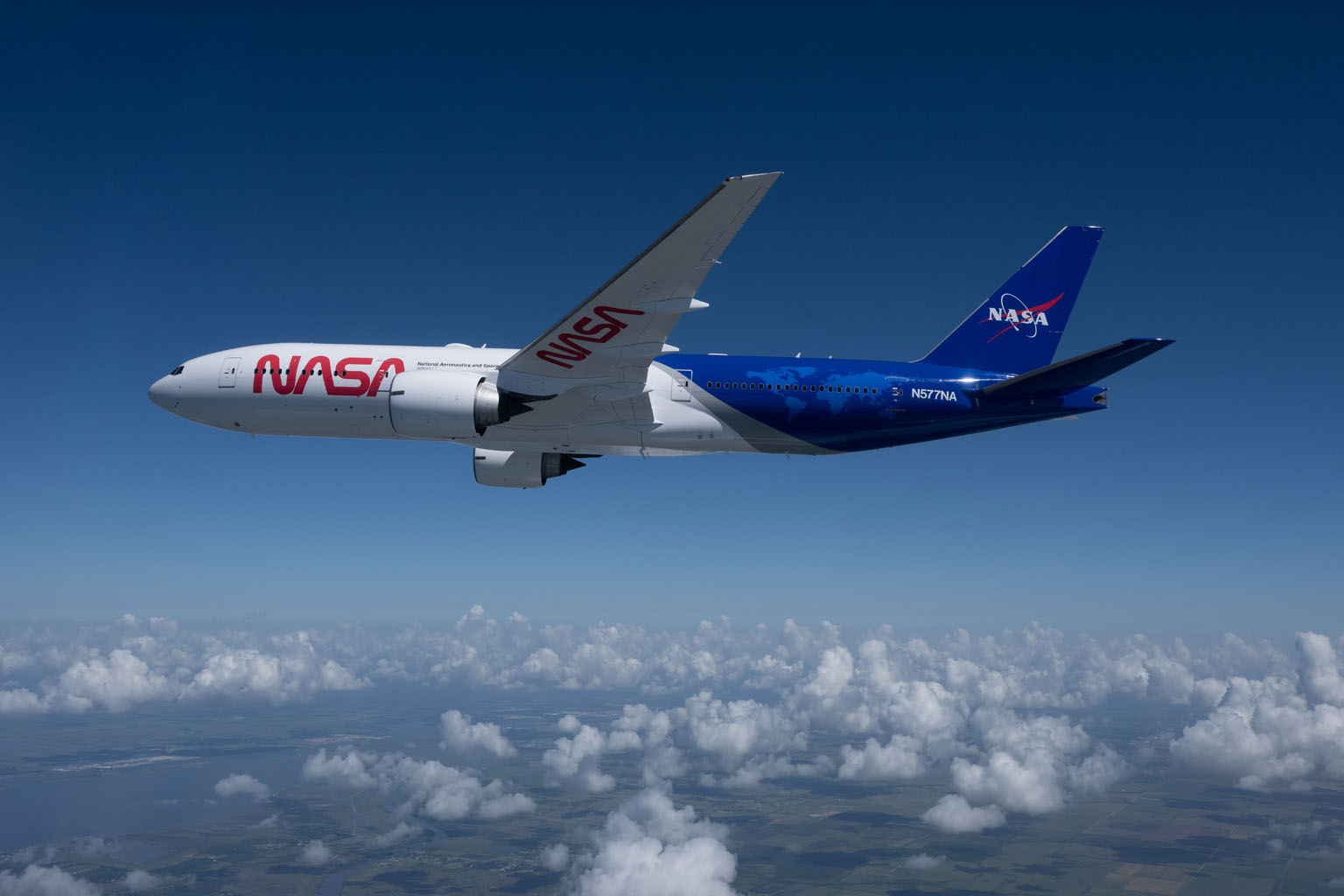
NASA displayed its Boeing 777 sporting a fresh coat of paint in an image dated August 11, 2026, marking a transition from the agency’s retired DC-8 aircraft. The DC-8, which concluded operations in 2024, had served as NASA’s primary airborne science platform for decades. The replacement aircraft will operate from NASA’s Langley Research Center in Hampton, Virginia, beginning in 2027. Its primary role will be as a flying laboratory supporting Earth science research and mission validation.
The B777 will carry advanced sensors and instruments to collect atmospheric and surface data during extended flight campaigns. These missions will focus on validating satellite sensor performance and improving Earth system models used for climate and environmental assessments. The aircraft’s global range will enable data collection across diverse regions, including remote and understudied areas. Operational flexibility will allow rapid deployment to respond to emerging scientific needs or natural events.
NASA officials stated the B777 was selected for its extended range, payload capacity, and fuel efficiency compared to the DC-8. The aircraft’s configuration will support multiple scientific payloads simultaneously, enhancing efficiency for multi-disciplinary research teams. Integration of new avionics and communication systems will improve real-time data transmission to ground teams during flights.
The transition to the B777 aligns with NASA’s broader strategy to modernize its airborne science fleet while maintaining continuity in long-term Earth observation programs. The aircraft’s first missions are expected to support calibration and validation efforts for upcoming satellite missions, including those focused on atmospheric composition and surface dynamics. NASA has not yet announced specific flight schedules or initial deployment locations.