NASA Opens New Flight Dynamics Research Facility in Virginia
NASA inaugurated the Flight Dynamics Research Facility at Langley Research Center, Virginia, marking its first new wind tunnel in over 40 years to advance aircraft, rocket, and spacecraft testing.
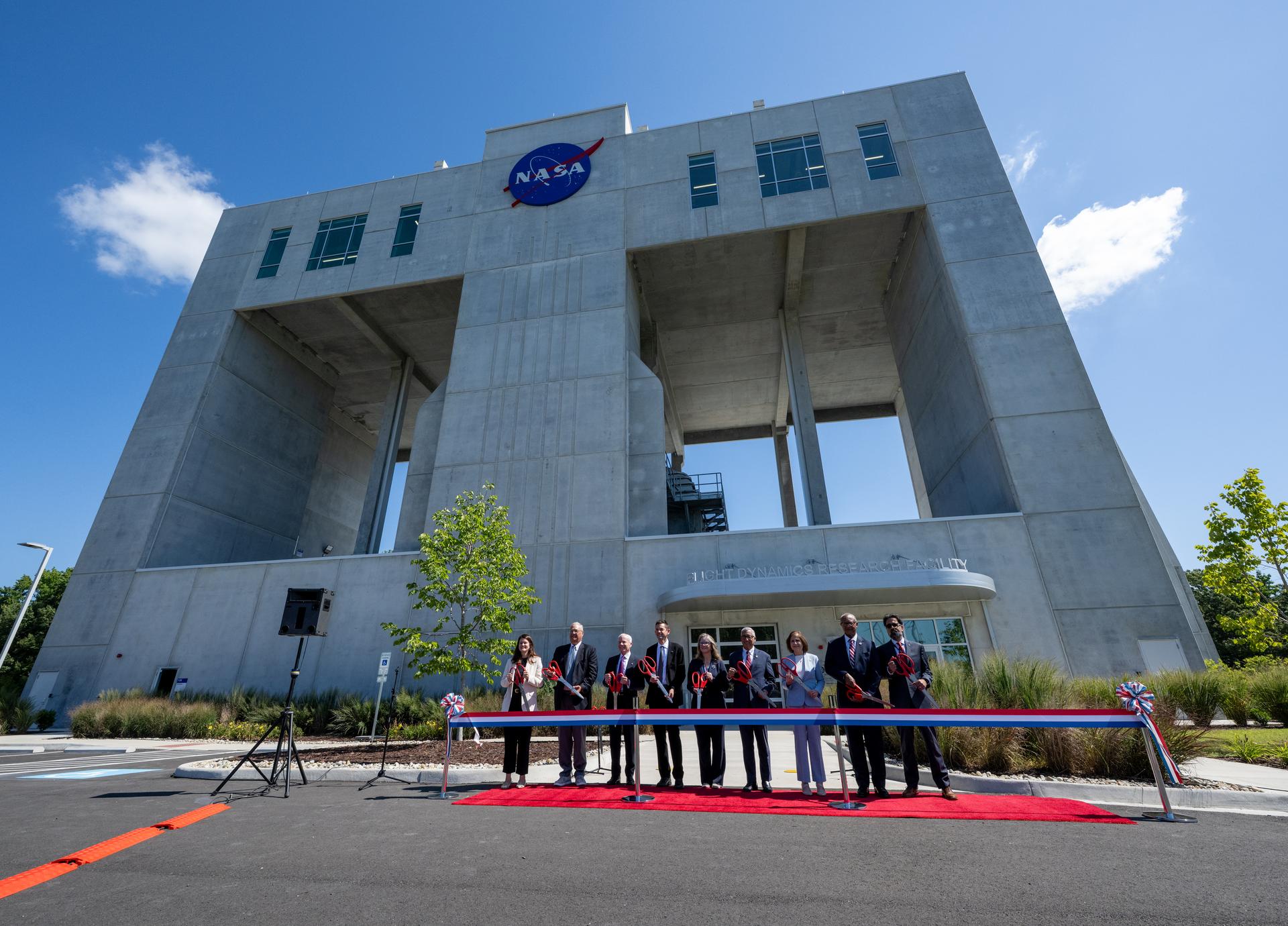
NASA opened the Flight Dynamics Research Facility at its Langley Research Center in Hampton, Virginia, providing a modern wind tunnel for testing aircraft, rockets, and spacecraft. The facility replaces outdated infrastructure with energy-efficient systems, reducing maintenance costs while enhancing testing flexibility for future flight technologies. Researchers can now conduct both free-flight and mounted tests on scale models, improving data accuracy and enabling simulations of full-scale vehicles at higher altitudes. The project was developed in partnership with the U.S. General Services Administration as part of a 20-year campus revitalization plan at Langley.
The new facility combines capabilities from two historic NASA Langley wind tunnels—the 20-Foot Vertical Spin Tunnel and the 12-Foot Low-Speed Tunnel—into a single 25,000-square-foot building. Its 20-foot diameter test chamber allows for larger, more detailed models, while a top airspeed of 117 miles per hour enables simulations of heavier vehicles in flight. The wind tunnel is powered by four 750-horsepower motors with carbon fiber fan blades, enabling precise airspeed adjustments during free-flight tests. These upgrades support research into autonomous flight vehicles, drones, and experimental aircraft designs.
NASA Administrator Jared Isaacman stated the facility will help maintain U.S. leadership in aviation and space exploration by enabling testing of technologies that shape future flight systems. Dr. Trina Dyal, NASA Langley center director, emphasized the facility’s role in advancing aeronautics and exploration through modernized testing capabilities. Edward C. Forst, GSA administrator, highlighted the facility’s role in supporting federal missions and long-term technological advancements. The facility is part of NASA’s broader Artemis program efforts, including testing vehicle designs for lunar missions and Mars atmospheric flight.
The Flight Dynamics Research Facility will support NASA’s aeronautics and space exploration goals, including testing entry, descent, and landing systems for lunar missions and Mars aircraft. Managed under NASA’s Aerosciences Evaluation and Test Capabilities portfolio, the facility strengthens industry and academic partnerships while extending the agency’s aerospace leadership. Its capabilities will help reduce mission risks and validate new designs for commercial, military, and experimental aircraft, ensuring continued U.S. dominance in aeronautics and space exploration.