NASA Model Wing Lights Up During First Pressure Sensitive Paint Tests
NASA conducted first-of-its-kind wind tunnel tests using unsteady Pressure Sensitive Paint to analyze airflow over a model wing, marking a milestone for future aircraft design research.
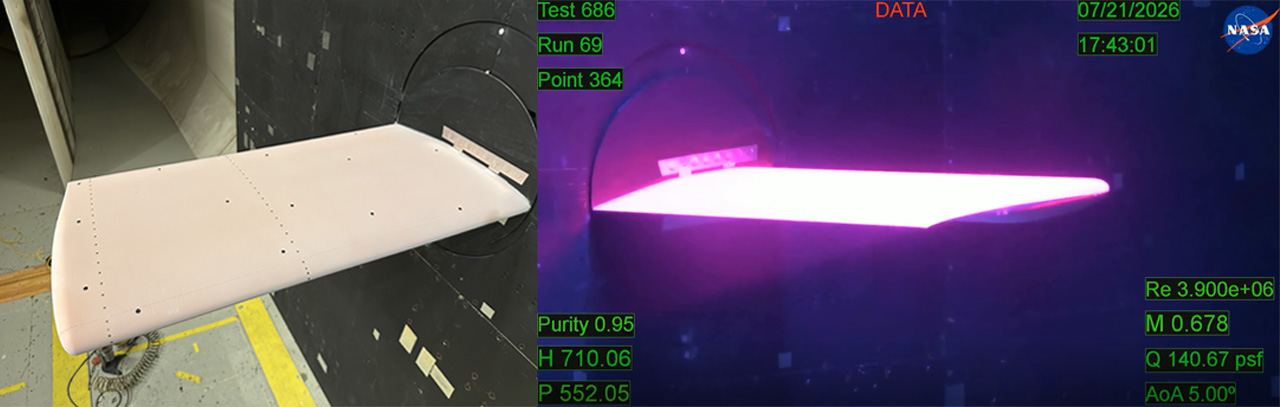
NASA researchers at Langley Research Center in Hampton, Virginia, performed groundbreaking tests in the Transonic Dynamics Tunnel using unsteady Pressure Sensitive Paint to study airflow around a Benchmark Supercritical Wing model. The specialized paint glowed pink-purple under ultraviolet light, while high-speed cameras recorded pressure changes in real time. This approach allowed researchers to capture dynamic aerodynamic data that traditional methods could not detect.
The Benchmark Supercritical Wing serves as a universal model for improving computer simulations rather than representing a specific aircraft type. The paint’s brightness varies with air pressure, enabling precise measurement of aerodynamic forces on the wing. This test combined two NASA-developed tools to enhance wind tunnel testing capabilities for future aircraft and rocket designs.
This marks the first use of unsteady Pressure Sensitive Paint on a large-scale, freely moving model in a low-oxygen environment, made possible by the Transonic Dynamics Tunnel’s unique testing conditions. The achievement opens opportunities for testing flexible aircraft models designed to adapt during flight for improved efficiency and performance.
Researchers at NASA Langley and Ames Research Center have been developing this technique for years, considering it a vital tool for wind tunnel applications. The milestone sets the stage for further advancements in aircraft design, simulations, and the future of flight technology.