NASA’s Newest Wind Tunnel Opens at NASA Langley
NASA inaugurated its first new wind tunnel in over four decades on July 31, 2026, at Langley Research Center to support Artemis lunar missions and Moon Base development.
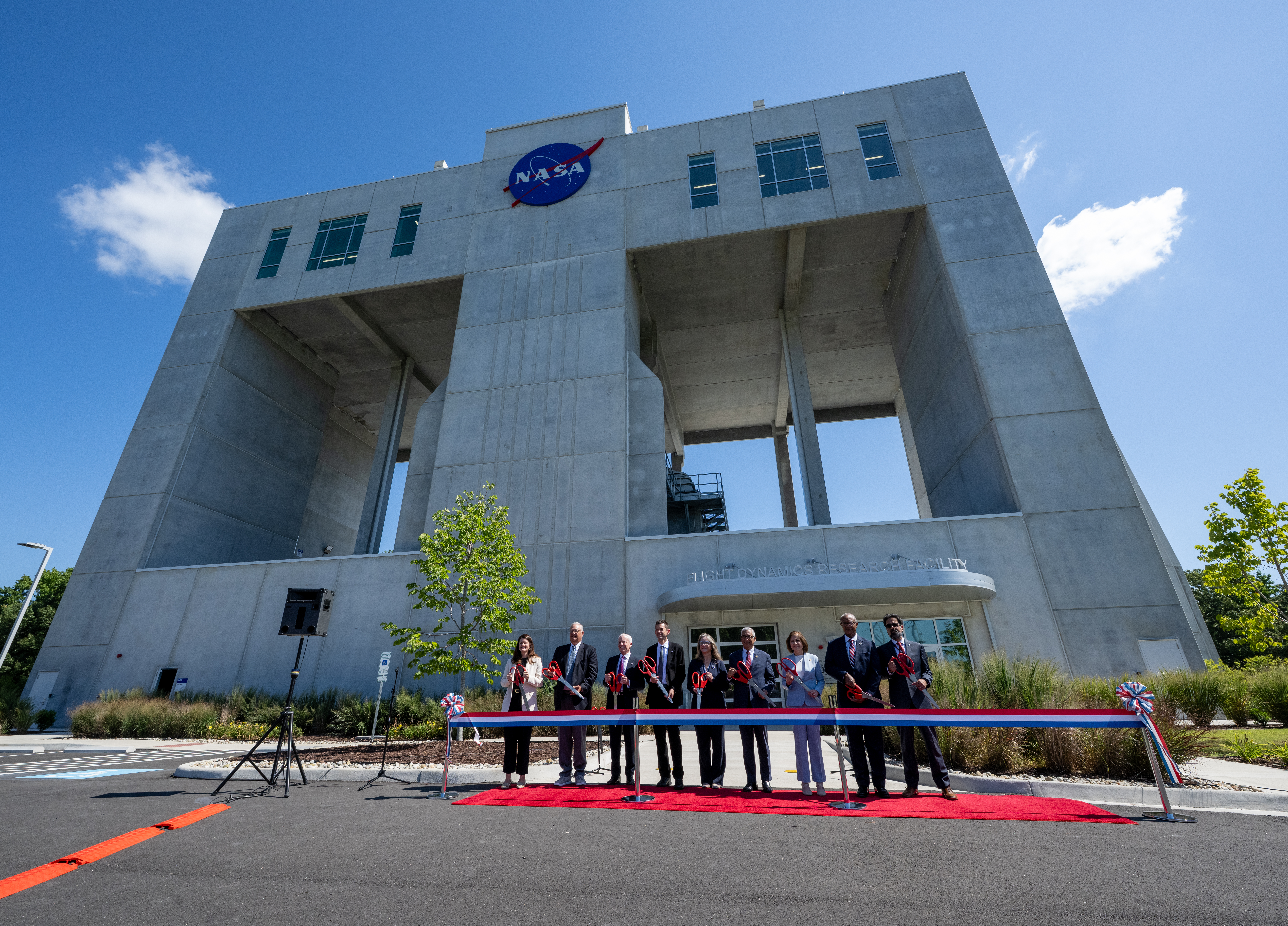
NASA and Virginia officials marked the opening of the Flight Dynamics Research Facility at NASA’s Langley Research Center in Hampton, Virginia, on July 31, 2026. The facility is the agency’s first major new wind tunnel since the 1980s, designed to enhance aerodynamic testing capabilities critical for future missions. Officials highlighted its role in advancing research aligned with the Artemis program’s goal of establishing a sustainable human presence on the Moon.
The Flight Dynamics Research Facility replaces aging infrastructure and introduces modern testing methods to improve efficiency and accuracy in aerodynamic studies. Engineers will use the tunnel to simulate conditions for spacecraft entering planetary atmospheres, including lunar return trajectories. The facility’s capabilities are expected to support both crewed and robotic missions under NASA’s broader exploration strategy.
Virginia Governor Glenn Youngkin and NASA Administrator Bill Nelson attended the ribbon-cutting ceremony, emphasizing the facility’s importance to regional and national aerospace initiatives. The state contributed funding and infrastructure support for the project, which aligns with Virginia’s expanding role in the U.S. space industry. The facility will also provide training opportunities for students and researchers in aeronautics and space technology.
The new wind tunnel is part of NASA’s long-term plan to modernize its research infrastructure and maintain U.S. leadership in aerospace innovation. While the facility’s primary focus is on lunar missions, its applications extend to commercial aviation and defense research. NASA has not yet announced a timeline for full operational capacity or specific projects scheduled for the facility.