Uncovering the Valleys Hidden Below Greenland’s Ice
NASA-led researchers have unveiled a new map of Greenland’s hidden bedrock, revealing previously unknown valleys beneath the ice sheet that may reshape understanding of the island’s geological past and future ice flow patterns.
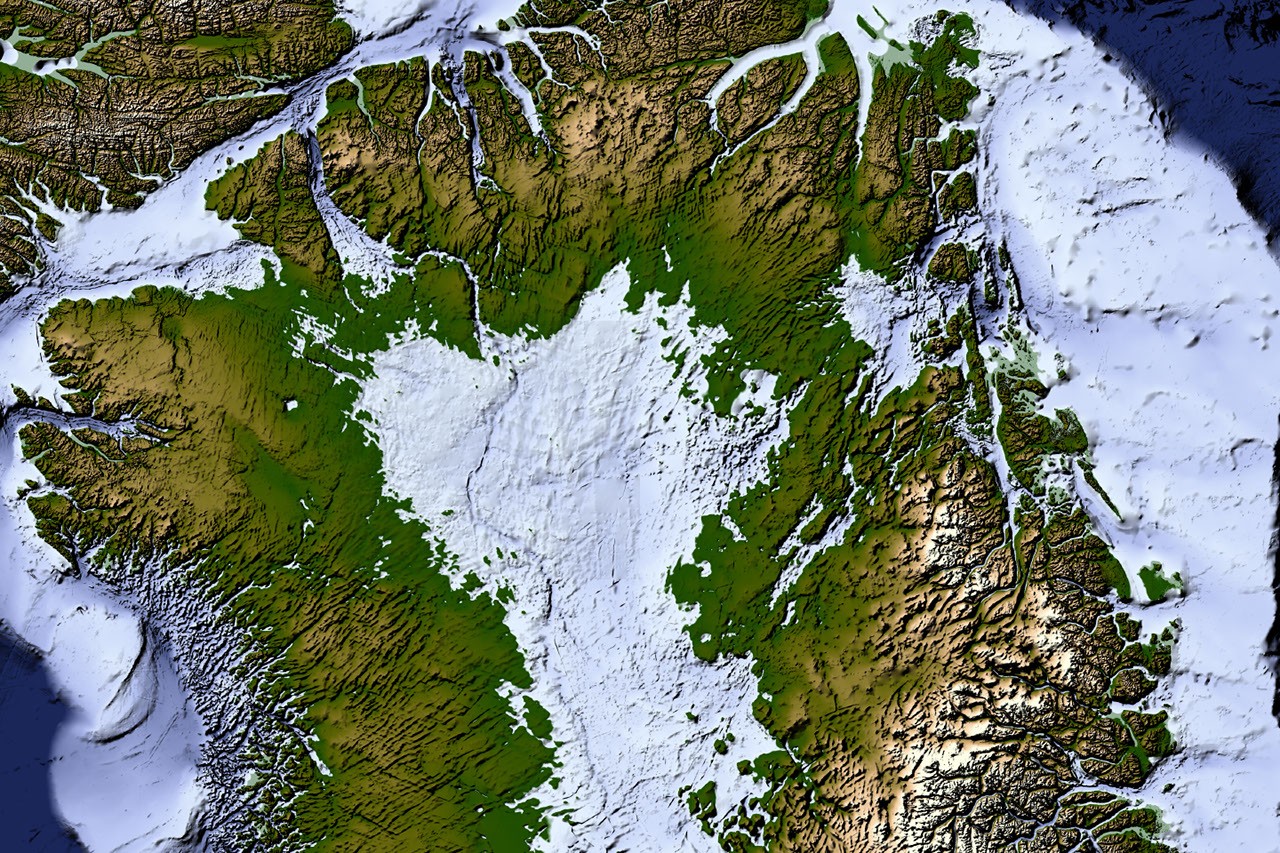
A NASA-led team has produced the most detailed map yet of the terrain beneath Greenland’s ice sheet, uncovering hundreds of previously unmapped valleys. The new model uses subtle surface features detected by satellites to infer the shape of the bedrock buried under more than 3 kilometers of ice. Researchers manually identified 1,943 subglacial valleys, with about a third newly documented, offering a clearer view of a landscape never seen directly by humans.
The map reveals a network of valleys that predate much of the ice sheet, providing new clues about Greenland’s geological history. Many valleys appear to originate in the southern and eastern highlands, where the ice sheet is thought to have first formed. Near the eastern highlands, the data show a mountain range beneath the ice, with relief increasing toward the coast, suggesting alpine landforms may have persisted since at least the Pliocene.
Some valleys in west-central Greenland are long, straight, and aligned in a southwest-northeast direction, hinting at tectonic influences that may have guided their formation. Researchers also found wide branching angles in the valleys, indicating that groundwater networks likely contributed to erosion before the ice sheet developed, adding complexity to the island’s geological story.
Understanding these valleys is critical for predicting future ice sheet behavior, as ice flow concentrates in these pathways, accelerating glacier movement toward the coast. Scientists expect that as the ice sheet retreats, flow will continue to focus along existing valleys, reinforcing cycles of erosion and ice loss. The findings aim to improve future versions of BedMachine Greenland, a high-resolution dataset used to model ice dynamics.