Ian Buck Kicks Off NVIDIA’s Week at SC26 as Science Enters the Age of Agents
NVIDIA unveiled AI agents, Nemotron for Science, Rubin HPC GPU, expanded Vera CPUs, and a quantum co-design platform at SC26, emphasizing simulation, AI, and quantum integration for research.
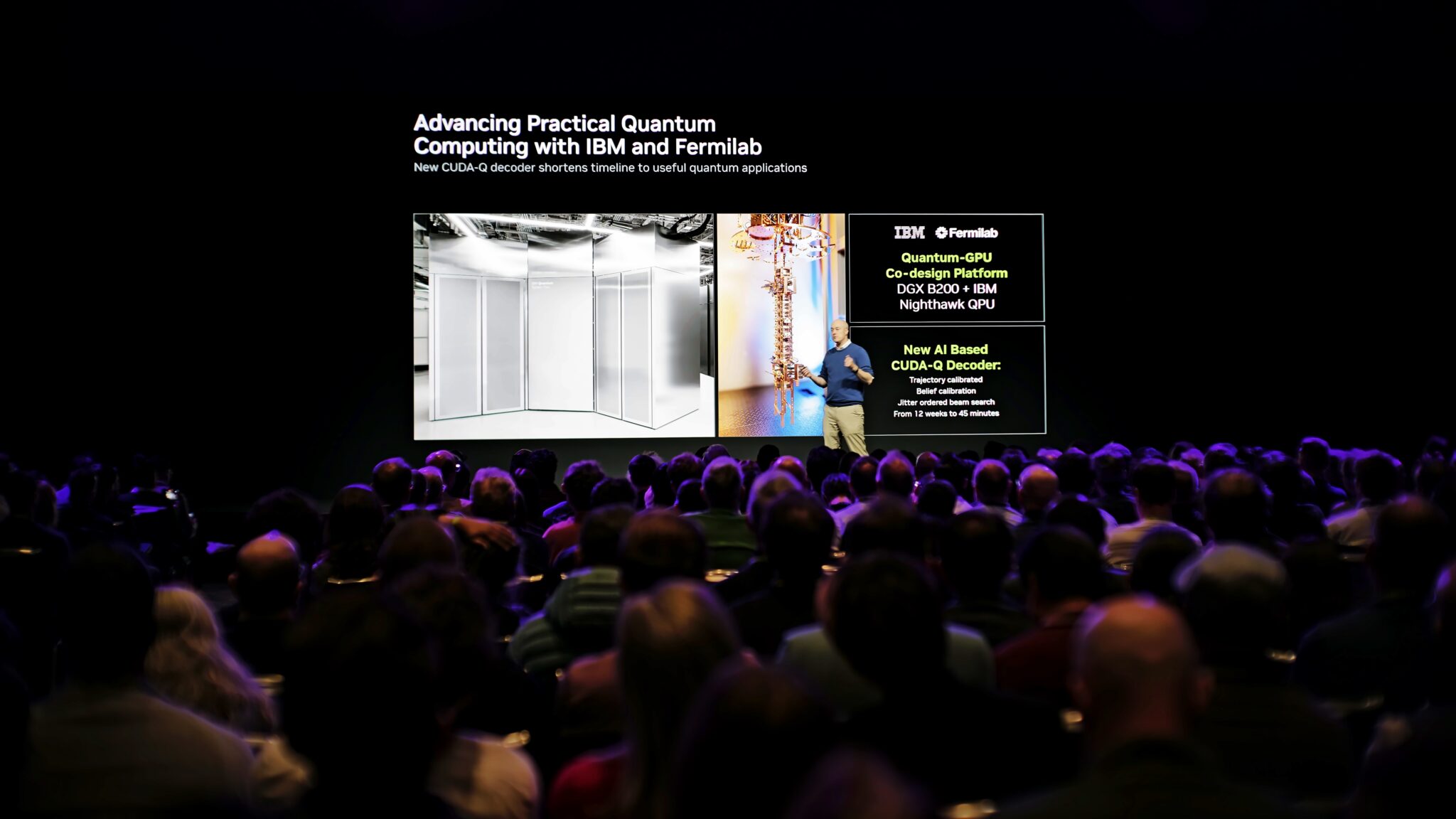
NVIDIA’s Ian Buck opened SC26 in Chicago by introducing AI agents capable of planning experiments, executing code, and validating results on researchers’ systems. These agents integrate with existing supercomputing infrastructure, marking a shift in how scientists interact with computational tools. Buck highlighted the role of simulation as the bedrock of scientific computing, now augmented by AI and quantum technologies. The announcement underscored NVIDIA’s long-term commitment to CUDA, now spanning over 1,000 CUDA-X libraries since its 2006 debut.
Buck detailed Nemotron for Science, combining the Nemotron 3.5 Super VL model with an open chemistry dataset and post-training methods for life sciences. Researchers can deploy the system locally on DGX Spark workstations or supercomputers. At Argonne National Laboratory, an agent using this toolkit autonomously identified two new binding sites after processing a single prompt, demonstrating practical research acceleration. Buck emphasized user control over data and models, while noting agents’ reliance on CPUs for tool execution between AI steps.
The Rubin HPC GPU, part of the Vera Rubin platform, supports FP64 to FP4 precisions, sparse-data acceleration, and seventh-generation NVLink connectivity. With over 50,000 CUDA cores—triple Hopper’s count—it targets scientific, engineering, and AI workloads. Expected in 2028, it joins Vera CPUs selected by DKRZ for its HLRE-5 supercomputer, slated for early 2028 deployment. Buck also highlighted a quantum computing breakthrough reducing decoding latency from 300 microseconds to 10, alongside a new CUDA-Q algorithm cutting error-correction research from 12 weeks to 45 minutes.
NVIDIA, IBM, and Fermilab announced a quantum computing co-design platform to advance error correction and applications research. The collaboration pairs NVIDIA DGX B200 systems with IBM quantum computers, including those powered by IBM Quantum Nighthawk. Buck also showcased NVIDIA Photonics co-packaged optics switches at Lambda, reporting 15x improvements in bit error reliability and link stability. The announcements collectively position NVIDIA at the intersection of AI, quantum, and high-performance computing for scientific discovery.