European Cities Deploy NVIDIA-Powered AI Agents to Run Smarter Urban Operations
European cities and partners are deploying NVIDIA-powered AI agents and digital twins to optimize urban operations, from energy use to traffic management, with pilots in multiple countries showing measurable efficiency gains.
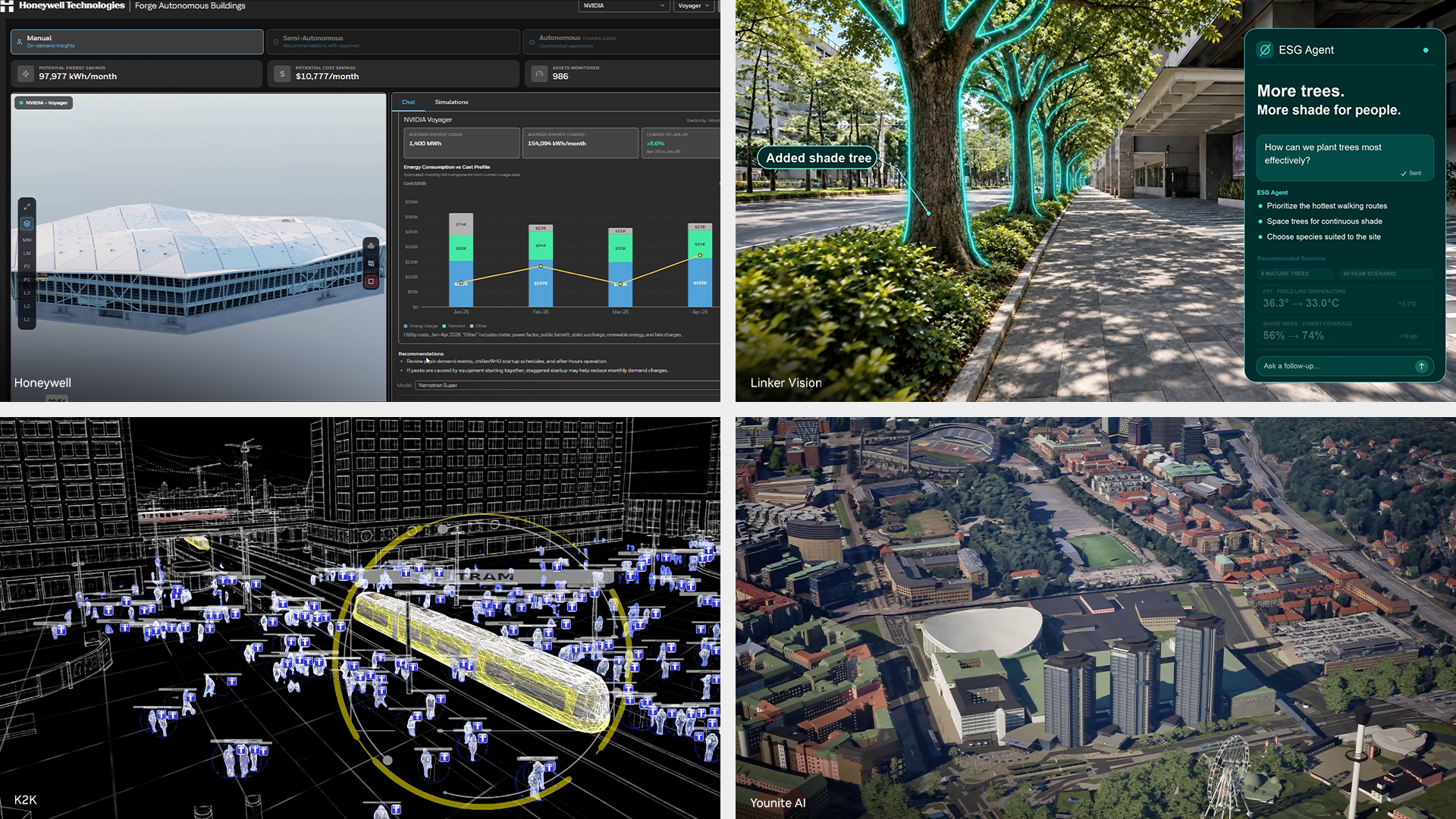
Cities across Europe are using NVIDIA’s accelerated computing to build AI agents and digital twins that help manage daily operations such as road repairs, energy efficiency, and public services. Software partners including ABA Technology, Akila, and Honeywell are developing solutions using NVIDIA’s physical and agentic AI tools, including Cosmos open models and the Metropolis Blueprint for video analysis. These tools help agents identify issues like traffic congestion, equipment conditions, and safety hazards, enabling proactive urban management.
In the U.K., the Liverpool City Region, the Island of Jersey, and Innovation City Belfast are testing AI-powered urban planning and public services with K2K, focusing on mobility, safety, and clean energy. In France, the Department of Côte-d’Or implemented operations agents using NVIDIA Nemotron and Omniverse, reducing document search time from weeks to minutes and targeting a 30% reduction in operating costs across over 500 public buildings.
Italy’s Milan region, with Galene.AI, Dell Technologies, and TD Synnex, is deploying a locally operated AI factory to provide real-time translation, citizen chatbots, and procurement assistance, aiming to simplify administrative work and grant faster access to municipal data. Belgium’s Port of Antwerp-Bruges is testing agentic vision AI with NVIDIA Cosmos to support complex use cases like oil-spill warnings using synthetic data for training.
In Sweden, Younite is developing a digital twin for Gothenburg under the EU’s Citiverse initiative to simulate changes and improve accessibility with event previews and crowd condition modeling. System builders including Cisco, Dell Technologies, and HPE are packaging NVIDIA accelerated computing into locally operated AI factories, allowing cities to customize and run intelligent applications while retaining control of their data and models.