More Performance From Every Byte: How Full-Stack Codesign Solves AI’s Memory Challenge
NVIDIA’s full-stack codesign approach optimizes memory use across AI infrastructure layers to address rising GPU memory demands and costs.
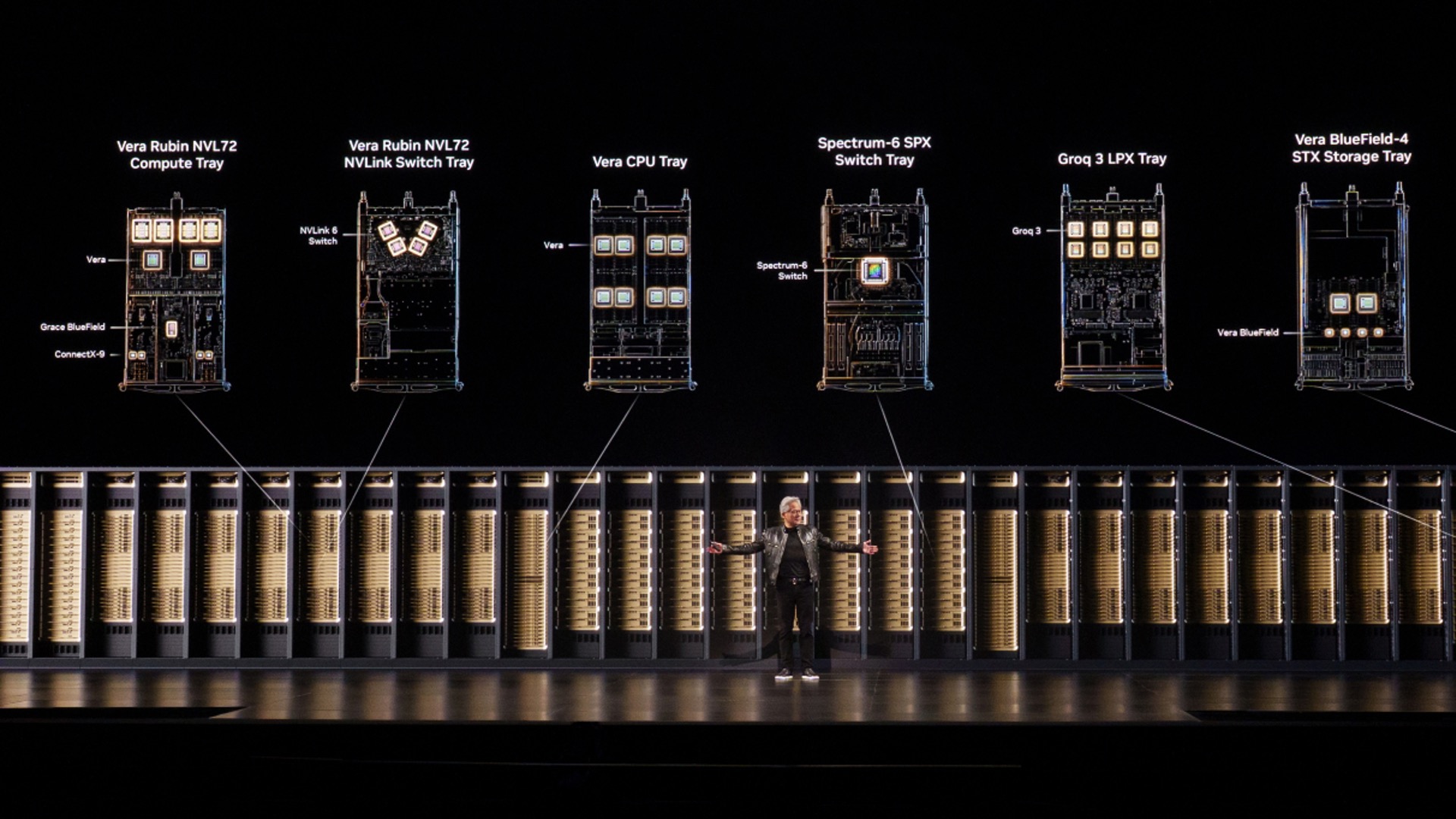
AI models and agentic applications are straining GPU memory due to larger contexts and increased concurrent users, while supply constraints and higher prices persist. NVIDIA addresses this by integrating GPUs, CPUs, networking, storage, and software into a unified design rather than simply adding more high-bandwidth memory (HBM). This approach targets inefficiencies at every layer of the AI factory’s memory hierarchy, where speed and cost trade-offs determine data placement.
The company highlights that HBM, the fastest but most expensive memory tier, faces competing demands from model weights and KV cache during inference. NVIDIA’s Blackwell Ultra and Vera Rubin platforms demonstrate that increasing HBM capacity alone does not resolve bottlenecks, as bandwidth limits can render additional capacity ineffective. Instead, the focus is on optimizing data movement and placement across the hierarchy to maximize utility per byte.
Techniques such as shrinking model weights, offloading inactive KV cache to lower-cost tiers, and compacting RAG embeddings reduce HBM pressure. These methods free up HBM for concurrent user requests, improving throughput without proportional increases in HBM capacity. NVIDIA’s platforms show significant gains in tokens per second per dollar, indicating more efficient memory use.
For AI factory operators, the key metric is tokens delivered per watt within response-time constraints. NVIDIA’s full-stack codesign reduces token costs by ensuring each byte of memory performs more useful work, balancing speed, capacity, and power efficiency across the system.