Why Scaling AI Compute Performance Requires a New Power Architecture
NVIDIA and partners introduced an 800 VDC power architecture to address inefficiencies in AI data center power delivery, aiming to scale compute performance without requiring new building infrastructure.
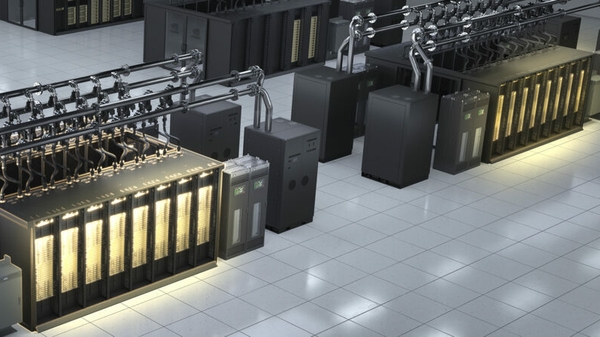
Next-generation AI systems require higher power density and efficiency, but traditional AC power delivery loses energy through multiple conversion stages. NVIDIA’s 800 VDC architecture reduces these losses by distributing power directly as DC, improving the ratio of power delivered to compute hardware. The approach was developed collaboratively through the Open Compute Project, with specifications published in 2026 and support from over 80 manufacturers. This open standard aims to ensure interoperability across vendors as AI facilities scale their power infrastructure.
To ease adoption, NVIDIA will offer an 800 VDC power rack compatible with its MGX platform in late 2026, designed to integrate with existing AC systems without modifying building electrical infrastructure. The hybrid design allows operators to upgrade rack-scale compute performance while preserving prior investments in land, power rights, and facilities. A row power center, planned for 2027, will further scale distribution to support up to 2 megawatts per row using an overhead 800 VDC busway.
For new facilities, a DC power block will enable direct medium-voltage conversion to 800 VDC in a single step, providing a scalable foundation for AI infrastructure planned over the coming decade. NVIDIA’s DSX reference designs provide system-level blueprints to align power architecture, computing, and facility infrastructure as operators expand their AI factories. The specifications define common interfaces to ensure compatibility among different vendors’ hardware within the same facility.
The transition to 800 VDC is positioned as a practical solution to meet rising AI power demands, with NVIDIA, Google, and Microsoft collaborating to ensure readiness for operators. Industry projections estimate $9 trillion in global AI and data infrastructure investment by 2040, emphasizing the need for power architectures that can scale alongside compute demand without stranded assets.