I'm intrigued by this political sim that puts you smack-dab in Germany at the end of World War 1
A political simulation game set during Germany’s 1919 Spartacist uprising offers a grassroots view of post-WWI Weimar politics, blending board-game mechanics with narrative choices.
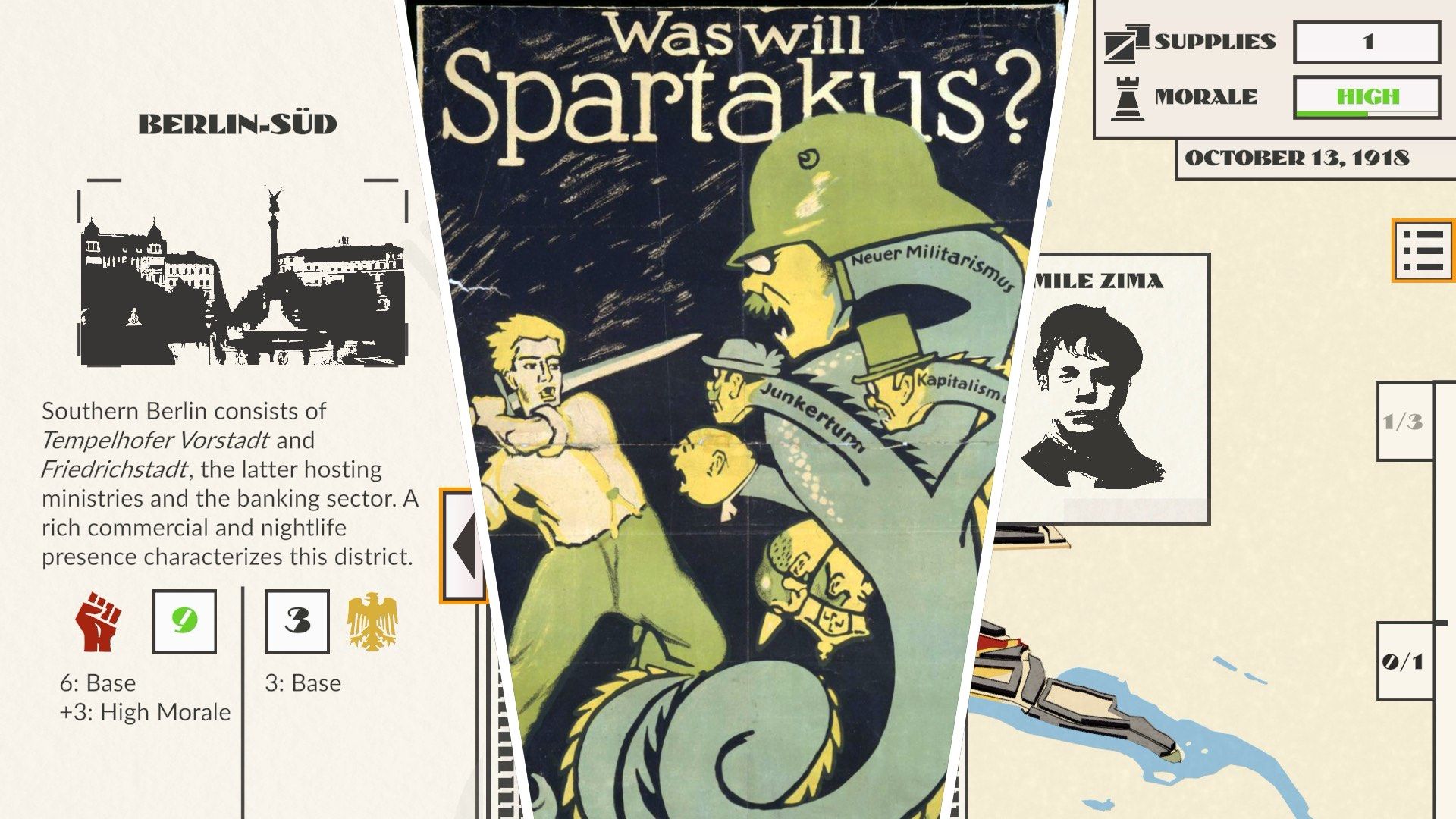
Red Echoes: Berlin, a new political simulation from Morningrise Games, immerses players in the 1919 Spartacist uprising, a suppressed communist revolt in post-WWI Germany. The game is scheduled for release in Q1 of next year, with a playable demo already available. Unlike traditional historical narratives, the game centers on ordinary Germans—a dockworker, a journalist, and a war-weary mother—rather than iconic leaders like Rosa Luxemburg or Karl Liebknecht.
Gameplay revolves around positioning three characters with distinct abilities to influence revolutionary fervor or reactionary pressure across Berlin. Visual novel segments shape the board state, requiring players to balance short-term sacrifices with long-term revolutionary goals. The demo demonstrates how strategic placement can suppress reactionary forces while amplifying revolutionary sentiment, though the full game promises deeper narrative consequences.
The game’s visual design mirrors Weimar-era aesthetics, using pools of red and yellow to represent revolutionary and reactionary influence spreading across a stylized map. While mechanically simple, the game’s strength lies in its writing, which avoids heavy-handed exposition in favor of believable dialogue and character-driven storytelling. Early impressions suggest a focus on authenticity over spectacle.
Red Echoes: Berlin is designed to be a concise experience, with the full game estimated to take three to four hours to complete. The developer emphasizes historical perspective over heroism, offering players a rare opportunity to engage with the political struggles of ordinary Germans during a pivotal moment in European history. The game’s release window aligns with growing interest in narrative-driven simulations.