Jenna Ortega's New Sci-Fi Movie Turns Compelling AI Drama Into One Big Joke
Jenna Ortega stars in *Klara and the Sun*, a dystopian AI drama based on Kazuo Ishiguro’s novel, where tonal clashes between humor and pathos undermine its emotional impact.
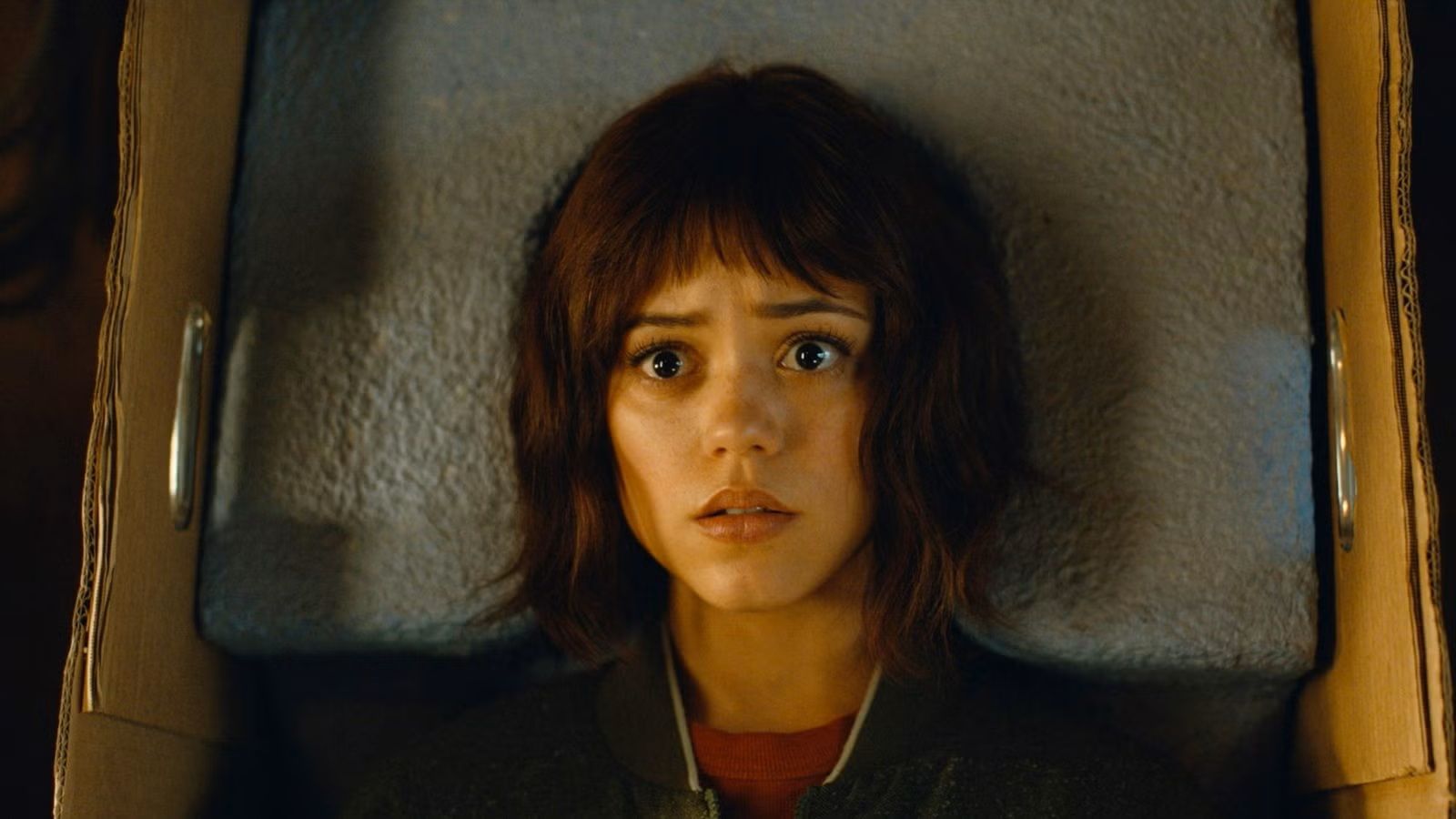
Jenna Ortega plays Klara, an Artificial Friend (AF) robot in a near-future dystopia where children undergo intelligence-enhancing procedures and humans rely on AI companions. Klara, one of many AFs in a shop window, dreams of being purchased to avoid obsolescence and eventual scrapping. Her chance arrives when Josie, a chronically ill teenager, chooses her over a newer model, setting off a coming-of-age story in a remote farmhouse. The film blends sci-fi themes with family drama, exploring themes of companionship and mortality through Klara’s perspective.
The adaptation of Kazuo Ishiguro’s novel introduces a visually striking world where robots like Klara recharge under the sun and mimic human behavior to attract buyers. Klara’s glitches and quirks, such as standing on one leg or experiencing fractured vision, add a layer of humanity to her character. Ortega’s performance captures Klara’s innocence and adaptability, though the film’s reliance on juvenile humor disrupts its emotional weight. The contrast between Klara’s earnest devotion and the script’s forced jokes creates tonal whiplash throughout.
Director Taika Waititi’s signature humor clashes with the film’s heavier themes, particularly in scenes where Klara’s struggles with stairs or mundane tasks interrupt moments of genuine pathos. The dystopian setting, where children are genetically enhanced and robots serve as disposable companions, offers rich material for commentary on AI and human connection. However, the film fails to fully explore these ideas, instead prioritizing slapstick gags over substantive storytelling. Klara’s role as a Manic Pixie Dream Robot, teaching humans about empathy, feels underdeveloped and clichéd.
Despite its flaws, *Klara and the Sun* delivers moments of sincerity, particularly in its depiction of Klara’s bond with Josie and the family’s grappling with illness and loss. The film’s visual style, including Klara’s POV sequences, adds depth to her character, though the tonal inconsistencies weaken its overall impact. Audiences may leave the theater moved but frustrated by the film’s inability to commit to either drama or comedy, leaving its potential largely untapped.