Brazil’s new curtailment rules unlikely to revive utility-scale solar investment
Brazil’s new curtailment rules aim to reduce uncertainty but are unlikely to revive utility-scale solar investment without broader market and regulatory improvements.
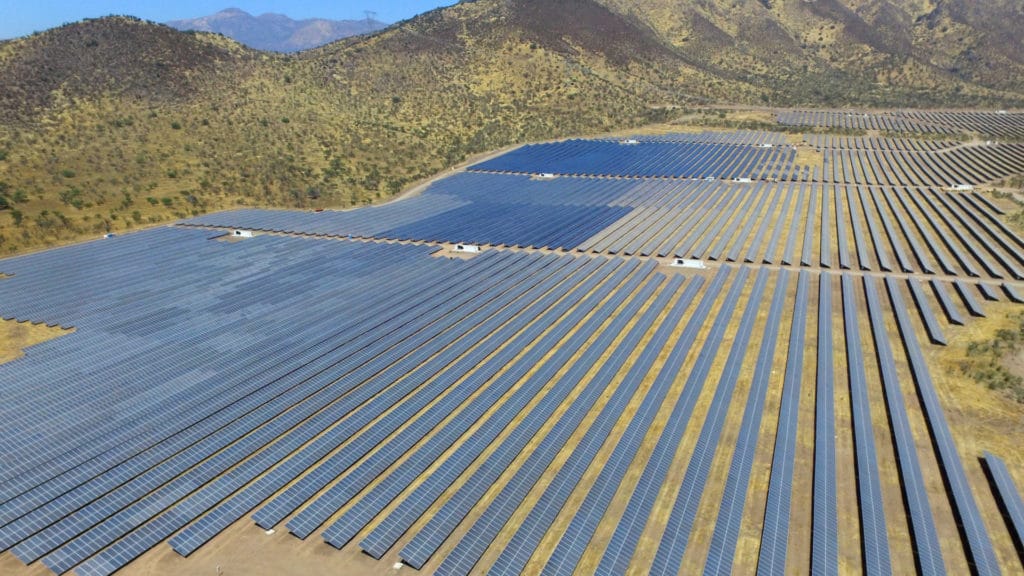
Brazil’s solar sector has faced persistent curtailment rates near 25%, prompting developers to cancel 923 projects in 2026, totaling 40.6 GW and BRL 134 billion in lost investment. The Brazilian Solar Photovoltaic Energy Association (ABsolar) attributes these cancellations to unclear compensation rules and curtailment criteria, even in regions with minimal past curtailment. The pace of cancellations accelerated in 2025, shrinking the authorized project pipeline from 110 GW in January 2026 to just 60 GW. Curtailment volumes in 2026 already rivaled the entire 2025 total, underscoring the sector’s growing challenges.
In July, Brazil’s Ministry of Mines and Energy issued Ordinance 140, setting compensation rules for curtailment between September 2023 and November 2025. The ordinance covers 682 solar plants with 25.5 GW of capacity, offering financial predictability for companies to restructure debt and resume investment. However, ABsolar notes the proposal excludes curtailment caused by oversupply, which represents most curtailment events. The ordinance’s predictability may ease planning but does not address the root causes of oversupply-driven curtailment.
Aneel’s Normative Resolution 1,170, published on October 6, formalizes Public Consultation 45’s outcome, establishing how future curtailment will be allocated among generation technologies. The resolution introduces a priority order favoring run-of-river hydropower and higher-cost sources, reducing curtailment shares for wind and solar. While this reduces regulatory uncertainty, Eduardo Tobias of Watt Capital warns it does not guarantee reduced curtailment volumes, as future curtailment depends on unpredictable factors like demand growth and storage deployment.
Beyond curtailment allocation, developers face challenges in forecasting the Settlement Price for Differences (PLD), which fluctuates due to changing calculation rules and lacks transparency. Tobias expects new greenfield solar projects to remain rare, with only those near demand centers or paired with batteries likely to proceed. Brazil’s National Electric System Operator (ONS) is also developing controls for distributed generation, while ABsolar advocates for independent management of small-scale resources to improve efficiency and reduce curtailment.