Rio Tinto plans 360 MWh thermal battery for Australian alumina refinery
Rio Tinto and Rondo Energy will test a 30 MW/360 MWh thermal battery at the Yarwun alumina refinery to replace fossil-fueled steam with renewable-powered heat storage.
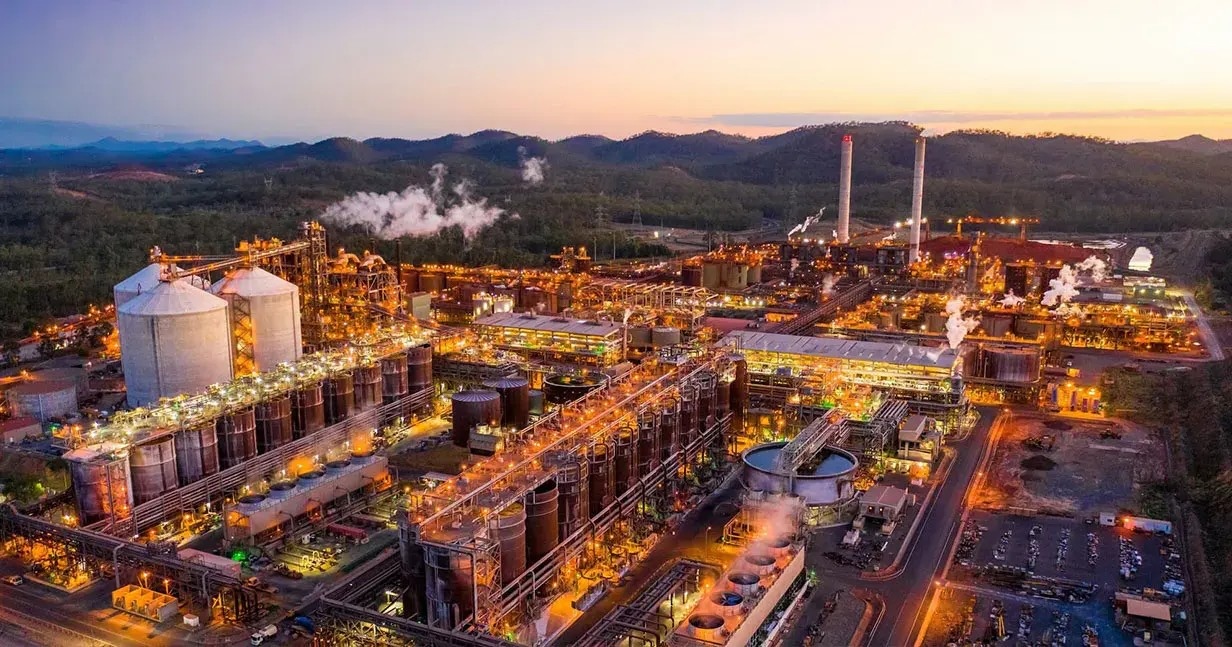
Rio Tinto and Rondo Energy have started front-end engineering and design for a 30 MW/360 MWh thermal energy storage system at the Yarwun alumina refinery near Gladstone. The project aims to integrate the battery into the refinery’s existing steam network, marking a global first for alumina refining. If successful, the system would replace fossil-fueled heat with renewable electricity stored as high-temperature heat, reducing onsite emissions by approximately 67,000 tonnes of CO₂ annually.
Rondo Energy’s heat batteries use refractory brick materials to store low-cost grid electricity generated during periods of high renewable output. The stored heat can be released as steam or hot air up to 1,000°C with a round-trip efficiency exceeding 98%. For energy-intensive industries like alumina refining, the technology offers a pathway to electrify process heat while maintaining operational reliability and reducing costs.
The project is supported by a AUD 3.6 million grant from the Australian Renewable Energy Agency (ARENA) for front-end engineering and design. If the study confirms technical and economic viability, ARENA may provide up to AUD 38 million for full-scale construction and commissioning, along with AUD 33.3 million in conditional contingency support. ARENA CEO Darren Miller emphasized the need to test such technologies in real-world environments to validate their role in decarbonizing industrial heat.
Rio Tinto Pacific Operations Managing Director Armando Torres highlighted the challenges of decarbonizing alumina refining, particularly for high-pressure steam generation. The Yarwun study will assess whether thermal energy storage can provide a viable alternative to fossil fuels for part of the refinery’s steam requirements. Success could pave the way for similar projects across other energy-intensive industries in Australia.