"AI is a technofascist, anti-human and anti-art project", says creator of lefty tech satire Future? No Thanks!, before explaining why he used it anyway
Developer Paulo Pedercini admitted using AI tools for minor debugging and voicework in his ecosocialist satire Future? No Thanks!, despite criticizing AI as a 'technofascist' project.
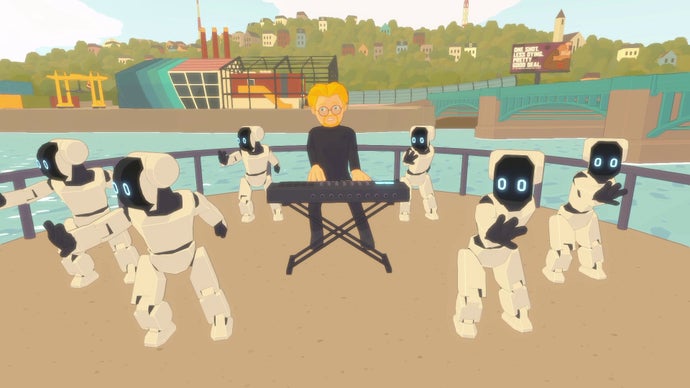
Paulo "Molleindustria" Pedercini, known for left-wing political games, disclosed that a small portion of code in Future? No Thanks! was written with AI assistance, primarily for bug fixes near project completion. The game also features about two minutes of text-to-speech voiceacting using ElevenLabs, intended as satirical commentary on AI voice technology. Pedercini emphasized that none of the game's art or writing was AI-generated, framing the AI use as a pragmatic choice rather than an endorsement. The disclosure was added to the Steam storepage weeks after the game's release, which had previously faced delays over sexual content concerns.
Pedercini argued that AI tools like ChatGPT or Claude served as 'powerful semantic search engines' for diagnosing technical issues, such as shader failures or loading glitches. He noted that modern search engines often produce low-quality AI responses, making AI-assisted debugging a practical workaround. Despite this, he acknowledged the difficulty of removing AI-generated code once integrated, complicating transparency. The voicework, featuring an automated toilet and mis-translating assistant, was designed to highlight the 'uncanny' nature of AI voices, with Pedercini preferring generated voices for comedic effect.
The game includes experimental elements like AI-generated 'fake doo-woop tunes' with lyrics referencing AI, initially intended as satire but later replaced with royalty-free loops due to ethical concerns. Pedercini cited the scarcity of AI-free royalty-free samples as a challenge, ultimately sourcing material from an untouched 2016 website. He framed the AI use as a response to the evolving expectations of independent gaming festivals, which increasingly require generative AI disclosures by 2026.
Pedercini’s disclosure followed criticism of his earlier blog post, which had argued that 'AI-free' was the only ethical stance for developers, though he later deleted those sections. He clarified that his intent was not to endorse AI but to explore nuanced uses within structural critiques of the technology. Responses from other developers, including Damon Reece and Dante Douglas, suggest ongoing debate within the industry about balancing ethical standards with practical tool use.