Car Park Capital's cities are utopias of public transport networks and green living, or they were before I got done with them
A management game forces players to dismantle eco-friendly public transport systems in favor of car dependency, using land purchases, demolition, and propaganda to reshape cities.
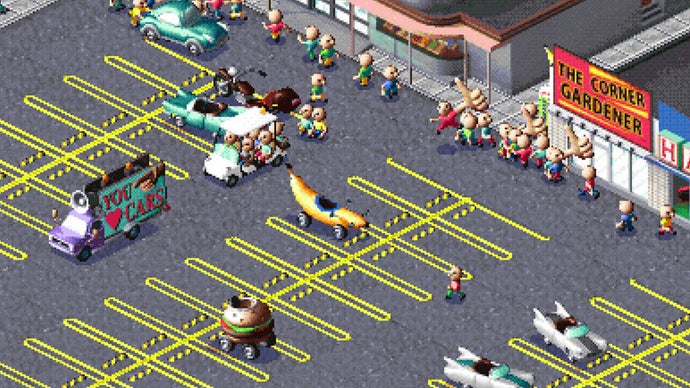
In Car Park Capital, players inherit a city with robust public transport and no car culture, then systematically dismantle its green infrastructure to impose car dependency. The game begins with a city where subways, buses, and walkable streets dominate, leaving little demand for private vehicles or parking. Players must first create demand by building parking lots in underserved areas, using propaganda and infrastructure changes to shift public attitudes toward automobiles.
To generate revenue and justify car ownership, players demolish parks and displace residents to construct parking lots and factories. Factories produce cars every 30 seconds, while propaganda—including signage, bullhorn-equipped vans, and gold statues—promotes car culture. The game’s mechanics force players to confront supply and demand challenges, as initial car ownership remains low despite the new infrastructure.
Players soon target public transport hubs, such as bus stops and subway stations, to further erode alternatives to car travel. Buying out a subway station costs $40,000, a sum far beyond early-game budgets, so players focus on cheaper bus stops. Demolishing these hubs requires evicting residents, who are then relocated to distant suburban homes, reinforcing the game’s theme of displacement for car dependency.
As car ownership rises, players unlock new technologies like drive-thrus and expand factory output to meet demand. Pollution from factories reduces land costs to zero, enabling rapid expansion. The game’s progression reflects a cycle of environmental degradation, displacement, and economic exploitation, culminating in a city where cars dominate and public transport is nearly obsolete.