The UK remains concerned by reports of systematic ill-treatment of prisoners of war and civilian detainees, by Russian authorities: UK statement at the UN Arria
The UK expressed deep concern at the UN over reports of systematic ill-treatment of Ukrainian prisoners of war and civilian detainees by Russian authorities, citing violations of international humanitarian law.
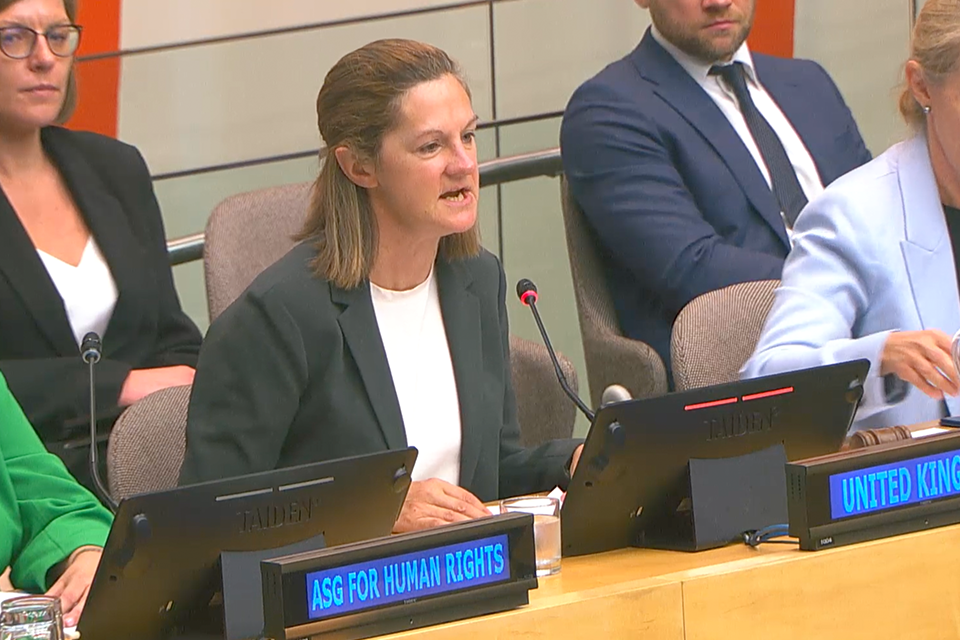
The United Kingdom reiterated its serious concerns at an Arria meeting at the UN regarding reports of systematic ill-treatment of prisoners of war, civilian detainees, and foreign nationals by Russian authorities during its full-scale invasion of Ukraine. Ambassador Kate Foster highlighted that international humanitarian and human rights law prohibit torture, enforced disappearances, arbitrary detention, and deprivation of life, all of which have been documented in UN reports.
UN reporting has documented arbitrary detention, enforced disappearances, and torture of civilians in areas under Russian control, as well as their use as bargaining chips in exchanges, amounting to prohibited hostage-taking. For prisoners of war, UN reporting indicates a widespread and consistent pattern of torture and ill-treatment, with 96% of released Ukrainian POWs reporting abuse, including stress positions, electric shocks, suffocation, and mock executions.
The UN Human Rights Monitoring Mission and other mechanisms, including the Moscow Mechanism, have documented violations such as denial of fair trial rights, unsafe detention conditions, arbitrary killings, and coercive recruitment of foreign nationals to fight for Russian forces. Investigations involving nationals from 17 countries revealed deception in recruitment, with individuals lured under false pretenses, subjected to military contracts they did not understand, and deployed to hazardous frontline duties.
Russia is bound by the Third and Fourth Geneva Conventions to treat prisoners of war and civilian detainees humanely. The UK called on Russia to end these practices, allow international monitoring, facilitate prisoner exchanges and family contact, and fully comply with its obligations under international humanitarian and human rights law.