Ukraine: Attacks on education threaten an entire generation, UNICEF warns
UNICEF warns that relentless attacks on schools and infrastructure in Ukraine are disrupting education for millions of children, risking an entire generation’s future.
In Sumy, Ukraine, children attend an underground classroom as air raid alerts disrupt lessons, with over 1,000 alerts nationwide in just 15 days of the school year. UNICEF Deputy Spokesperson Ricardo Pires highlighted how sirens force students to abandon lessons repeatedly, leaving them unable to concentrate. He emphasized that the war has severely undermined children’s right to education, with Sumy, Mykolaiv, and Odesa among the hardest-hit regions this year.
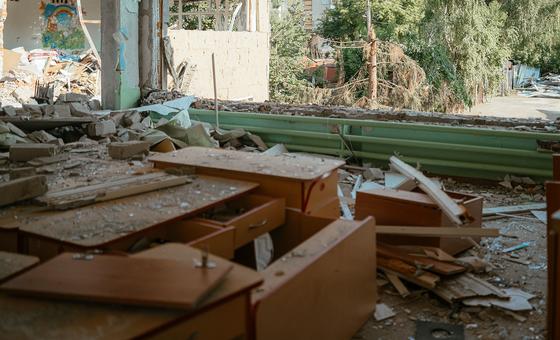
The Ukrainian Government reports that hundreds of educational institutions were damaged between January and August, bringing the total since the war began to over 4,200. UNICEF notes that the damage extends beyond physical destruction, with psychological scars and constant interruptions affecting children’s learning. OECD assessments reveal that a significant proportion of 15-year-old students lack sufficient competency in core subjects, limiting their future opportunities.
UNICEF has established 22 shelters-turned-schools in Sumy, accommodating around 300 students each, as part of efforts to sustain education amid the conflict. Nearly 4.2 million children and over 366,000 teachers returned to school this month, though many rely on blended or fully online learning. Nearly half of all pre-school-aged children are missing regular education and care due to the ongoing war.
The approaching winter threatens to further disrupt education, as attacks on infrastructure risk cutting off electricity and heating. Last year, nearly two million children endured extreme winter conditions without heat, electricity, or water, with frontline areas like Sumy hit hardest. UNICEF aims to reach three million people this winter, including 540,000 children, to repair heating systems, provide backup energy, and support catch-up learning for 375,000 students.