Apple launches research study to explore the use of AI for health
Apple launched a U.S. study with OpenEvidence to assess how people use conversational health AI, focusing on trust, comprehension, and real-world health actions.
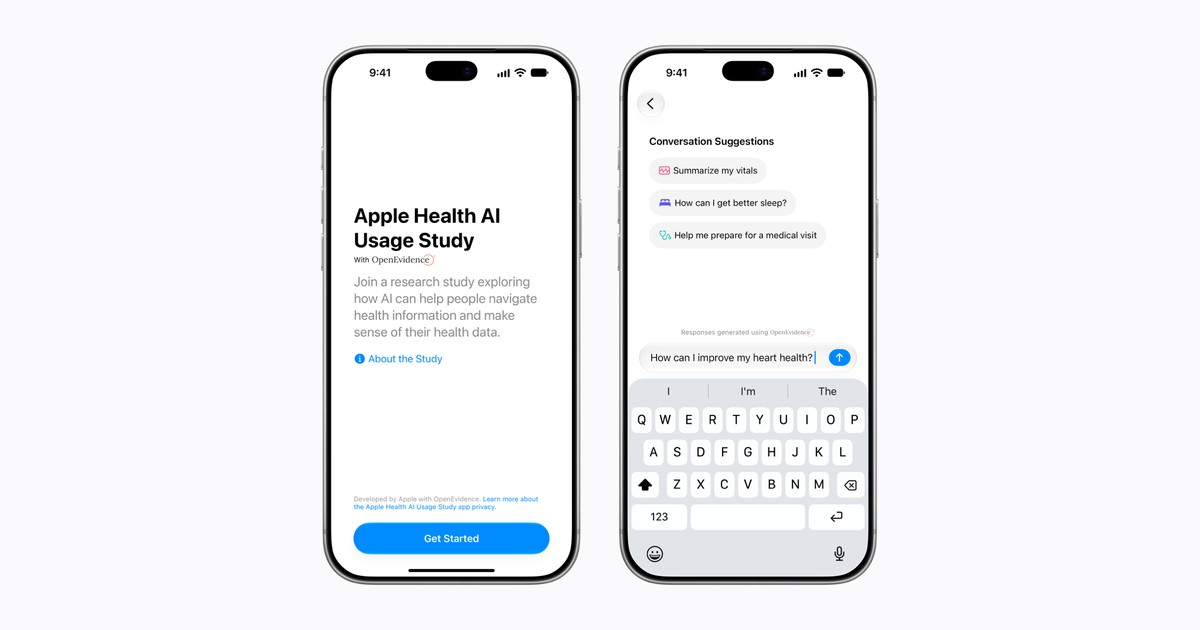
Apple announced the Apple Health AI Usage Study, a virtual research initiative developed with OpenEvidence to examine how individuals interact with conversational health AI tools. The study aims to evaluate factors such as user trust, response quality, comprehension, and everyday health actions to inform the design of responsible health AI experiences. Researchers seek to understand how people engage with health information provided by AI in real-life scenarios, with the goal of improving clarity and relevance in health-related responses.
The study combines medically grounded AI technology from OpenEvidence with an Apple-designed research experience. Participants can ask everyday health questions, receive responses in approachable language, and view linked peer-reviewed clinical citations supporting each answer. The app also allows participants to share HealthKit data, such as resting heart rate or sleep metrics, to explore how personal data integration affects understanding and relevance of AI-generated health information.
Researchers highlight the need for clarity in health AI responses, as current tools may sometimes provide incomplete or unclear information. The study will explore how health AI could help participants better prepare for clinical visits by providing accurate, cited information. Collaboration between patients and clinicians using the same trustworthy tools is emphasized as a way to improve healthcare conversations and decision-making.
The study prioritizes privacy and transparency, with safeguards to protect participant data and prevent its use in training AI models. Eligible participants must be 21 or older, reside in the U.S., and own an Apple Intelligence-enabled iPhone running iOS 26 or later. Up to 200,000 participants can enroll via the study app, which includes safety features to detect concerning questions and recommend follow-up with healthcare providers when necessary.