A new kind of airport is built in Portland, with the help of connected workflows
Portland International Airport’s Terminal Core Redevelopment Project, led by Skanska and Hoffman Construction with design by ZGF Architects, doubled passenger capacity using connected digital workflows powered by Autodesk Forma.
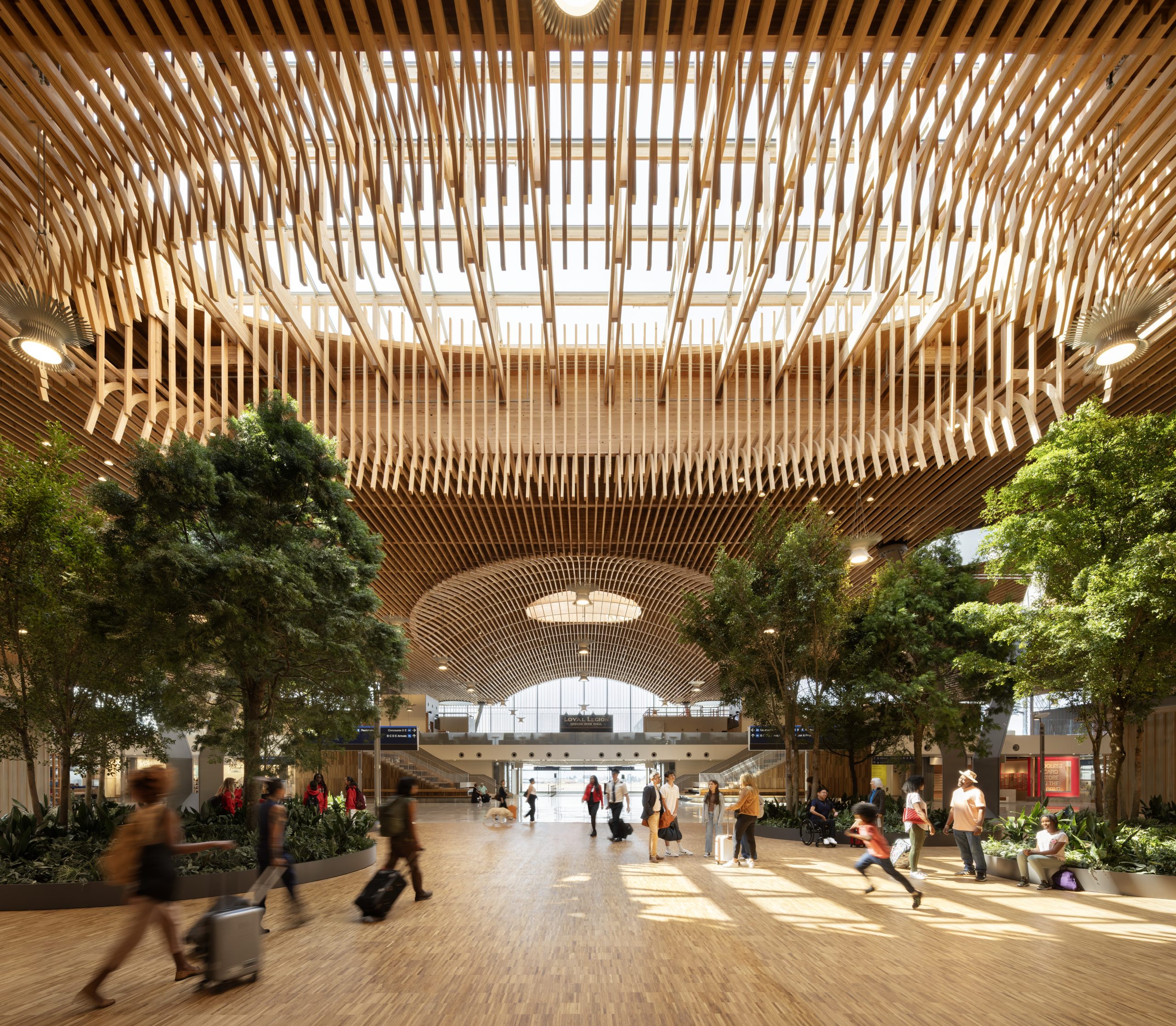
Portland International Airport’s Terminal Core Redevelopment Project (TCORE), part of the Port of Portland’s PDX Next program, has transformed one of the Pacific Northwest’s busiest airports while maintaining full operations. The redevelopment, led by a joint venture between Skanska and Hoffman Construction with design by ZGF Architects, doubles passenger capacity and redefines the airport experience. Behind the visible changes—such as natural light and a mass timber roof—lies a coordinated effort powered by connected digital workflows, demonstrating how cloud-based collaboration is reshaping complex infrastructure projects.
As construction progressed, coordination became the central challenge, with hundreds of companies needing to align while the airport remained open. Autodesk Forma provided a shared, cloud-based environment where teams accessed and updated information in real time. Instead of relying on disconnected files, architects, engineers, contractors, and owners collaborated within a single source of truth. This approach improved visibility, helped teams identify clashes earlier, and ensured access to the latest data, enabling faster issue resolution and clearer coordination across the project.
The mass timber roof, spanning nine acres and supported by just 34 columns, required precise collaboration among teams. Detailed models allowed the planning of every step, from prefabricating roof modules to transporting them across the airfield and lifting them into place. These simulations aligned teams on sequencing and logistics before construction began, while also facilitating communication with stakeholders, including airport operations, air traffic controllers, and the FAA. The same models supported sustainability goals, enabling Arup’s team to quantify materials and demonstrate a 22% reduction in embodied carbon for the new second floor and a 66% reduction when accounting for the reuse of the existing ground floor.
As the final phase of the multi-year project nears completion, the impact of the connected approach is evident. The seamless experience for travelers reflects thousands of coordinated decisions, made possible by teams working from a shared digital foundation. PDX serves as an example of how technology can bridge design and construction, helping teams move faster, reduce risk, and deliver projects with greater confidence and precision.