Cool as ICE, hot on the track: the new BMW 3 Series with four- and six-cylinder engines completes its final round of summer driving dynamics testing in Miramas.
BMW concludes final summer testing for the next 3 Series, featuring four- and six-cylinder engines with 48V mild hybrid systems, ahead of its market launch.
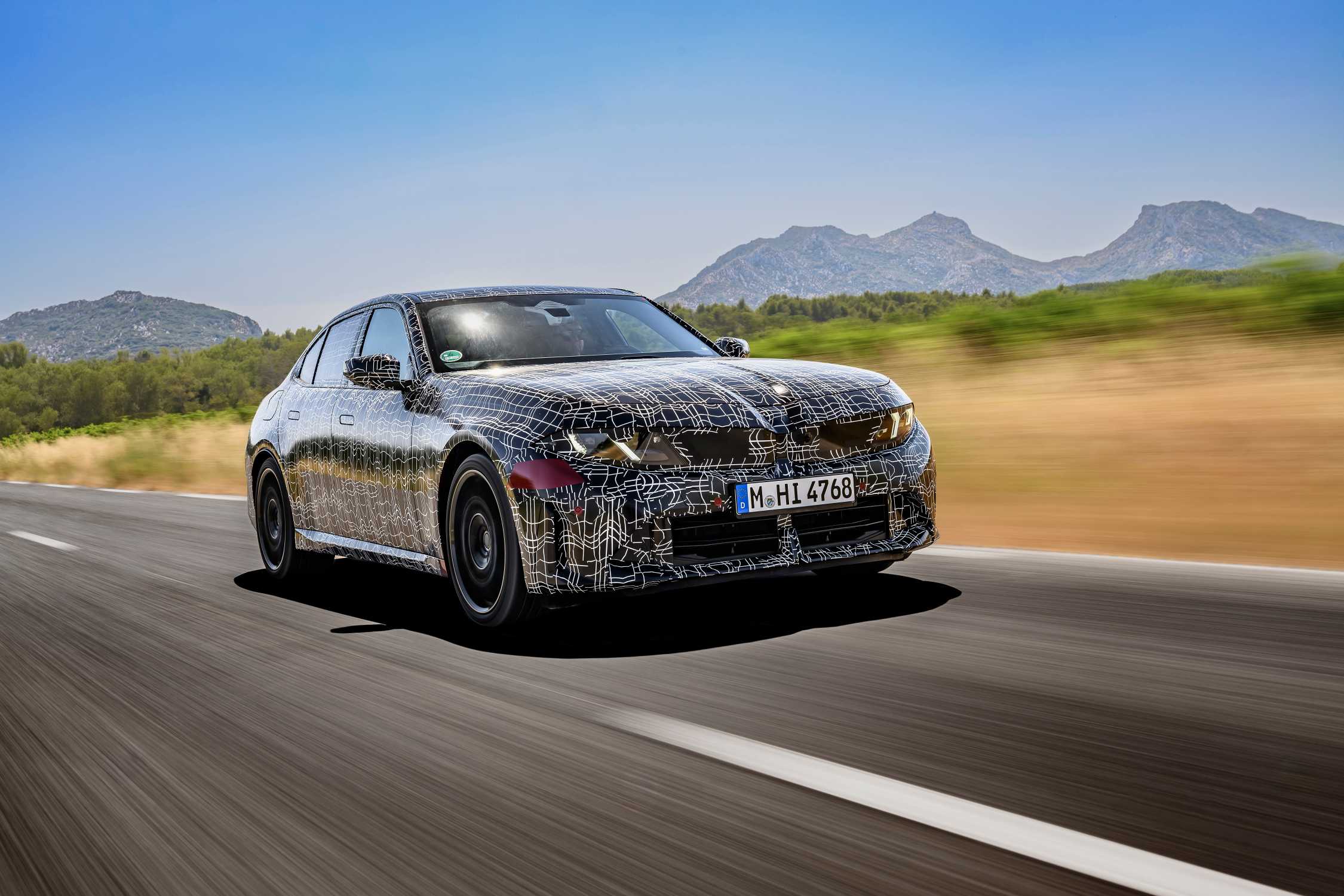
The next-generation BMW 3 Series with internal combustion engines is entering final production development after completing a comprehensive testing program. The lineup includes models with four- and six-cylinder engines, both equipped with 48V mild hybrid technology, alongside the fully electric BMW i3 introduced earlier this year. All variants retain the brand’s signature compact sports sedan proportions, including a longer wheelbase, shorter overhangs, and the distinctive Neue Klasse design language. The new models emphasize precise handling, comfort, and driving dynamics, with testing conducted at BMW’s Miramas facility in southern France.
Development teams evaluated the new 3 Series across diverse conditions, including the frozen tracks of Arjeplog and the Nürburgring, to refine its chassis and driving systems. The vehicle features a double-joint spring strut front axle, five-link rear axle, and advanced digital systems such as an upgraded integrated braking system and adaptive suspension options. Standard lift-related dampers and optional adaptive M suspension further enhance performance and comfort, with new optional sports tires available in 245/35 R20 and 275/30 R20 sizes.
The BMW M350 xDrive serves as the dynamic flagship of the internal combustion lineup, powered by a six-cylinder engine paired with an eight-speed Steptronic transmission and BMW xDrive all-wheel drive. It generates 326 kW/443 hp and accelerates from 0 to 100 km/h in 4.1 seconds. The model includes adaptive M suspension, an M Sport differential, and variable sport steering as standard, with the new Drift Moment function scheduled for 2027 via remote software update.
All new 3 Series models share a unified electronics and software architecture centered around the BMW Driving Stack, which integrates hardware and software for cohesive driving functions. The system is tailored differently for electric and internal combustion variants, with the latter featuring an optimized intelligent Driving Stack for enhanced agility and stability. The transverse dynamics management system consolidates all-wheel-drive and agility-related functions, ensuring consistent performance across the lineup.