Balcony solar bill introduced in Congress for the first time
A new federal bill would require states to legalize plug-in balcony solar panels and offer rebates to low-income households, aiming to cut electricity costs for renters and small-appliance users.
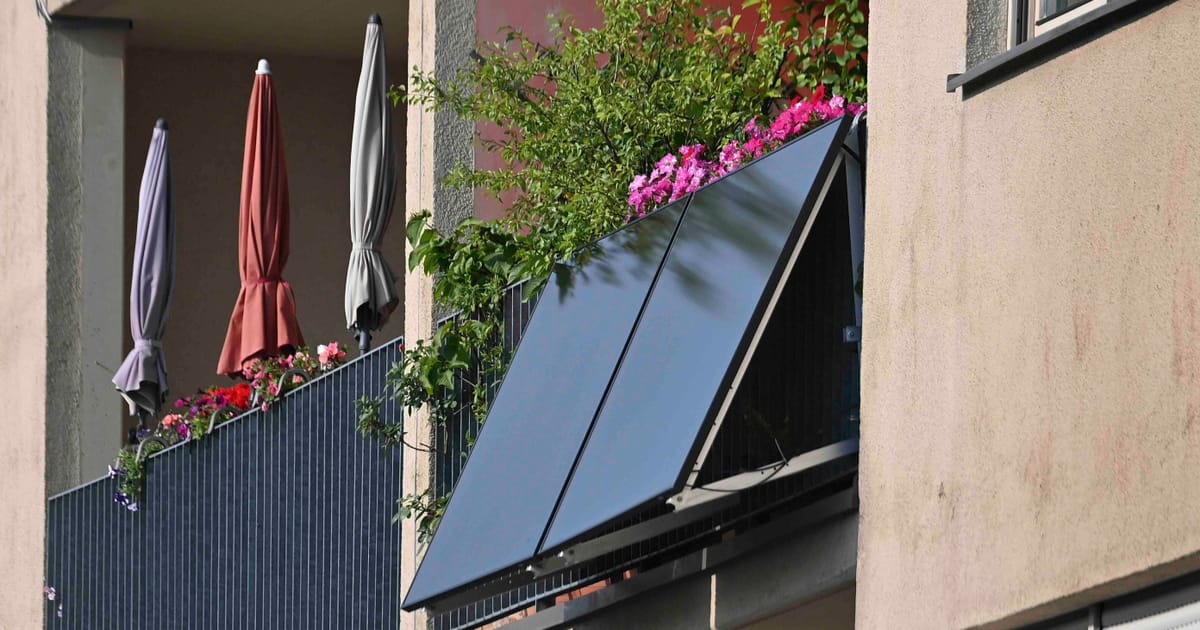
U.S. Representative Rob Menendez introduced the first federal bill to legalize plug-in solar panels that connect directly to household outlets, addressing rising electricity costs. The legislation, called the Socket Full of Sunshine Act, mandates state utility regulators to establish rules enabling access to this technology within one year of passage. It also creates a federal rebate program providing up to $1,000 for low- and moderate-income households to purchase qualifying systems, with protections for renters' rights to use balcony solar.
Plug-in solar systems typically consist of one to four panels that plug into a standard 120-volt outlet, generating enough power for small appliances like laptops, refrigerators, or air conditioners. These setups can achieve a payback period as short as 2.5 years, compared to over a decade for larger rooftop arrays, and may save households hundreds of dollars annually depending on local electricity rates. However, the U.S. currently lacks a unified safety standard for the technology, relying instead on a patchwork of state-level regulations.
The bill sets a maximum system size of 1,200 watts and requires rebate-eligible kits to include at least 55% American-made components by cost, aiming to bolster domestic manufacturing. Currently, no such kits are manufactured in the U.S., according to Cora Stryker, cofounder of Bright Saver, a nonprofit advocating for plug-in solar. The legislation would require states to complete regulatory proceedings on plug-in solar within two years of the bill’s enactment.
While the bill is unlikely to advance during the current Congress, Menendez and allies plan to reintroduce similar legislation in the next session. Bright Saver is collaborating with three additional representatives and one senator from a red state to introduce complementary bills, which may pursue alternative approaches to expanding access to balcony solar.