VAT and Tax on Accepting Crypto Payments: What EU Businesses Need to Know
EU businesses accepting crypto must still charge VAT on sales and report income at fiat value, per EU VAT rules and 2015 Hedqvist ruling, with record-keeping critical.
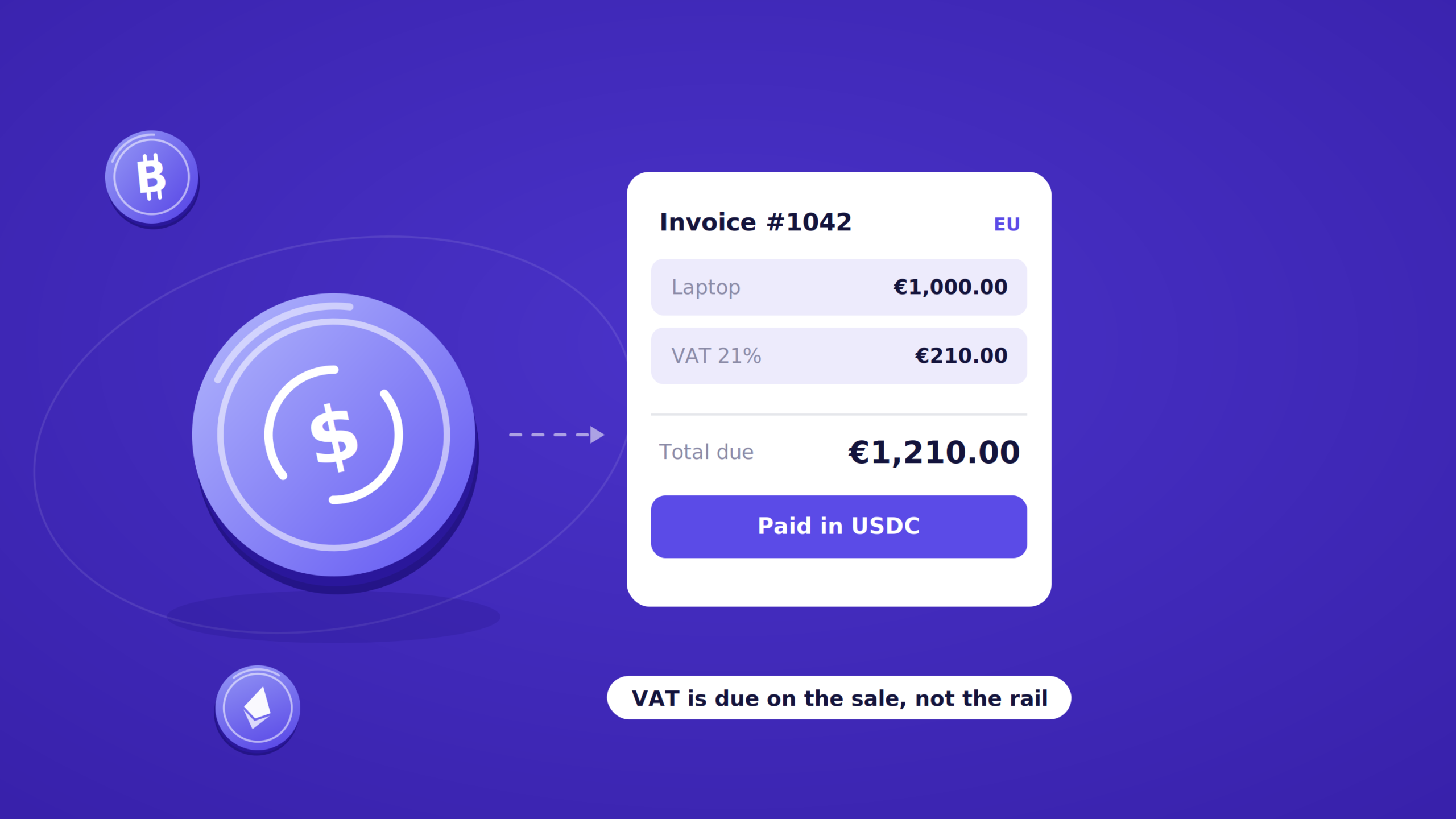
The European Court of Justice’s 2015 Hedqvist ruling clarified that exchanging traditional currency for Bitcoin is VAT-exempt, but this does not apply to sales of goods or services paid in crypto. Businesses must still charge VAT on the underlying sale at the standard rate, regardless of the payment method. The VATable amount is the euro value of the goods or services, not the nominal crypto amount. Record-keeping is essential to meet VAT obligations accurately.
When invoicing, the taxable amount must be expressed in euros using the crypto’s fiat value at the time of the transaction. EU member states use Article 91(2) of the VAT Directive to convert foreign-currency amounts, often relying on the latest selling rate from a representative exchange or the European Central Bank. Germany, for example, accepts the latest published rate from a conversion portal if documented. The specific rate source and timing may vary by jurisdiction, requiring confirmation with local tax advisors.
Income tax treatment for crypto payments follows the general principle that crypto received as revenue is recognized as income at its fiat value on the day of receipt. This value becomes the cost basis for future tax calculations. If the crypto is later sold or converted at a different value, a separate taxable gain or loss may arise. Businesses must account for revenue in euros or their functional currency, not in crypto, as per Irish Revenue guidelines.
Regardless of local variations, businesses must maintain detailed records of the fiat value of every crypto transaction to comply with VAT and income tax reporting. Retention periods for these records are set nationally and can exceed expectations; Ireland, for instance, requires six years of retention. Accurate documentation ensures correct reporting and provides necessary evidence in case of audits or inquiries.