Crypto Payment Gateway Fees: What You Actually Pay
A crypto payment gateway clarifies how multiple fees accumulate beyond the headline rate, explaining when charges apply and how to minimize costs.
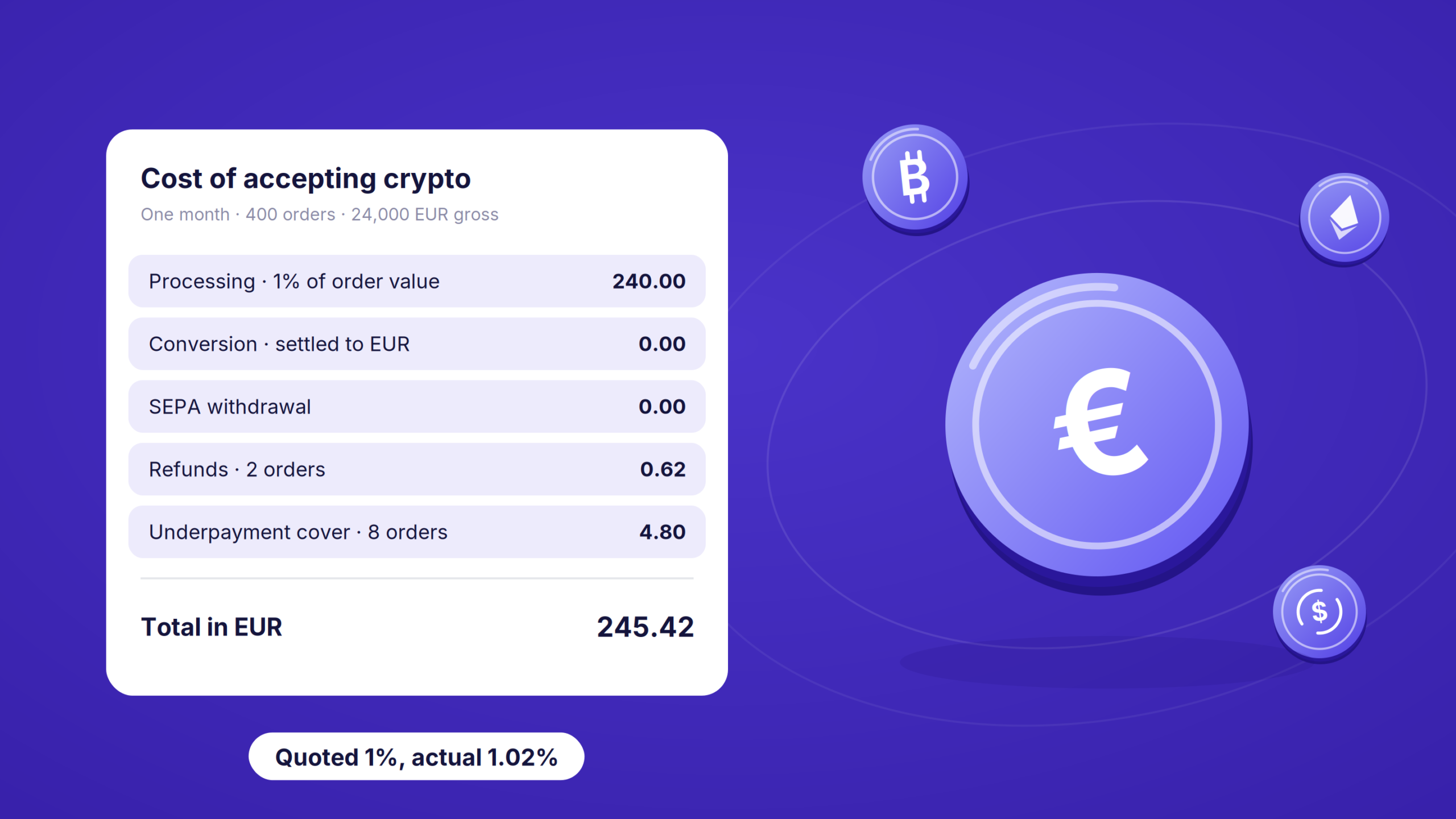
The headline 1% fee is only the first of several charges in crypto payments. Providers often omit other fees that may apply later, such as currency conversion or withdrawal costs. These fees vary by provider and transaction type, making the total cost higher than initially estimated. The article breaks down five distinct fee events to help merchants understand where expenses occur.
Currency conversion fees differ based on whether the process is automatic at checkout or manual later. Automatic conversions incur no exchange fee, while manual conversions incur a 1% fee. Merchants are advised to set the correct receive currency upfront to avoid unnecessary conversions. In the first half of 2026, 75.4% of orders were settled to fiat, with EUR being the leading currency at 66.2%.
Withdrawal and payout fees are separate and depend on the method used. SEPA withdrawals are free on the Standard plan, while SWIFT withdrawals have a minimum fee of 50 EUR. Payouts to others incur higher percentages, such as 0.50% for crypto and SEPA payouts. The distinction between withdrawal and payout is critical for accurate cost modeling.
Refunds add another layer of fees, typically 0.25 EUR plus 0.1% only if the refund currency differs from the original. Unlike card refunds, crypto refunds require the customer’s wallet address and network details, adding operational complexity. Merchants are encouraged to review the full fee structure and plan for refund processes to avoid unexpected costs.