Your Processor Called You High Risk. Here Is What Crypto Actually Changes
Crypto payments eliminate issuer-driven reversals and rolling reserves tied to dispute exposure, but compliance and operational requirements remain unchanged for merchants.
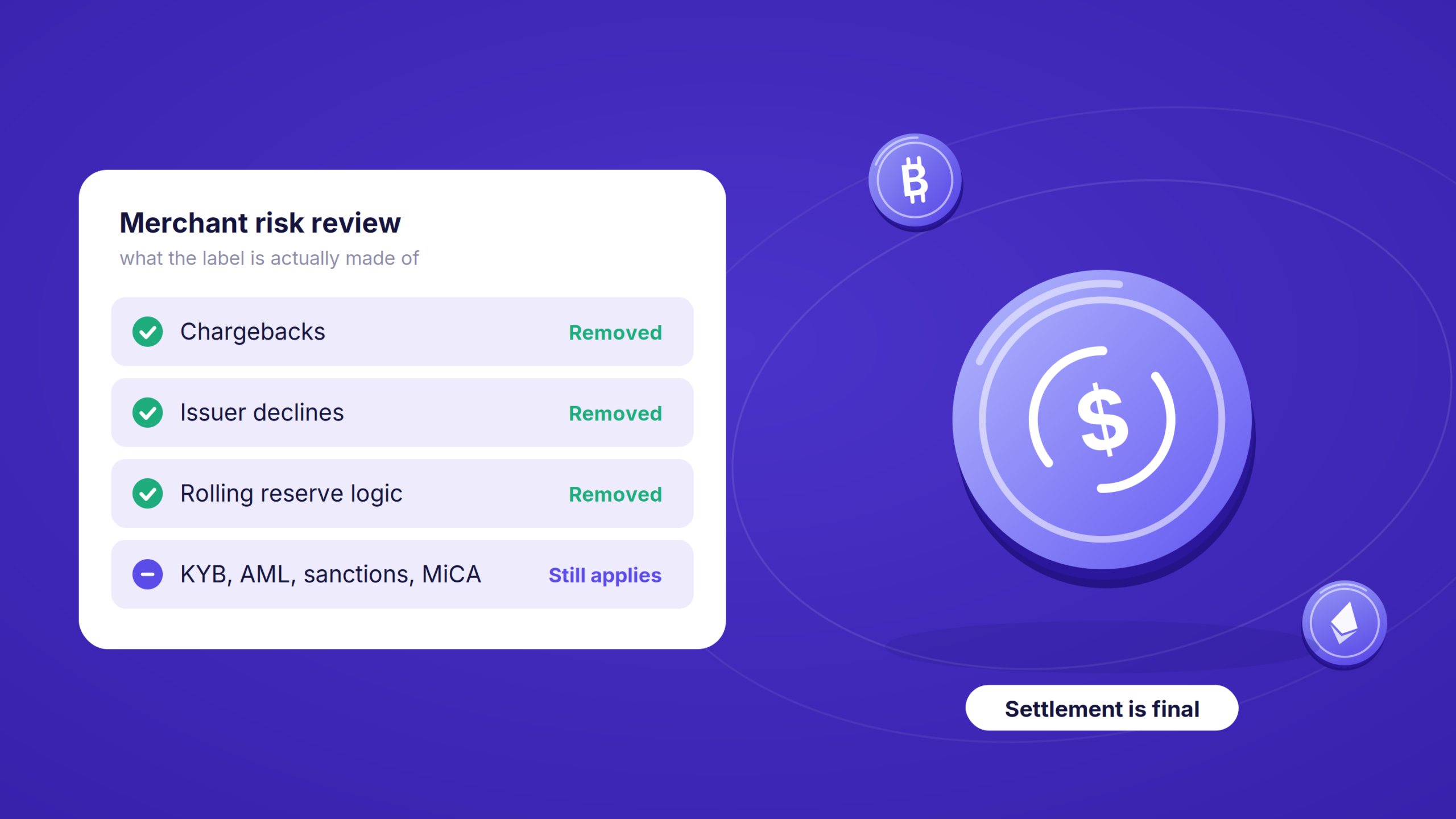
A high-risk payment processor label typically stems from an acquirer’s estimate of potential losses from cardholder disputes, not the merchant’s actual risk profile. These labels often persist across providers because industry classifications track categories rather than individual business improvements. Rolling reserves, while framed as temporary, function as interest-free loans that strain working capital, particularly in early months when new holds accumulate before earlier ones are released.
Chargebacks and issuer declines are the primary drivers of dispute exposure for traditional processors. Crypto payments, settled on-chain, remove the issuer’s ability to reverse transactions weeks later, shifting dispute resolution entirely to the merchant. This eliminates one of the core reasons for high-risk classifications, though it does not address other compliance or operational risks that processors evaluate.
CoinGate’s Standard plan charges 1% per transaction with no monthly or setup fees, settling funds weekly. Enterprise rates are custom and volume-based, with settlement options of weekly or on request. The provider emphasizes that crypto does not exempt merchants from regulation; CoinGate operates under Bank of Lithuania authorization as both a Crypto-Asset Service Provider under MiCA and a Payment Institution under Lithuanian law.
Business verification for CoinGate requires company registration documents, ownership details, and a clear business description, while personal verification applies to roles handling funds. The process includes politically exposed person declarations, residential address confirmation, and a live ID check via Onfido. Compliance demands remain stringent, as the shift to crypto payments primarily changes which risks the processor evaluates, not the volume of oversight required.