Crypto Checkout Conversion: Where Orders Get Lost
Merchants accepting crypto face checkout drop-offs due to short payment windows and underpayment handling gaps, with new guidance on configuring timers and tolerance thresholds.
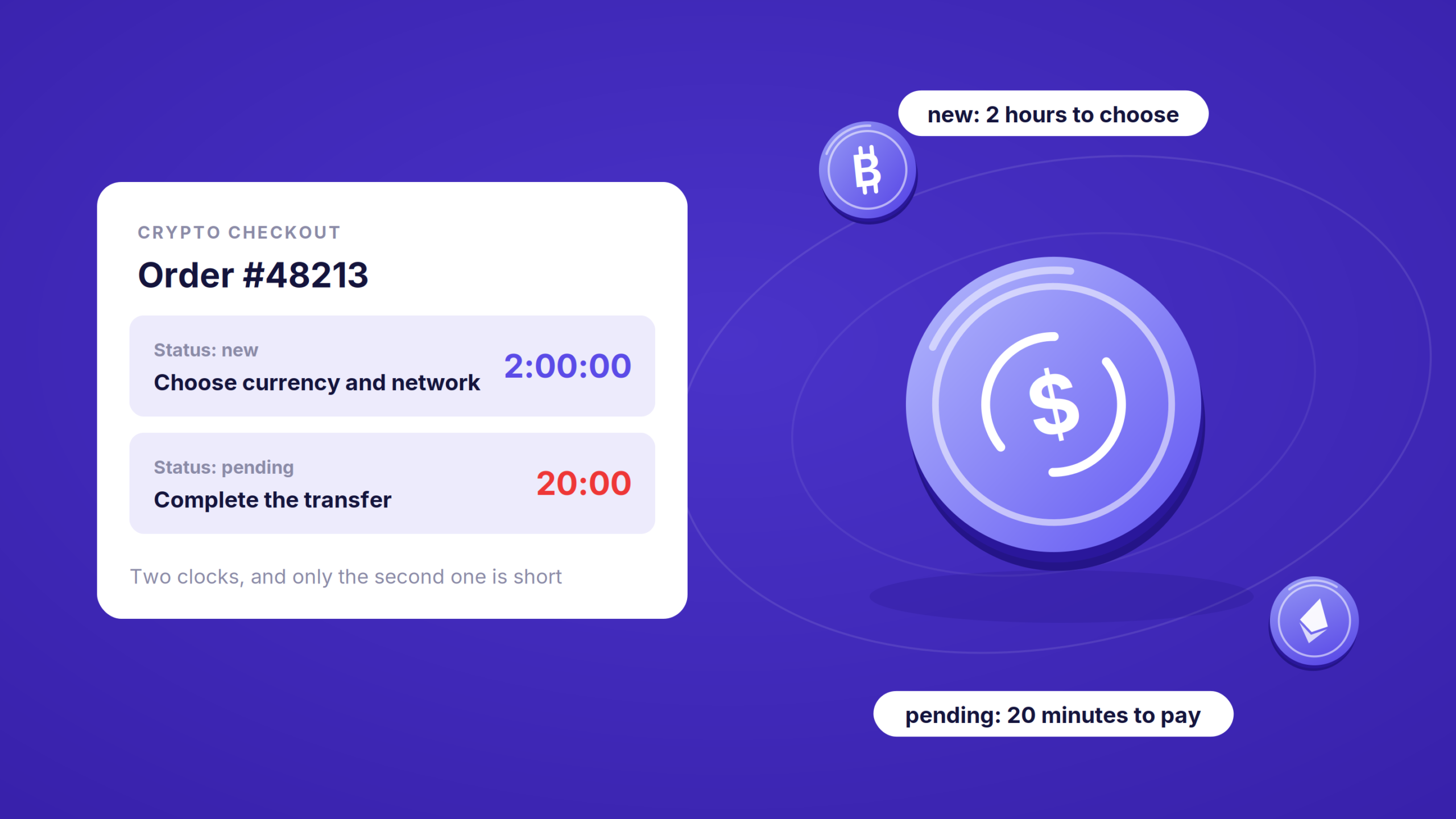
Crypto checkout conversion failures often stem from two overlooked timers: a two-hour window for selecting currency and network, followed by a 20-minute transfer window. Most merchants only monitor the second timer, but the first is where shoppers abandon orders after choosing crypto. The tight 20-minute window is designed to minimize market volatility but disproportionately affects users who need to move funds between wallets or exchanges. Merchants cannot adjust these timers directly, as they are fixed by the payment processor, requiring upstream fixes like pre-checkout instructions to ensure customers arrive with funded wallets.
Underpayment is a common failure mode that does not appear as a distinct order status. Instead, it is tracked as a property within the order data, which can disrupt integrations relying on status-based logic. Merchants can mitigate this with Underpaid Cover, which allows setting a tolerance of up to 10% per tool (API, button, POS). Payments arriving short but within tolerance are auto-approved, while those outside tolerance trigger an email for top-up. However, the cover only applies if the payment arrives within the 20-minute window; late and short payments are treated as expired.
Overpayment is less disruptive but requires clear policy handling. Orders complete normally, and shoppers receive an email about excess funds, which they can request as a refund. The challenge arises with very small overpayments that fall below the minimum refundable amount, leaving excess funds in limbo. Merchants are advised to address this in their refund policy to avoid inconsistent support responses. The system’s single-use payment addresses further complicate resolution, as funds sent to old addresses are not linked to new orders.
Integration pitfalls extend to callbacks and order status updates. Only seven of the nine order statuses trigger payment callbacks, excluding 'new' and 'partially_refunded'. Merchants must avoid assuming expired orders are final, as late payments can still be settled within a configurable window. Relying solely on callbacks for updates risks missing payments that arrive after an order is marked expired in a merchant’s database. Retrieving order details directly is the recommended approach to ensure accuracy and avoid holding funds against closed orders.