Reconciling Crypto Payments With the CoinGate Ledger API
CoinGate has launched a Ledger API to automate crypto payment reconciliation, replacing manual dashboard checks with programmatic transaction tracking for finance teams.
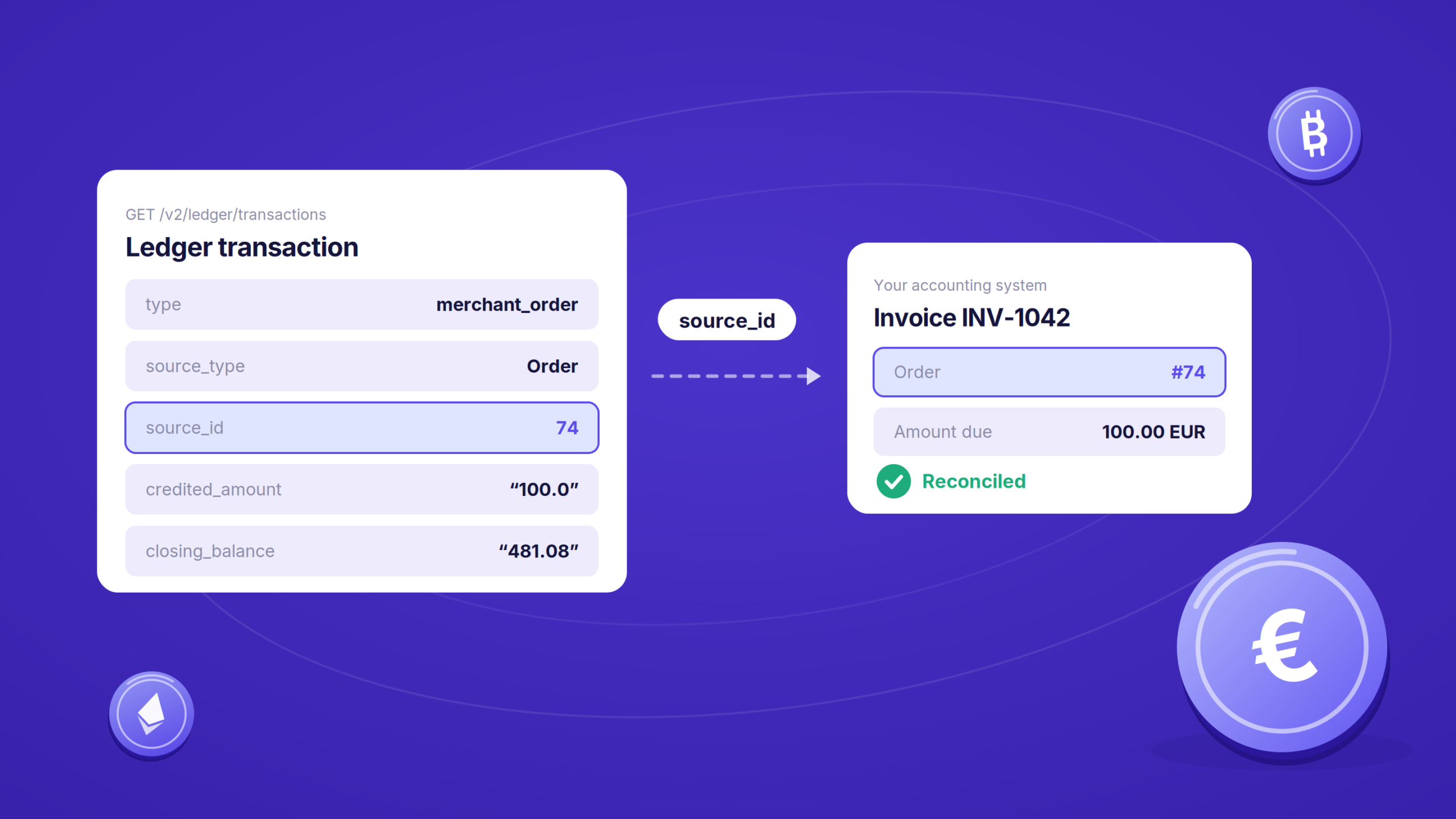
CoinGate’s new Ledger API addresses a common challenge in crypto payments: ensuring received funds match accounting records. The API provides a structured, traceable feed of every credit and debit across multicurrency accounts, enabling automated reconciliation rather than manual dashboard reviews. Each account—such as EUR, Bitcoin, or USDC—tracks balances, while transactions log every movement, including payments, fees, and refunds. The system links each ledger entry to the originating order, allowing finance teams to trace transactions back to invoices and customer payments. This eliminates the need for ad-hoc reconciliations and reduces errors in financial reporting.
The API operates under the base URL https://api.coingate.com/v2, using the same authentication as other CoinGate endpoints. Developers should note that sandbox and live environments use different currency IDs (e.g., live EUR is 11, sandbox EUR is 2), and matching should be done via currency symbols to avoid discrepancies. The API returns paginated results, with 100 entries per page by default, and allows filtering by date ranges. Errors, such as invalid dates, are returned with clear status codes (e.g., 422 for IncorrectDateRangeError), preventing silent failures in automated processes.
Reconciliation hinges on understanding the API’s transaction structure. Each entry includes fields like `source_type` and `source_id`, which link movements to specific orders, and `closing_balance`, which shows the running balance after the transaction. However, the API’s use of `debited_amount` and `credited_amount` follows double-entry bookkeeping conventions, where debits increase liabilities (e.g., customer payments) and credits decrease them (e.g., fees). This contrasts with typical accounting interpretations, requiring developers to adjust their logic accordingly to avoid miscalculations.
The Ledger API is designed to integrate seamlessly into existing finance workflows. Teams can fetch individual accounts or transactions, schedule automated reconciliations, and validate balances programmatically. By replacing manual checks with a structured, auditable feed, the API reduces operational overhead and improves accuracy in crypto payment tracking. Developers are advised to test thoroughly in the sandbox environment before deploying to production.