Paying Suppliers in Stablecoins: What Changes and What Does Not
CoinGate outlines how businesses can use stablecoins for supplier payments, emphasizing vendor willingness, technical setup, and risk management in cross-border transactions.
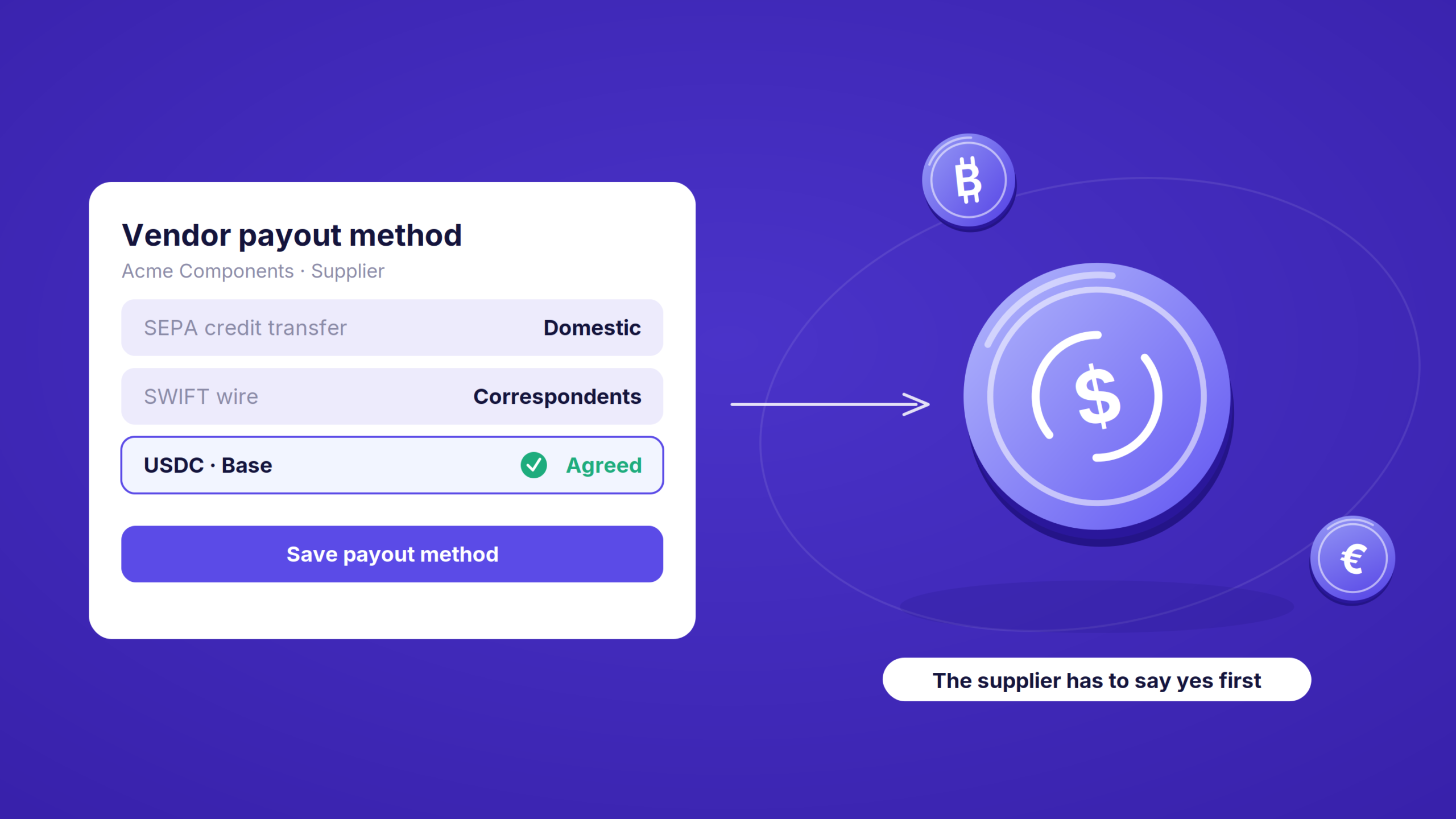
Stablecoins are often proposed as a solution to slow, opaque cross-border payments, but adoption hinges on suppliers accepting them. No payment provider can force a vendor to use USDC or EURC instead of traditional wires, as banking policies, accounting systems, or auditors may prohibit it. Businesses should first confirm supplier willingness during onboarding or contract renewals before investing in technical integration. If no suppliers agree, the project should be abandoned to avoid unnecessary costs.
Traditional international wires involve multiple intermediaries, each adding fees, delays, and currency conversion spreads that are rarely transparent. Stablecoin transfers bypass these intermediaries, settling in minutes with a transaction hash for verification. However, the invoice, approval workflow, and three-way matching remain unchanged. The primary difference is the payment instrument and timing, not the procurement process. Businesses must still account for currency exposure between funding and execution, as stablecoins shift but do not eliminate FX risk.
CoinGate charges 0.50 EUR plus 0.5% for payouts in USDC or EURC, rising to 1.5% with conversion, reflecting the cost of not holding dollars. Businesses can avoid this fee by settling in the supplier’s functional currency using EURC, though availability is limited to Ethereum. The choice of stablecoin and network affects costs and eligibility, with country screening and AML status required for transactions. Businesses should compare these costs against traditional banking spreads rather than assuming savings.
Early payment discounts become feasible with predictable settlement times, as payments can be delivered on the agreed day. Transaction hashes provide a public, timestamped record of payments, reducing disputes. However, wallet addresses must be verified out-of-band to prevent fraud, as email-based address changes are unreliable. For bulk payouts, CSV uploads handle up to 300 rows, with draft batches expiring after five minutes. API access is restricted to ensure compliance, requiring valid business AML status and administrator KYC.