Why Communications Platforms Take Crypto for Prepaid Balances
Crypto prepaid balances address high decline rates in small, frequent top-ups by offering permanent customer-specific addresses and automatic reconciliation, reducing support costs and service interruptions.
Card declines on small, frequent prepaid top-ups often go unnoticed until a service halts, costing revenue and customer trust. Unlike one-off purchases, these top-ups are routine and rarely scrutinized, making card failures particularly disruptive. Crypto solutions aim to streamline this process by eliminating the need for repeated invoices and temporary addresses, which frequently lead to support tickets and unresolved payments.
Crypto integrations typically mimic card flows, generating new addresses for each top-up and causing structural issues when customers reuse old addresses. This results in a high volume of support queries about uncredited payments. A permanent, customer-specific address resolves this by allowing automatic balance updates upon incoming transfers, shifting reconciliation from invoice matching to customer attribution.
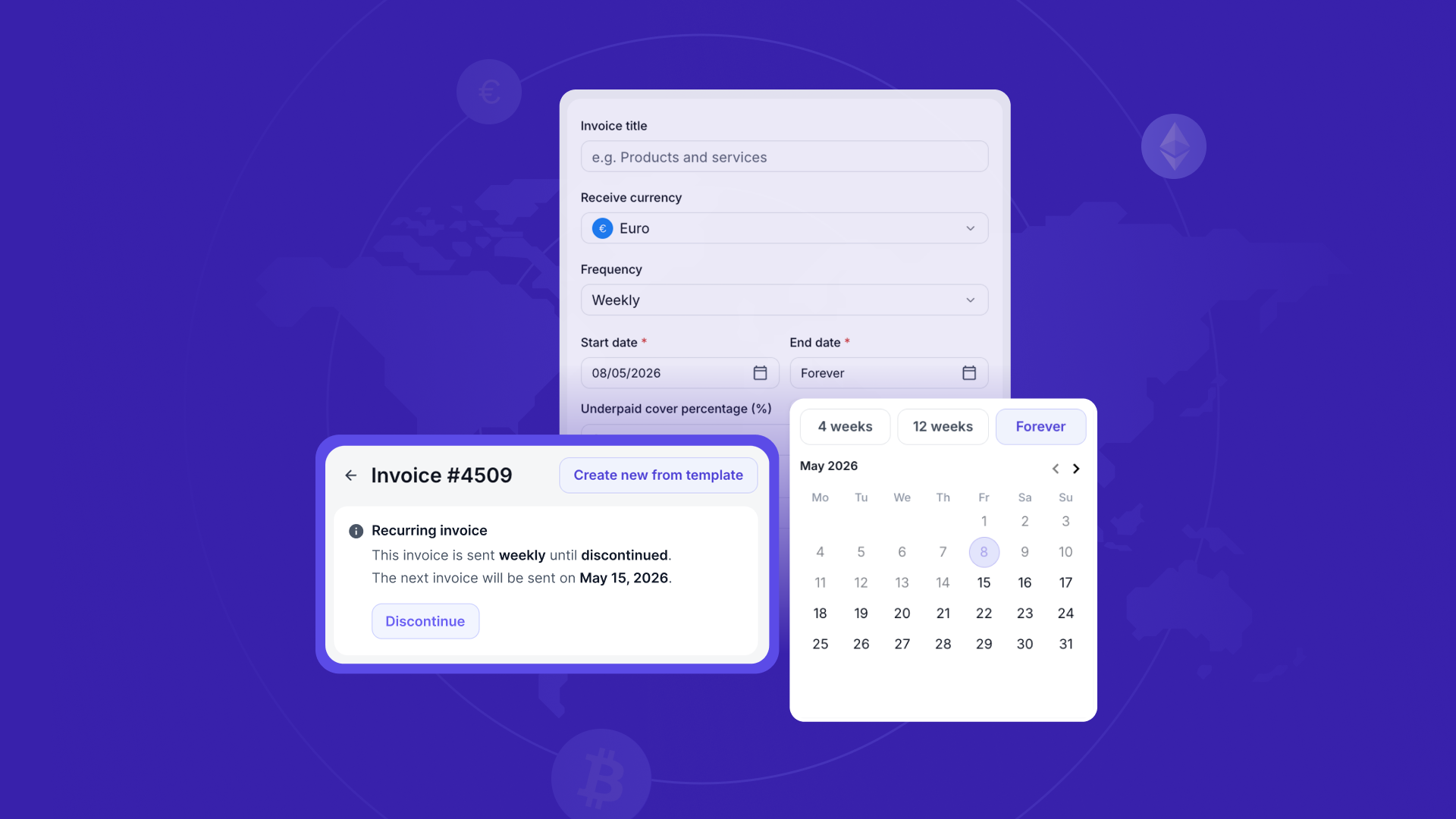
Recurring crypto payments do not function like card auto-reloads; instead, they generate scheduled invoices that require manual customer action. This approach avoids the lack of stored payment methods in crypto but introduces new workflows. Alerts based on service duration rather than currency thresholds better align with operational needs, such as mid-shift calling limits.
Pricing for incoming crypto payments starts at 1% per transaction on the Standard plan, with no monthly or setup fees. Settlements are automatic and weekly by default, though faster options exist for Enterprise clients. Conversion to euros occurs at the locked exchange rate, and settlement currency must be explicitly set to avoid defaulting to USDC.