Cyber Investigation & Incident Response
Elastic Security enhances cyber investigation and incident response with AI-driven analytics, unified data access, and collaborative tools to reduce threat dwell time and improve analyst productivity.
The useful question is what changes for users, developers or buyers, and whether the announcement stays industry context or becomes something people can actually use.
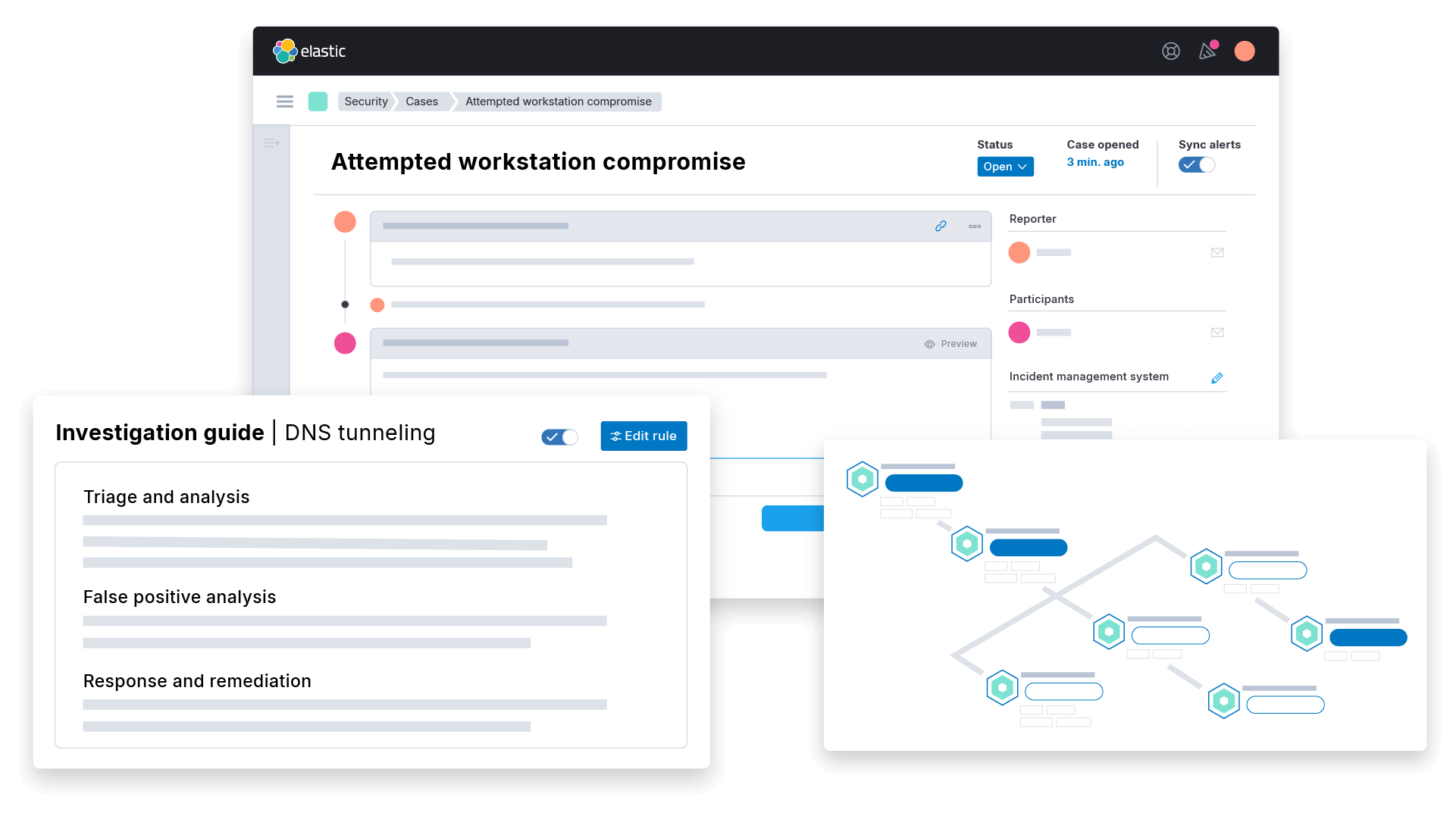
Elastic Security integrates investigation and response workflows to help security teams address external attacks and insider threats. The platform enables analysts to access years of data quickly, eliminating delays caused by scattered information. Built-in case management and workflow integrations facilitate cross-team collaboration, including with DevOps, to streamline remediation efforts. PSCU reported a 99% reduction in dwell time using Elastic, demonstrating its impact on operational efficiency.
The platform supports rapid triage and investigation through embedded threat intelligence and investigation guides. These guides provide context on why alerts trigger, how to assess their validity, and recommended next steps. Elastic Security Labs researchers contribute expert advice via built-in playbooks, reducing the learning curve for junior analysts while augmenting experienced practitioners. A unified investigation timeline allows teams to connect disparate data points and examine user or host activity in detail.
Elastic Security enables automated remediation actions across distributed endpoints, allowing teams to respond to threats at scale. The platform’s case management system coordinates efforts internally, while integrations with external security and ticketing tools extend collaboration beyond the SOC. Users can access internal and external context, including host anomaly scores and alert attribute counts, to inform decision-making during investigations.
The Elastic Security platform is available for download or hosted in Elastic Cloud, offering a single stack for analyzing logs, metrics, and APM traces. It supports preventative, detective, and responsive measures against threats, including ransomware and malware. With the ability to leverage petabytes of enriched data and ML insights, teams can uncover both expected and unexpected threats while maintaining speed and simplicity in their operations.