Iron Flow Chemistry
ESS Tech has commercialized iron flow battery technology offering 25+ years of operation without capacity fade, using widely available materials and a predominantly American supply chain.
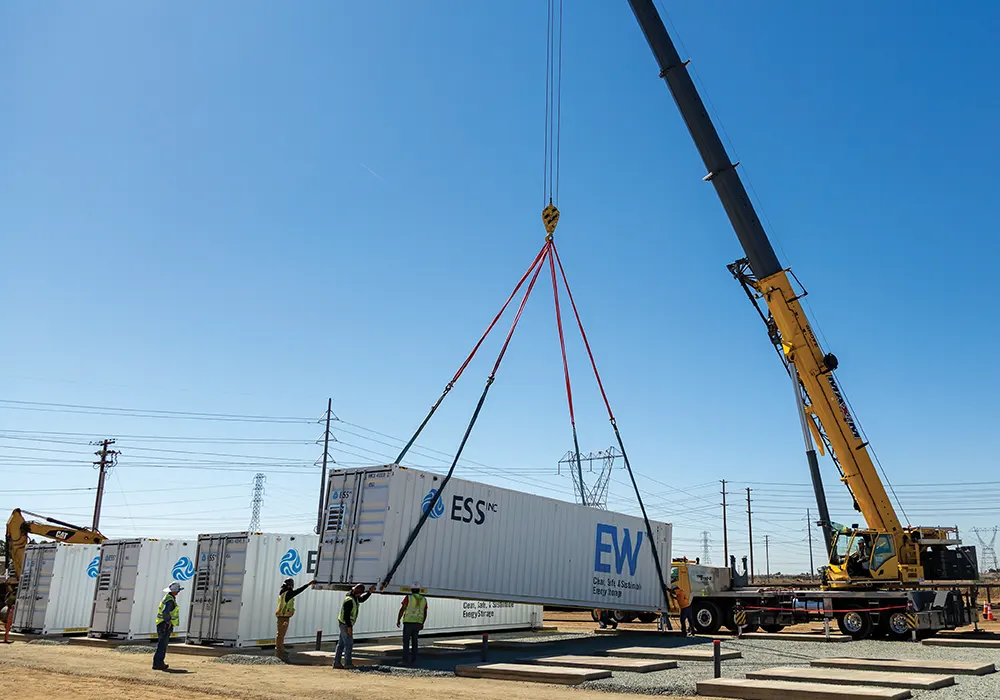
ESS Tech, Inc. announced the commercialization of its iron flow battery technology, developed since 2011, which delivers over 25 years of service with no capacity fade or degradation. The technology relies on abundant materials like iron, avoiding critical minerals such as vanadium, lithium, or cobalt, and is designed for safe operation in diverse environments, including wildfire-prone regions. ESS systems are engineered for flexibility and scale, meeting long-duration energy storage demands without performance loss, while supporting domestic supply chain resilience and minimizing climate impact.
A lifecycle analysis conducted in collaboration with UC Irvine compared ESS’s iron flow batteries to vanadium redox, zinc bromine, and lithium-ion systems, finding iron flow batteries to have the lowest global warming potential. The study evaluated manufacturing, operational, and end-of-life phases, highlighting iron flow batteries as the cleanest option. ESS’s electrolyte health management system further reduces maintenance needs by eliminating frequent downtime for recovery or rebalancing required by other flow battery technologies.
ESS’s iron flow batteries are designed for deployment in various settings, from urban areas to fire-risk zones, with reduced requirements for fire suppression or hazardous material precautions. The systems are substantially recyclable or reusable at end-of-life, aligning with sustainability goals. The technology’s competitive total cost of ownership over a 25-year lifespan ensures long-term reliability and affordability for customers.
ESS is advancing toward the U.S. Department of Energy’s 2030 long-duration energy storage cost target of $0.05/kWh through automated production and standardized components. The proton pump system maintains battery health and state of charge, while the technology’s field-proven deployment contrasts with competing non-lithium systems still in development. ESS’s iron flow batteries are positioned to meet future grid-scale energy storage demands with proven performance and scalability.