New Smart City Pilot Network to Bridge Digital Divide for 50 U.S. Cities
Intel and Tradewinds Networks launched Bellflower Connect, a solar-powered municipal network in California, to provide affordable internet access to 50 U.S. cities by 2027, addressing digital exclusion and high telecom costs.
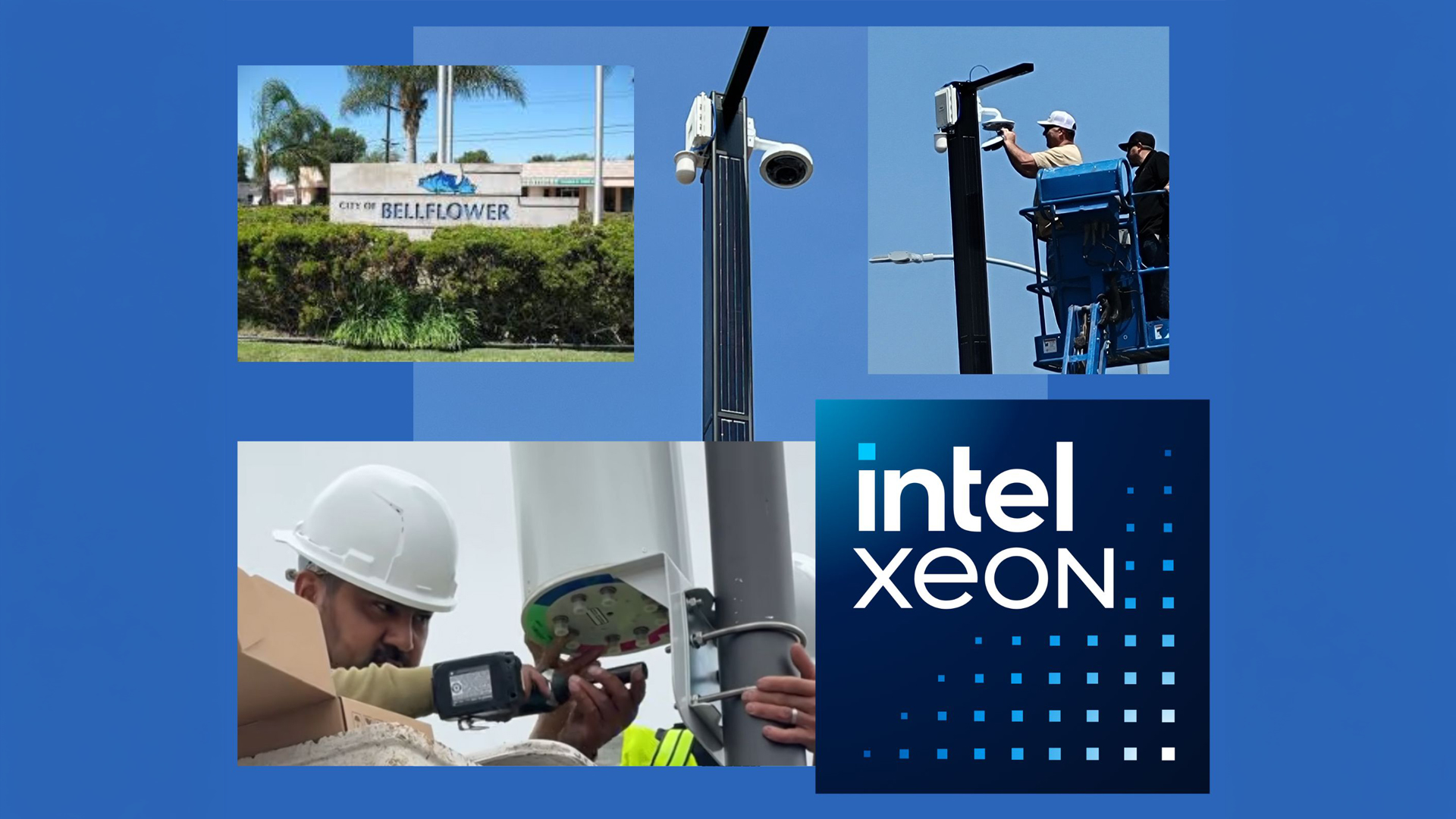
Bellflower, California, a city of 75,000 near Los Angeles, has long struggled with limited internet access and high telecom expenses, leaving residents unable to pay bills, check medical updates, or accept credit card payments. To address this, the city partnered with Tradewinds Networks to deploy Bellflower Connect, a private wireless network using solar-powered micro-servers with Intel Xeon processors and AI-driven cybersecurity at the edge. The project received $1 million in municipal transportation grants and $2 million from Tradewinds, with funding structured through a revenue-sharing agreement. Local workforce development initiatives also train students as certified wireless broadband technicians, aligning with sustainable city goals.
The network operates without relying on distant cloud data centers, instead using 80 solar-powered towers and compact Dell PowerEdge XR8000 servers with Intel Xeon processors for edge computing. This approach reduces costs, power consumption, and processing delays compared to traditional broadband models. Intel’s Vijay Kesavan noted that the scalable Xeon infrastructure allows cities to easily integrate future services like smart lighting or traffic sensors. The project’s modular design enables incremental upgrades without overhauling the entire system.
Residents in qualifying low-income households receive free internet access via a home modem linked to the nearest tower, while others can subscribe for $15 per month and businesses for $39 per month—rates significantly lower than commercial carriers. By May 2026, 60 households were using the service, with an expected 10,000 households connected by mid-2027. Free public Wi-Fi will also cover parks, libraries, and outdoor markets, benefiting local businesses like Cassidy’s Corner Café, which plans to use the network for operations and customer Wi-Fi.
The model is expanding to 50 additional cities, with Wrightsville, Arkansas, set to begin Phase 1 installation this summer and eight others in the approval pipeline. Despite logistical challenges such as rising costs and delayed fiber delivery, project leaders highlight strong community support, with residents testifying to the network’s life-changing impact during city hall meetings.