Combatting Antibiotic Resistance with Nanotechnology, Robotics, and AI
Berkeley Lab’s Aeron Tynes Hammack combines nanofabrication, robotics, and AI to accelerate quantum materials research and develop phage-based therapies against antibiotic-resistant bacteria.
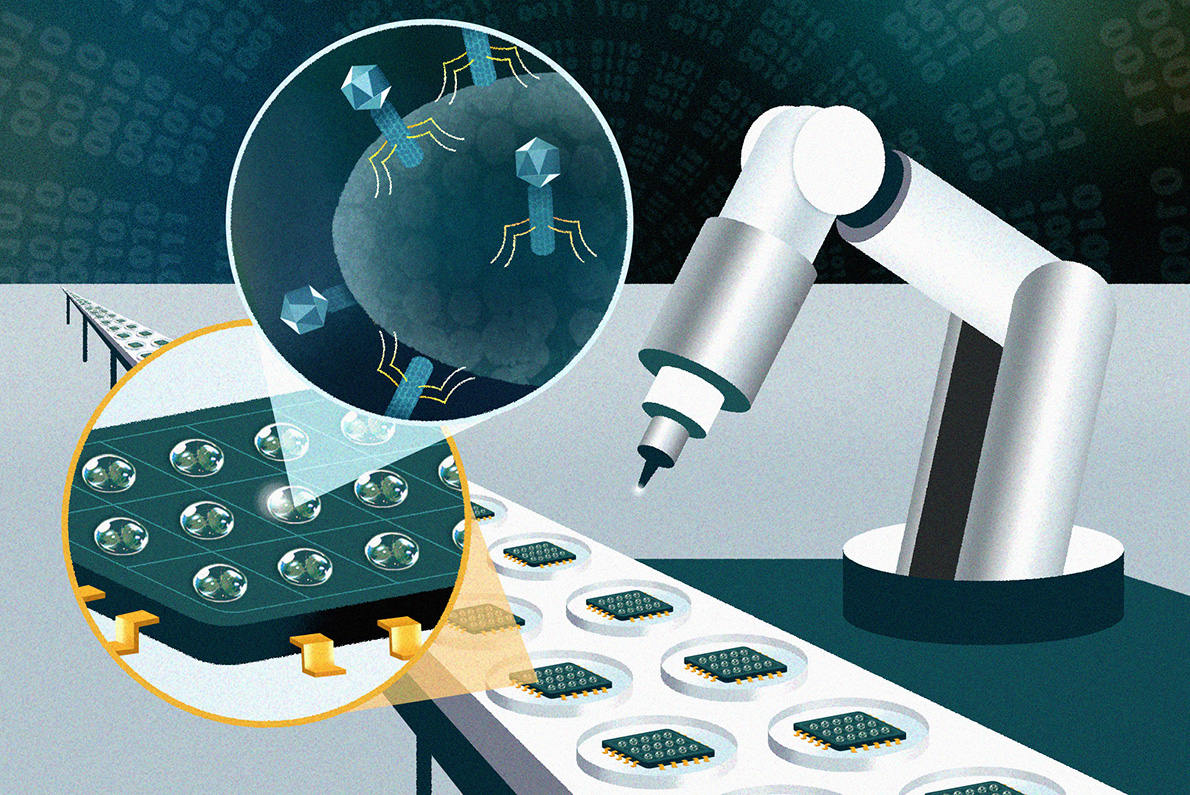
Aeron Tynes Hammack, Interim Facility Director of the Nanofabrication Facility at the Molecular Foundry, applies automated tools to test thousands of small samples for quantum computing and infectious disease applications. Using the QIS cluster tool, he evaluates Josephson junction configurations for qubits, while biotech firm Locus Biosciences advances a phage therapy developed with Hammack’s high-throughput screening process, now in clinical trials. The approach leverages robotics and AI to rapidly identify effective materials and bacteriophages, addressing critical gaps in traditional research pipelines.
Phage therapy, discovered in the early 20th century, targets specific bacterial strains without promoting broad antimicrobial resistance, unlike conventional antibiotics. Hammack co-founded EpiBiome to automate phage screening against drug-resistant pathogens, testing 2.5 million phage-host combinations to identify a six-phage cocktail effective against 356 uropathogenic E. coli strains, including 29% multi-drug resistant cases. The therapy demonstrated 96.4% efficacy in lab trials and showed promising safety signals in Phase 1 clinical testing.
Hammack’s work bridges physics and biology, applying nanofabrication techniques from quantum research to phage therapy. At EpiBiome, he automated phage screening using microscopy and spectroscopy to detect bacterial lysis, while developing AI-driven computer vision to analyze results. The process, later scaled by Locus Biosciences, highlights the potential of precision diagnostics and phage-based treatments to combat antibiotic resistance, a growing global health threat.
At Berkeley Lab, Hammack now focuses on single-particle assays to detect minute biological signals, aiming to create label-free biosensors using nano-scale magnetic and plasmonic technologies. These sensors could enable atomic-resolution biological studies, early cancer detection, and real-time monitoring of molecular interactions without chemical tags. The Phage Foundry, led by Vivek Mutalik, further supports this research by cataloging characterized phages, providing a public resource for phage-based therapies and microbiome studies.