What’s the Problem with Quantum Noise?
Quantum noise, inherent fluctuations in isolated systems, limits measurement and control at the smallest scales, posing challenges for quantum computing and detection technologies.
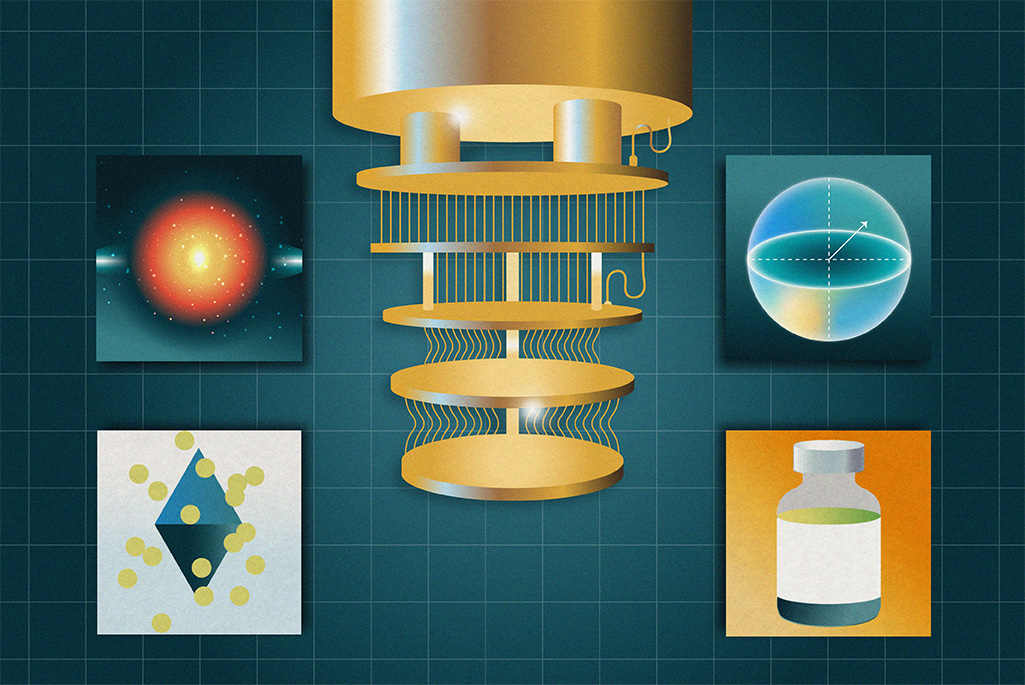
Quantum noise arises from unavoidable fluctuations in even perfectly isolated systems, acting as a fundamental barrier to precision at the smallest scales. These disturbances disrupt quantum computations, degrade sensor sensitivity, and accelerate decoherence, undermining the stability of quantum systems. Researchers at Lawrence Berkeley National Laboratory are exploring methods to mitigate these effects, including advanced qubit designs that resist instability and AI-driven measurement techniques to enhance control. The work aims to enable quantum computers capable of simulating complex molecular interactions for drug discovery and materials science, as well as detectors sensitive enough to observe elusive particles like dark matter and neutrinos.
The challenge of quantum noise is likened to ripples on a perfectly still pond, where microscopic disturbances persist despite ideal conditions. These fluctuations corrupt quantum calculations, limit the detection of faint signals, and disrupt the fragile states required for quantum technologies to function. Berkeley Lab’s efforts focus on both theoretical and practical approaches to suppress noise, including materials engineering and adaptive measurement protocols. Success could unlock new frontiers in fundamental physics and applied sciences, from unraveling cosmic mysteries to designing next-generation technologies.
Mitigating quantum noise requires interdisciplinary solutions, combining quantum physics, materials science, and computational techniques. Novel qubit architectures, such as topological or protected qubits, are being developed to extend coherence times and reduce error rates. Meanwhile, AI-powered algorithms analyze and compensate for noise in real time, improving the reliability of quantum systems. These advancements are critical for scaling quantum technologies beyond laboratory prototypes.
The broader implications of reducing quantum noise extend to fields like cosmology and medicine, where ultra-sensitive detectors and high-fidelity quantum simulations could reveal new insights. Berkeley Lab’s research underscores the importance of addressing fundamental limitations to harness the full potential of quantum technologies. By refining control over quantum systems, scientists aim to bridge the gap between theoretical promise and practical application, paving the way for discoveries that redefine our understanding of the universe.