Stacking Up for the Future: How Researchers Are Building Next-Gen Quantum Computers
Researchers at Lawrence Berkeley National Laboratory are advancing quantum computing by developing an integrated technology stack, addressing hardware, software, and control challenges to enable error-corrected quantum calculations for future scientific applications.
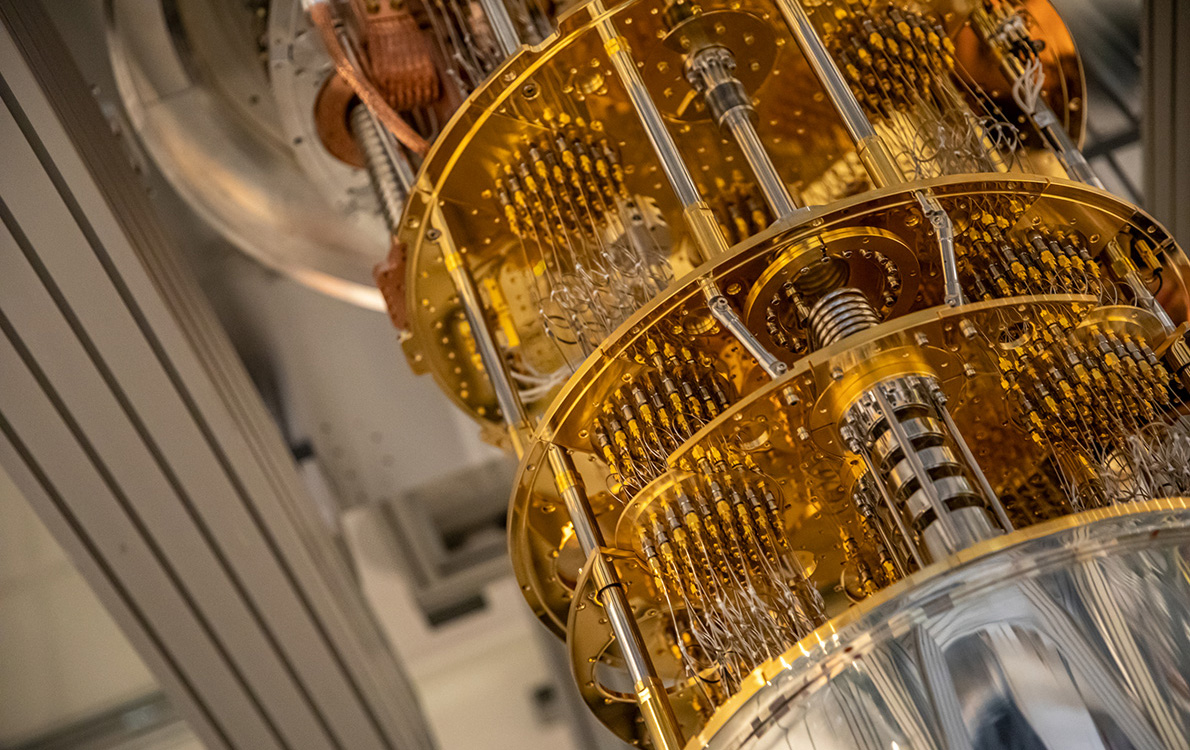
Quantum computers promise to accelerate breakthroughs in fields like drug development and materials science, but achieving this requires more than just qubits. Researchers at Lawrence Berkeley National Laboratory (Berkeley Lab) are collaborating with industry and academia to build a complete quantum computing stack, including superconducting quantum processing units (QPUs), dilution refrigerators operating below 20 millikelvin, and control electronics like QubiC. This integrated approach ensures precise qubit manipulation and error correction, forming the foundation for practical quantum computing.
A holistic focus on the quantum stack is critical because performance bottlenecks can emerge at any level. For instance, maintaining qubit coherence depends not only on processor design but also on minimizing noise in signal delivery through the dilution refrigerator’s cold stage. Scalability remains a challenge, as current wiring setups—one wire per qubit—become impractical for systems with thousands of qubits. Berkeley Lab is researching low-noise wiring technologies to optimize coherence and support larger-scale quantum processors.
First-generation quantum computers, with dozens to hundreds of qubits, are still limited in computational power compared to supercomputers. Berkeley Lab is working toward second-generation systems with thousands of qubits, requiring advanced error correction and classical computing support. These larger systems will enable simulations of particle interactions, high-energy physics, and quantum chemistry—problems intractable for classical computers. The lab’s research focuses on developing robust, noise-resistant processors to bridge this gap.
Berkeley Lab’s Advanced Quantum Testbed (AQT) is central to these efforts, aiming to increase processor performance by roughly 1,000 times while optimizing full-stack operations. By applying these advancements to real-world scientific problems and partnering with industry, the lab is accelerating the development of next-generation quantum computers. These innovations address challenges across the stack, from cryogenic infrastructure to error-corrected QPUs, positioning Berkeley Lab as a key player in quantum computing’s future.