Atlas System Evolution: Balancing Sustainment with Strategic Enhancement
L3Harris is upgrading the U.S. Space Force’s Atlas system with three major enhancements by 2027 to improve space domain awareness, enable real-time data sharing with Five Eyes allies, and support distributed operations from Dahlgren and Vandenberg.
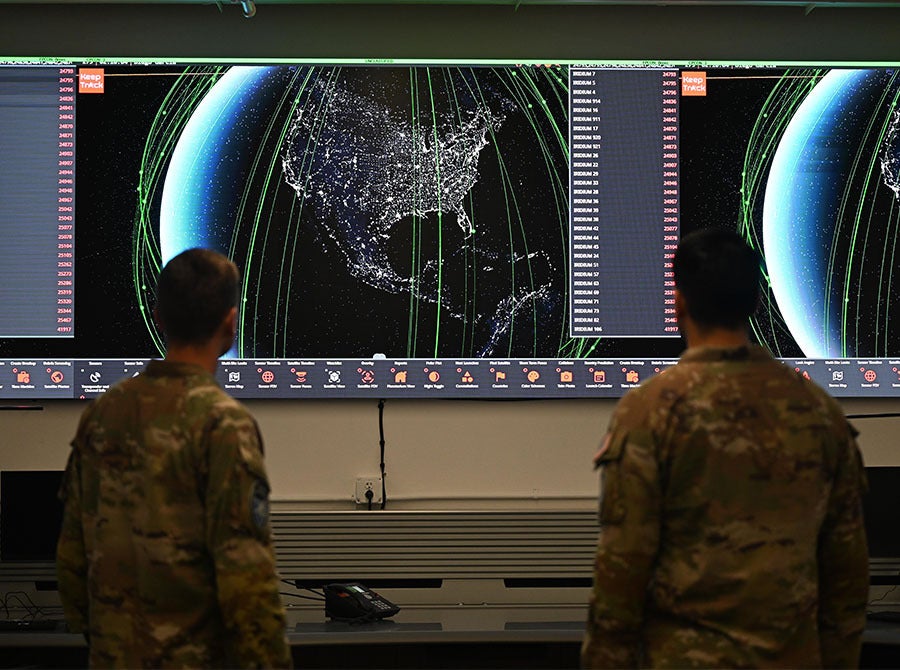
L3Harris is modernizing the Atlas system, transitioning it from a legacy replacement to a platform supporting distributed space operations. Three major enhancements planned for 2027 will improve satellite monitoring, debris tracking, and threat detection, ensuring warfighters maintain situational awareness in a contested domain. The upgrades aim to address blind spots in space capabilities critical for communications, navigation, and intelligence operations.
The Mission Processing System infrastructure at Dahlgren, Virginia, will integrate Atlas with cloud-based architecture, doubling user capacity and extending mission capabilities to the East Coast. The 19th Space Defense Squadron’s upgrade, scheduled for early 2027, will create a backbone for geographically distributed operations, connecting Dahlgren with the 18th Space Defense Squadron at Vandenberg via high-speed networks for seamless collaboration and reduced latency.
By Q1 2027, Atlas will enable real-time exchange of space domain awareness data among Australia, Canada, New Zealand, the United Kingdom, and the U.S. The system will automate sharing of space object tracking, conjunction warnings, and anomaly detections, replacing manual processes. L3Harris’s Test, Training and Exercise capability will provide a separate environment for realistic training using historical and synthetic data, supporting operator certification and complex scenario generation without disrupting live missions.
Atlas’ development balances sustainment and enhancement, with half the effort maintaining system availability and cybersecurity, and the other half optimizing algorithms, workflows, and data fusion. The system replaced the Cold War-era SPADOC, offering updated interfaces, increased processing capacity, and integration with global sensors to provide real-time situational awareness across all orbital regimes.