NASA Awards L3Harris Contract for Search-for-Life Mission
NASA has awarded L3Harris a contract to develop thermal and optical stability technologies for the Habitable Worlds Observatory, a telescope designed to detect life signs on distant planets with picometer-level precision.
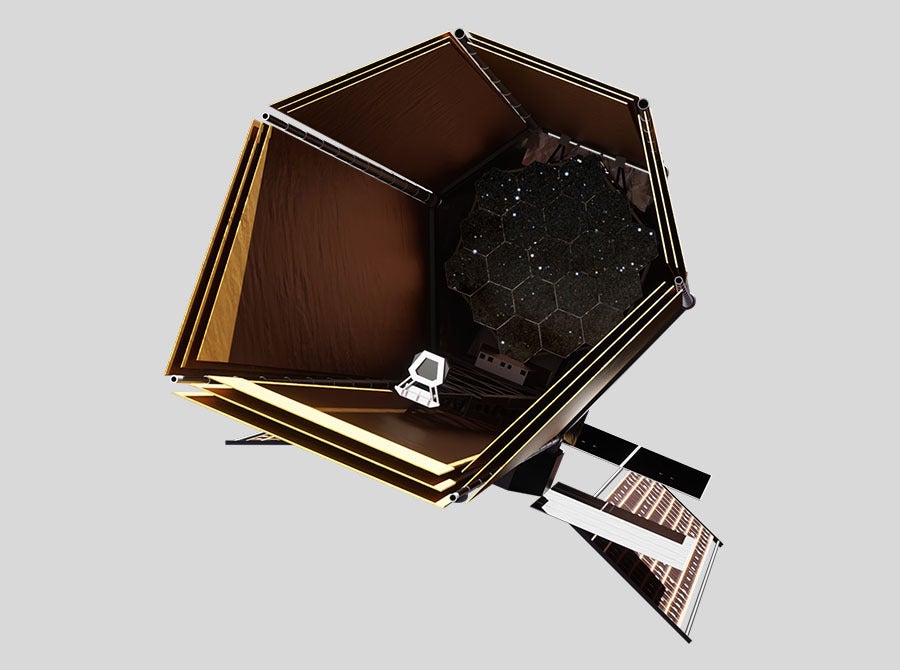
NASA has selected L3Harris Technologies for a three-year, fixed-price contract to advance key technologies for the Habitable Worlds Observatory (HWO), a next-generation space telescope aimed at identifying habitable exoplanets. The contract tasks L3Harris with demonstrating thermal and optical stability systems capable of picometer-level precision, a requirement for the telescope’s ability to detect faint light from distant worlds. The work will be conducted in Rochester, New York, building on the company’s prior contributions to NASA’s Nancy Grace Roman Space Telescope. The goal is to prevent even atomic-scale movements caused by temperature fluctuations, ensuring the telescope remains stable enough to analyze light from exoplanets for signs of life such as water vapor or methane.
The HWO mission represents one of the most technically demanding projects NASA has undertaken, requiring instruments capable of measuring light from planets light-years away with extraordinary accuracy. L3Harris will leverage its experience from previous deep space missions, including the James Webb Space Telescope and the Roman Space Telescope, to meet these challenges. The company’s role focuses on developing systems that maintain thermal and optical stability at a scale smaller than an atom, a critical factor for detecting chemical signatures of potential life. This contract marks L3Harris’ involvement in a mission that could redefine humanity’s understanding of life beyond Earth.
Charles Clarkson, Vice President and General Manager of Space Superiority & Imaging at L3Harris, emphasized the mission’s engineering complexity, noting that achieving picometer-level stability is among the most demanding challenges in space exploration. The HWO’s design specifically targets the detection of extrasolar planets capable of supporting life, requiring spectral measurements of unprecedented precision. L3Harris’ work on this project builds on seven years of collaboration with Xoople to develop advanced space-borne measurement systems tailored for AI-driven analysis. The company’s participation underscores its long-standing role in high-stakes NASA missions.
The Habitable Worlds Observatory is intended to address fundamental questions about the universe, including the existence of life beyond our solar system. By focusing on exoplanets with potential habitability, the telescope will analyze light for chemical indicators such as oxygen, ozone, and methane. L3Harris’ contract with NASA highlights the company’s ongoing contributions to deep space exploration, following its involvement in missions like the Roman Space Telescope, which studies dark energy, dark matter, and undiscovered galaxies. The HWO’s success could provide transformative insights into the prevalence of life in the cosmos.