Roman Space Telescope Will Survey a Century of Cosmos in Weeks: L3Harris Technology Makes It Possible
NASA’s Nancy Grace Roman Space Telescope, launching next month, will survey the cosmos 1,000 times faster than Hubble, mapping billions of galaxies and exoplanets in its first five years.
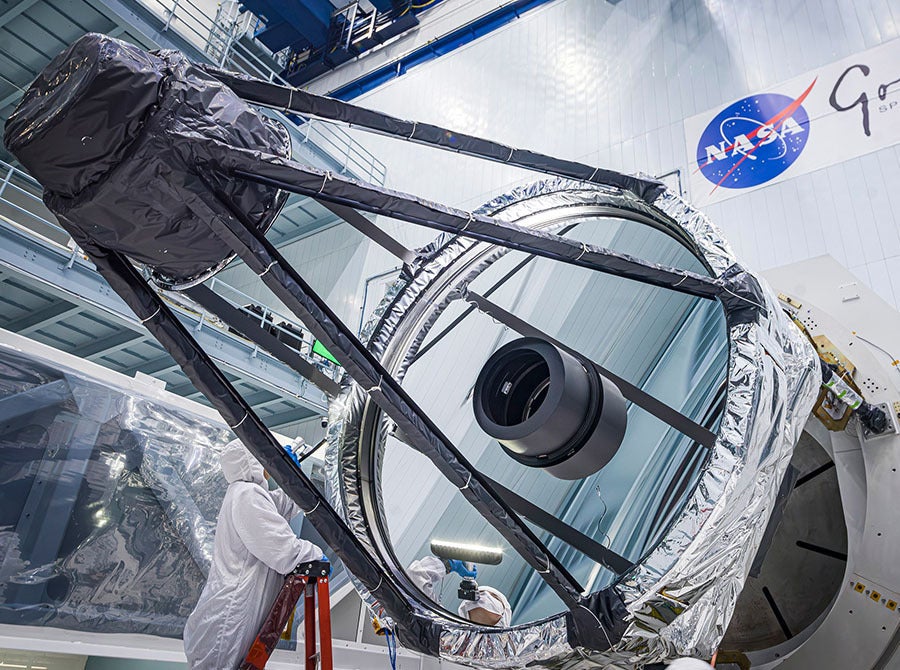
The Nancy Grace Roman Space Telescope, named after NASA’s first chief of astronomy, is scheduled for launch next month and will operate from the second Lagrange point, 1 million miles from Earth. Its primary mission includes three surveys: mapping the Milky Way’s galactic center to detect 100,000 exoplanets, scanning 12% of the sky to measure the universe’s expansion, and studying supernovae from up to 8 billion years ago. L3Harris Technologies designed and built the optical telescope assembly, communication systems, and guidance sensors required for the telescope’s decade-long operation without repair.
The telescope’s coronagraph instrument will block starlight to image exoplanets, a technology demonstrator for future missions like NASA’s Habitable Worlds Observatory. The Optical Telescope Assembly, delivered by L3Harris, serves as the telescope’s critical imaging component, ensuring precise and stable data collection. Roman’s rapid survey capabilities and wide field of view are expected to transform understanding of dark energy, dark matter, and the universe’s evolution.
L3Harris has contributed to over 60 years of space exploration, including work on the James Webb Space Telescope, Mars rovers, and GPS satellites. The company’s systems have supported missions to Mars, Earth observation, national security, and astronaut communications aboard the International Space Station and Artemis II. Roman represents the culmination of decades of innovation in space-qualified systems, where every component must meet stringent performance standards.
The mission aims to identify worlds that could harbor life and provide data to address enduring questions about the universe’s structure and fate. For engineers at L3Harris, launch day will mark both a milestone and the beginning of a new phase of discovery as the telescope ventures into the cosmos to answer fundamental scientific questions.