L3Harris Technology Set to Help Unlock the Universe as NASA's Roman Space Telescope Nears Launch
NASA's Roman Space Telescope, launching no earlier than August 30, will deploy L3Harris-built optical technology to map the universe, study dark energy, and survey exoplanets with unprecedented speed and precision.
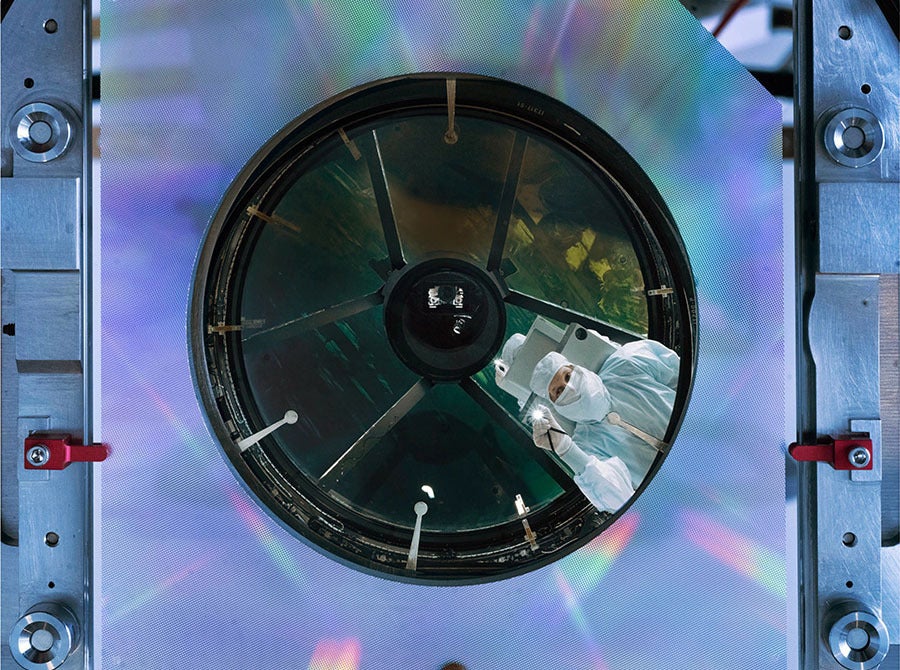
NASA’s Nancy Grace Roman Space Telescope is scheduled to launch no earlier than August 30, carrying technology designed by L3Harris Technologies that will enable the mission to create the largest and most detailed cosmic maps ever produced. The observatory’s Optical Telescope Assembly, built by L3Harris, features a 2.4-meter primary mirror and a field of view 100 times larger than the Hubble Space Telescope, allowing it to survey the universe nearly 1,000 times faster. This advanced optical system will help scientists investigate dark energy, discover distant exoplanets, and capture sweeping views of billions of galaxies from nearly one million miles from Earth. The telescope will operate from the Sun-Earth L2 Lagrange point, a stable location ideal for deep-space observations.
L3Harris Technologies designed and manufactured the Optical Telescope Assembly at its Rochester, NY facility, addressing engineering challenges in optical precision, stability, and reliability to meet the mission’s demanding requirements. The company also provided high-reliability communications infrastructure, precision guidance sensors, and radiation-hardened electronics to ensure the telescope operates with accuracy in the harsh environment of deep space. These technologies will enable Roman to transmit vast volumes of scientific data back to Earth while maintaining extraordinary image quality throughout its mission. The Optical Telescope Assembly and telescope electronics represent a continuation of L3Harris’ decades-long partnership with NASA on civil and national security space programs.
The Roman Space Telescope’s primary scientific objectives include investigating dark energy, the invisible force believed to drive the accelerating expansion of the universe, and conducting the most comprehensive census of exoplanets using a coronagraph. By capturing images of some of the oldest galaxies and most distant stars, the mission aims to uncover discoveries that could transform humanity’s understanding of the cosmos. L3Harris’ contributions ensure the telescope’s optical system performs flawlessly, enabling scientists to explore fundamental questions about the universe’s structure and evolution. The observatory’s unprecedented survey speed and image quality will produce an unparalleled volume of data for astronomical research.
As the Roman Space Telescope begins its journey, L3Harris technology will serve as humanity’s window into the universe’s oldest mysteries, including dark energy and distant planetary systems. The mission represents one of the most ambitious observatories ever built, with L3Harris’ optical telescope assembly playing a critical role in its success. By enabling Roman to operate with precision and reliability from nearly one million miles away, the company’s contributions will support discoveries that could redefine scientific knowledge for decades. The telescope’s launch marks a significant milestone in NASA’s efforts to explore the cosmos and advance our understanding of the universe’s fundamental workings.