NASA Ames’ Contributions to Roman’s Mission
NASA’s Nancy Grace Roman Space Telescope, launching on Aug. 30, will advance cosmic research with contributions from NASA Ames, including software to reduce image glare and technology to image exoplanets in multi-star systems.
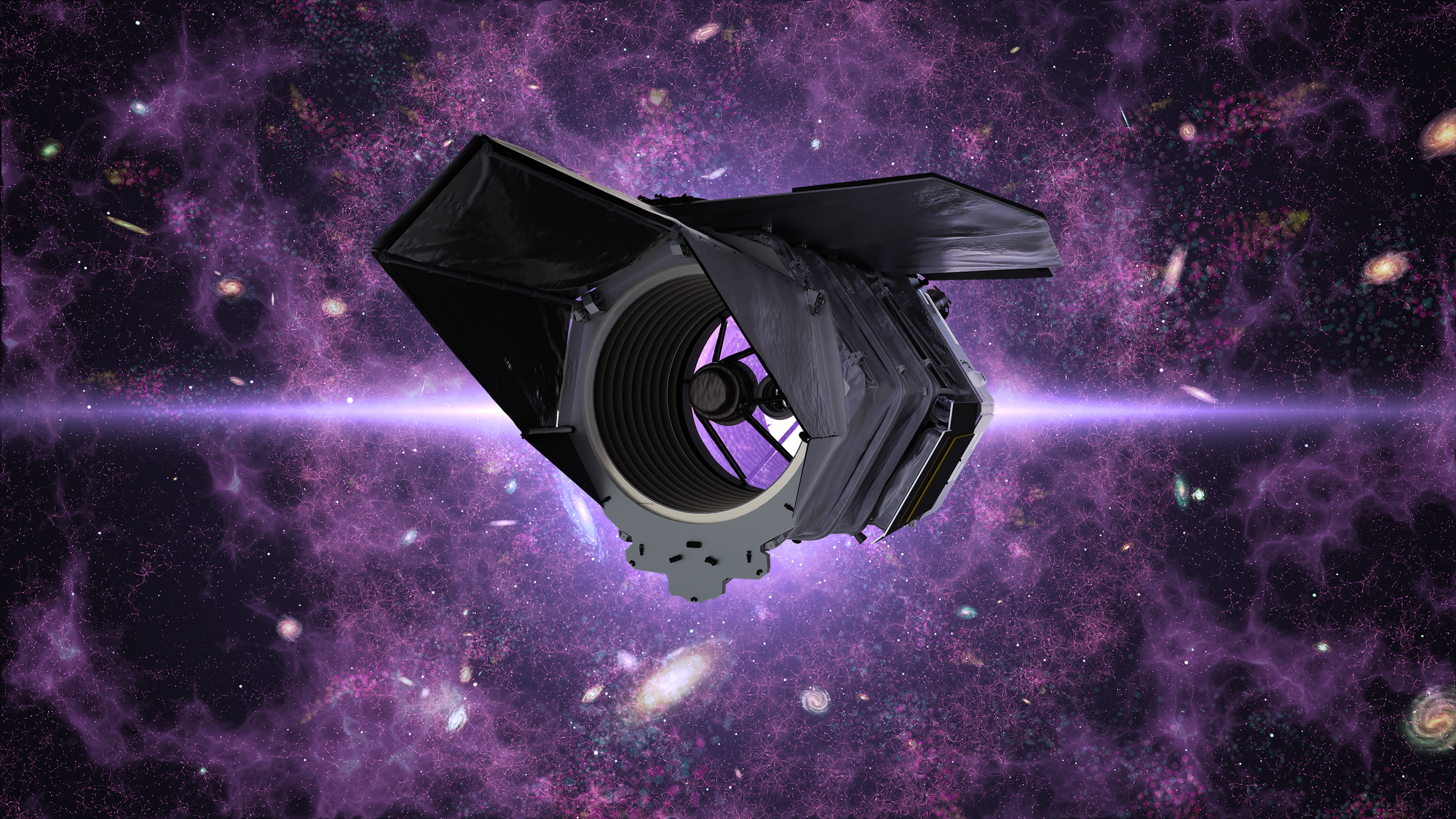
NASA’s Nancy Grace Roman Space Telescope is scheduled to launch on Sunday, Aug. 30, to study dark energy, dark matter, exoplanets, and galaxy formation. Researchers at NASA’s Ames Research Center in California’s Silicon Valley are contributing to the mission by developing tools to enhance the telescope’s imaging capabilities. The Wide Field Instrument, Roman’s main camera, will capture high-resolution images of the universe, but stray light can degrade image quality. Ames scientists, in collaboration with NASA Goddard and IPAC/Caltech, created ROSALIA software to predict and remove unwanted light, improving the accuracy of astronomical observations and enabling clearer views of cosmic structures.
The ROSALIA software addresses two types of stray light: bright glints and diffuse background light, including zodiacal light from interplanetary dust. By removing this contamination, the software reveals faint emissions at galaxy edges, aiding studies of cosmic evolution. The software also helps astronomers adjust observation plans to minimize interference from glints, ensuring higher-quality data for research on dark matter and galaxy formation.
The Roman Coronagraph Instrument, one of two on the telescope, will demonstrate advanced technologies for directly imaging exoplanets around other stars. It uses deformable mirrors to suppress starlight and create a dark zone for observing faint reflected light from planets. Current coronagraphs struggle with multi-star systems, where overlapping starlight complicates imaging. NASA Ames is addressing this challenge with Multi-Star Wavefront Control (MSWC), a technology that includes custom masks and software to suppress light from multiple stars and reveal hidden exoplanets.
The MSWC technology, developed in collaboration with NASA’s Jet Propulsion Laboratory, is included on the Roman Coronagraph’s flight instrument as an added capability. Researchers at Ames are working to enable observations of the Alpha Centauri system, the nearest multi-star system to Earth, where a potential exoplanet has been identified. Ames also leads the hardware working group for the Roman Coronagraph Participation Program, supporting international teams in expanding the coronagraph’s capabilities beyond its baseline modes.