NASA’s Roman Telescope to Carry 1.35 Million Names to Deep Space
NASA’s Roman Space Telescope will carry a memory card with 1.35 million names submitted globally to a point one million miles from Earth, launching no earlier than August 30 aboard a SpaceX Falcon Heavy.
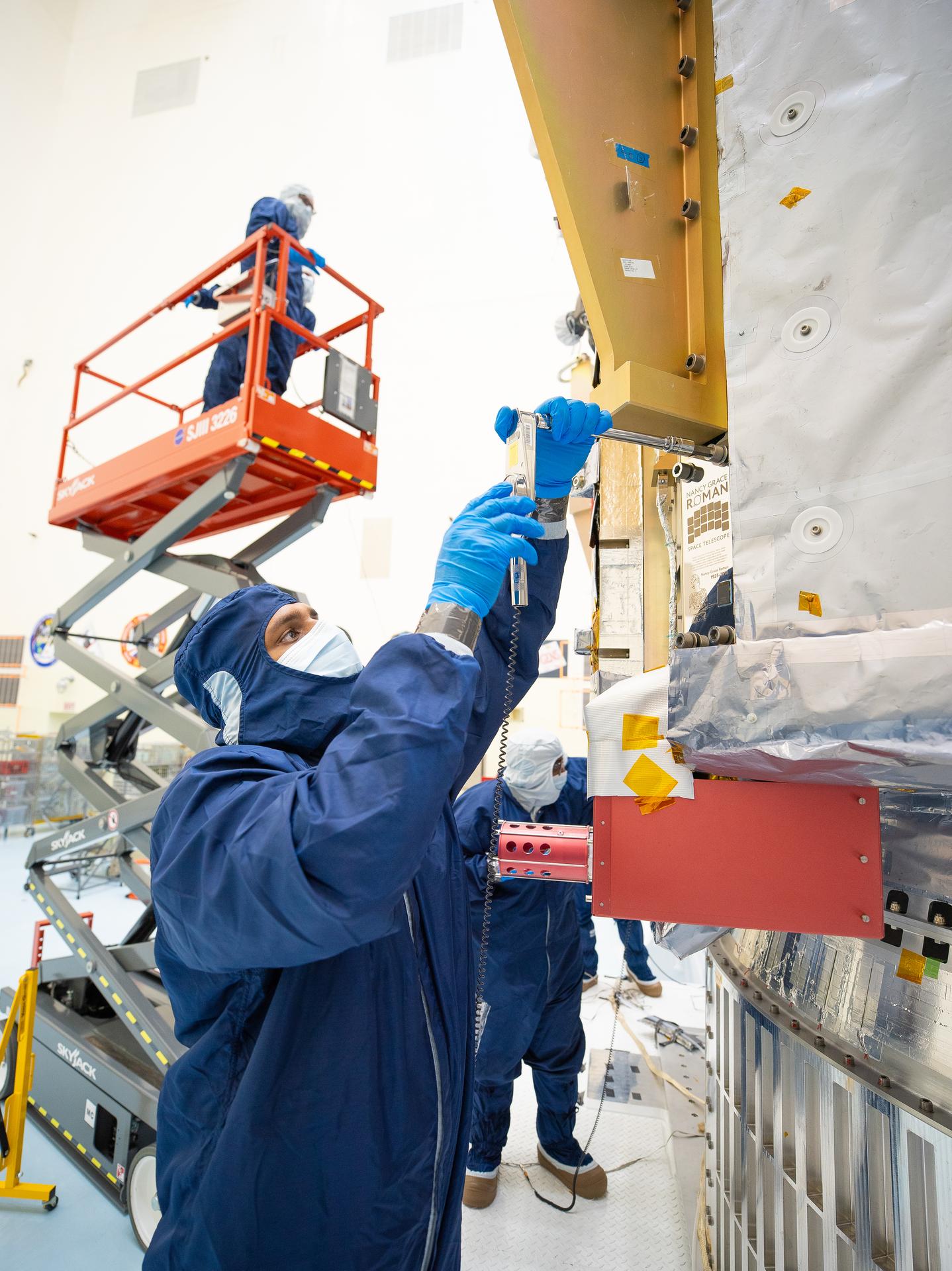
Technicians at NASA’s Kennedy Space Center installed a memory card containing 1,350,144 names on the Nancy Grace Roman Space Telescope on July 27. The names were collected from public submissions worldwide, including astronauts assigned to Artemis II and Artemis III missions. The memory card will accompany the telescope to the Sun-Earth Lagrange point 2, approximately one million miles from Earth, where gravitational forces balance. The mission aims to conduct astronomical observations from this stable orbital position.
The Nancy Grace Roman Space Telescope is named in honor of Dr. Nancy Grace Roman, NASA’s first chief astronomer and a key figure in developing the agency’s modern science initiatives. Roman advocated for space-based observatories that could observe the universe without interference from Earth’s atmosphere while ensuring data accessibility for researchers. The telescope’s design reflects her vision of advancing astronomical research through unobstructed observations and collaborative data sharing.
NASA and SpaceX have scheduled the telescope’s launch for no earlier than 7:26 a.m. EDT on Sunday, August 30, using a SpaceX Falcon Heavy rocket from Launch Complex 39A at Kennedy Space Center. The launch window follows standard mission preparation protocols, including final checks and payload integration. The Falcon Heavy was selected for its capacity to transport the telescope to its designated orbit at L2.
Once operational, the Roman Space Telescope will conduct wide-field surveys to study dark energy, exoplanets, and infrared astronomy. Its instruments will enable scientists to analyze cosmic phenomena with greater precision than previous space telescopes. The mission represents a continuation of NASA’s long-term efforts to expand understanding of the universe through advanced observational technology.